 Between stimulus and response, there is a space.
In that space lies our freedom and power to choose our response.
In our response lies our growth and happiness.
Viktor Frankl
Between stimulus and response, there is a space.
In that space lies our freedom and power to choose our response.
In our response lies our growth and happiness.
Viktor Frankl
 A new study confirms what most of us already know. High stress is bad for us and is linked to cardiovascular death even if we do not have a pre-existing cardiovascular problem. The study, published in The Endocrine Society’s Journal of Clinical Endocrinology & Metabolism (JCEM), shows that the stress hormone cortisol is released when we speed up and are under pressure and its purpose is to help the body recover from stress and regain a state of balance. However, when the stress is persistent, ongoing and chronic, an elevated level of cortisol is maintained and this, paradoxically, is associated with cardiovascular risk factors. In other words, as we learn about in the MBSR Programme, the body’s own stress response system can become a problem when it remains switched on in response to deep ongoing stress.
Nicole Vogelzangs, from the VU University Medical Center in The Netherlands, states: “Previous studies have suggested that cortisol might increase the risk of cardiovascular mortality, but until now, no study had directly tested this hypothesis“. The results of our study clearly show that cortisol levels in a general older population predict cardiovascular death, but not other causes of mortality.”
So creating a gap in the ongoing rush of your day and paying attention to your life is not just a nice option, but is crucial for your ongoing health. Then, developing adaptive ways to work with the stress in your life, rather than simplistically wishing to escape to a stress-free world, is the next step. These ways could include looking at your diet, doing exercise such as walking or yoga, structuring your week so as to get some time in nature, making time just for yourself, and developing a meditation practice. If you click on the “Stress ” Category in the blog or on the “Effects of Mindfulness” you will find more posts or research on this subject.
Rese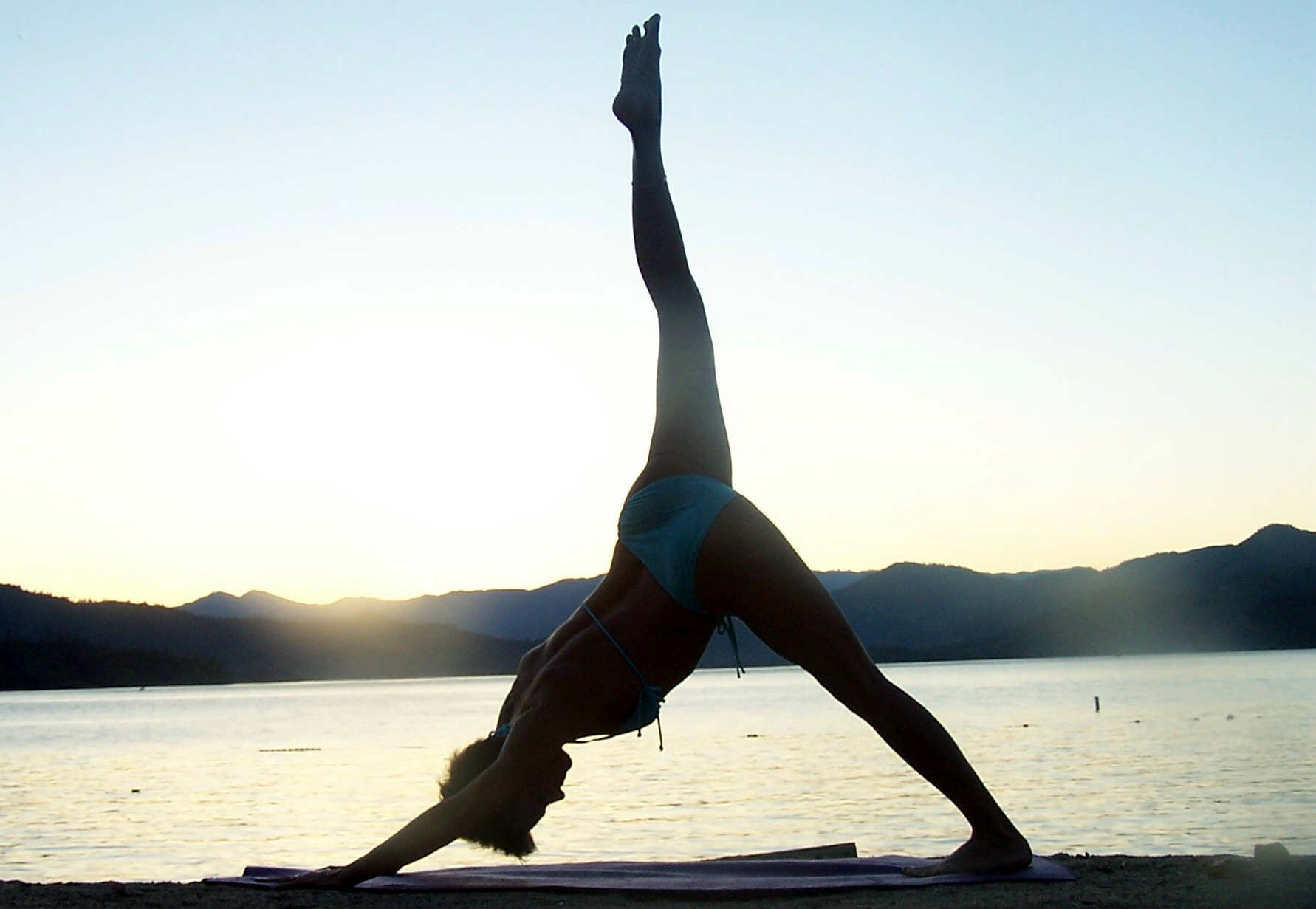 archers at Boston University School of Medicine (BUSM) and McLean Hospital have found that practicing yoga may increase the levels of gamma-aminobutyric (GABA) in the brain, a neurotransmitter associated with calming anxiety. It was found that three sessions of yoga a week can help fight off depression because by boosting GABA, it stimulates the function of brain and central nervous system and helps promote a state of calm within the body.
The research was published in the Journal of Alternative and Complementary Medicine, and found that the levels of GABA are much higher in those that do yoga than those do the equivalent of a similarly strenuous exercise such as walking. Using magnetic resonance spectroscopic (MRS) imaging, the researchers compared the GABA levels of eight subjects prior to and after one hour of yoga. The study also involved questions about their psychological wellbeing throughout the study. The finding were that those who did yoga reported lower levels of anxiety and higher increases in their mood than the walkers.
“Our findings clearly demonstrate that in experienced yoga practitioners, brain GABA levels increase after a session of yoga,” said lead author Chris Streeter, MD, assistant professor of psychiatry and neurology at BUSM and a research associate at McLean Hospital. These finding support the use of yoga-based exercises in the 8 week MBSR Programme.
 It would be nice to think that everyone would find themselves less stressed as a result of their Summer Holidays. However, a recent study, conducted by the UK’s Institute of Leadership and Management (ILM), found that 40% of managers reported coming back from their holidays as stressed or more stressed than they were beforehand.
Part of this seems to stem from the increased connectivity which marks the modern age. The rise in use of Blackberries and iPhones, and the updating of social network sites such as Facebook, means that many people keep in touch with aspects of their working life, even when on holidays. For example, 80% of respondents in the study stated that they checked and responded to emails, while 66% said that they checked their smartphones at least once a day. Even those who did not check their mails found that they were unable to completely escape: Over 90% of managers reported being worried at some stage during the holidays about returning to hundreds of e-mails, while 10% said that it took up to a week before they finally managed to unwind.
As Penny de Valk, from the ILM, states: Gone are the days when people cut off contact for a fortnight over the summer and made a complete break. While technology means that it is easier than ever to work remotely, it also makes it extremely hard to switch off. Uncertain economic times also mean that many UK employees are keeping one eye on their job at all times, when what they really need is time away from the office to rest and re-energise.
 ……Just being totally engaged in the moment – that’s arduous enough! I’ve known a number of students over the years who feel like they have to do something spectacular, something more difficult than that. It is plenty difficult, just to continuously bring yourself back to this moment.
Even while driving a car we can space out and drive for miles on the freeway and still make all the right turns. It’s amazing how tuned out we can be, and yet still seem to be functioning — not functioning full well but nevertheless we’re getting by. But we’re spinning in our own thoughts, we’re not really here. So it’s arduous enough to just bring ourselves back to this moment. That’s practice enough for anyone.
And we shouldn’t think there are some special moments for it, such as the times that we spend on a meditation cushion. Of course there are those moments, but if we split up our life that way – “Here’s my special moment when I go off to sit in meditation” — well does that make any sense? The rest of your life now, what are you doing, just not paying attention? There doesn’t need to be that kind of a break. And gradually with some maturity of practice some people start to catch on to that and just learn to be here.
Steve Hagan
 All relationships demand that we trust the other person. However, due to our personal history, this can sometimes prove a challenge. Our brains are wired to remember the risks that come from encounters with others, such as those in our childhood. Therefore certain words or situations may trigger deep felt unconscious memories and the brain automatically applies an expectation of danger to them. Our stress and anxiety rises, and we feel trapped. Our instinct is to run away. This happens even though our strengths and resources are greatly different now than what they were when we were little.
Thus it can help if we increase our capacity to see these fears as they arise in order not to be influenced by our automatic reactions to them. A way if doing so is outlined here:
Anxiety, dread, worry and even panic are just mental states like any other. Recognize fear when it arises, observe the feeling of it in your body – watch it try and convince you that you should be alarmed – see it change and move on. Verbally describe to yourself what you are feeling, to increase frontal lobe regulation of the limbic system. Notice how the awareness which contains fear is itself never fearful. Keep separating from the fear; settle back into the vast space of awareness through which fear passes like a cloud.
Rick Hanson, Buddha’s Brain
 Mindfulbalance