Busy

It has become the standard greeting everywhere: I am so busy.

We say this to one another with no small degree of pride, as if our exhaustion were a trophy, our ability to withstand stress a mark of real character.  The busier we are, the more important we seem to ourselves and we imagine, to others.  To be unavailable to our friends and family, to be unable to find time for the sunset (or even to know that the sun has set at all), to whiz through our obligations without time for a single, mindful breath, this has become the model of a successful life.

How have we allowed this to happen?  This was not our intention, this is not the world we dreamed when we were young and our whole life was full of possibility and promise.  How did we get so terribly lost in a world saturated with striving and grasping, yet somehow bereft of joy and delight?

Wayne Muller, Sabbath

Meditation reduces the perception of pain.

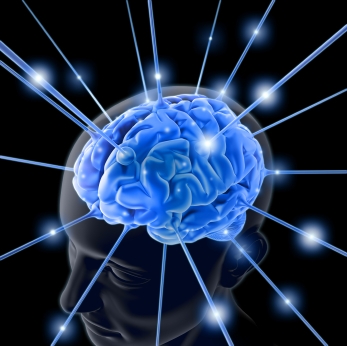
A recent study, conducted by researchers at the University of Oxford,  has found that our physical experience of pain is influenced by the mood we are in at that moment. In other words,  our brain influences how we perceive and deal with the pain we are going through, as a low or anxious mood  disrupts a portion of our neurocircuitry related to regulating emotion, causing an enhanced perception of pain. The low mood may go as far as to drive the pain and make it feel worse. Mind and body are intimately linked when it comes to health and wellness.

Mindfulness meditation has been shown to affect the way we attend to what is happening in our lives at any moment,  and can impact upon mood in a positive manner. Therefore it is probably not surprising to read that a 2010 University of Manchester study, to be published in the Journal Pain,  noted that experienced meditators found pain  less unpleasant than did non-meditators. It seems that regular meditation can train the brain to anticipate pain less and reduce its emotional impact.

Dr Christopher Brown, who led the research,  stated “Meditation is becoming increasingly popular as a way to treat chronic illness such as the pain caused by arthritis. Recently, a mental health charity called for meditation to be routinely available on the NHS (the National Health Service)  to treat depression, which occurs in up to 50% of people with chronic pain.”

The finding is a potential boon to the estimated 40% of people who are unable to adequately manage their chronic pain. Dr Brown suggests that the reason meditation works  is due to the fact that it is a training in remaining focused on the present moment and not anticipating future problems: “The results of the study confirm how we suspected meditation might affect the brain. Meditation trains the brain to be more present-focused and therefore to spend less time anticipating future negative events. This may be why meditation is effective at reducing the recurrence of depression, which makes chronic pain considerably worse.”

You can read more on the University’s website: http://www.manchester.ac.uk/aboutus/news/display/?id=5801

A simple practice for reducing stress today

If at times today you find yourself getting anxious or stressed,  you may like to try this simple practice of dropping into your breathing. We use the breath as an anchor to steady us at moments of confusion or distress. The breath is always with us. We do not need any special skills or practices to simply notice it. We do not need to go anywhere, other than where we are at that moment:

Our breathing is a stable solid ground that we can take refuge in. Regardless of our internal weather- our thoughts, emotions and perceptions- our breathing is always with us like a faithful friend. Whenever we feel carried away, or sunken in a deep emotion, or scattered in worries and projects, we return to our breathing to collect and anchor our mind.

We feel the flow of air coming in and going out of our nose. We feel how light and natural, how calm and peaceful our breathing functions. At any time, we can return to this peaceful source of life.

We may like to recite: Breathing in I know that I am breathing in.
Breathing out I know that I am breathing out.”

We do not need to control our breath. Feel the breath as it actually is. It may be long or short, deep or shallow. Conscious breathing is the key to uniting body and mind and bringing the energy of mindfulness into everyday life.

Thich Nhat Hahn

More effects of MBSR

The MBSR Programme and Mindfulness practice seems to promote a “left-shift” in the brain. This means that there is increased activity in the left frontal activity of the brain after MBSR training. This change in function seems to reflect the development of an “approach state,” in which we move towards, rather than away from, a difficult external event or difficult internal thoughts and emotions. The development of this approach mentality, or an openenss to be aware of difficult emotions, seems to be related to emotional strength and resilience.

A second effect which is being noticed is an improvement in immune function. Not only is general resilience developed, but the body’s ability to fight infection is improved. I have already written about the studies which have seen this in HIV cases.

Thirdly, the MBSR Programme is related to participants expressing a greater internal sense of stability and clarity. This is certainly my experience in the Programees we have run here in Geneva. However, it has been studied in a pilot study at the UCLA Mindful Awareness Research Center by Daniel Siegal. He found that adults and adolescents with attentional problems achieved more executive function improvements sustaining attention, diminishing distractibility) than are accomplished with justmedications for this condition. This research links in with the work done by Alan Wallace, Richie Davidson and Amiji Jha who have also found significant improvements in attentional regulation in those who have had mindfulness meditation training, such as enhanced focus.

The body and the mind

Increasingly research is showing how the mind plays a significant part in how our body feels. This is of interest to us who are working with stress. It also helps us understand how mediatation, simply sitting and observing the mind, can be an effective way of working with difficult emotions and events.

For example, research has shown that the body responds to abstract thoughts as if they were real. Work done at the University of Aberdeen found that when participants were asked to recall the past or imagine the future, their bodies acted out the metaphors contained in the words. So when asked to remember, they leaned slightly backward; when imagining the future, their bodies moved forwards. Though these shifts amounted to just a few millimeters, the results were consistent enough for researchers to conclude that they could ‘take an abstract concept such as time and show that it was manifested in body movements.’

Nils B. Jostmann of the University of Amsterdam observes: “How we process information is related not just to our brains but to our entire body. We use every system available to us to come to a conclusion and make sense of what’s going on.” This is consistent with the way stress manifests itself in the body as headaches or heart conditions. It can also be seen when we have had a difficult encounter and we go around with a knot in the stomach. It supports the approach of Mindfulness meditation in its focus on the mind as a part of a whole body response to life’s stresses.

See more at http://www.nytimes.com/2010/02/02/science/02angier.html/

Fibromyalgia

The widespread pain of fibromyalgia is hard to treat, but a small clinical study published in Psychotherapy and Psychosomatics shows that meditation may deliver lasting benefits. 39 women with fibromyalgia attended the 8 week MBSR Programme, focusing on deepening mind-body awareness and cultivating acceptance of parts of their condition that they were unable to control. At the end of the Course – and at a three-year follow-up – the women in the Mindfulness group coped better with pain than those whose classes included relaxation training and exercise.

The MBSR Programme included elements on managing stressful situations, which National Fibromyalgia Association senior medical adviser Patrick Wood M.D. considers important. “Fibromyalgia pain is often triggered by some sort of stressor” he says, “so learning to handle stress better can make a big difference in terms of symptom experience”