Noticing the space around

Most of our suffering comes from habitual thinking. If we try to stop it out of aversion to thinking, we can’t; we just go on and on and on. So the important thing is not to get rid of thought, but to understand it. And we do this by concentrating on the space in the mind, rather than on the thought.

Our minds tend to get caught up with thoughts of attraction or aversion to objects, but the space around those thoughts is not attractive or repulsive. The space around an attractive thought and a repulsive thought is not different, is it? Concentrating on the space between thoughts, we become less caught up in our preferences concerning the thoughts. So if you find that an obsessive thought of guilt, self-pity, or passion keeps coming up, then work with it in this way — deliberately think it, really bring it up as a conscious state, and notice the space around it. This way, we begin to have a perspective on the impermanent nature of thinking.

Ajahn Sumedho
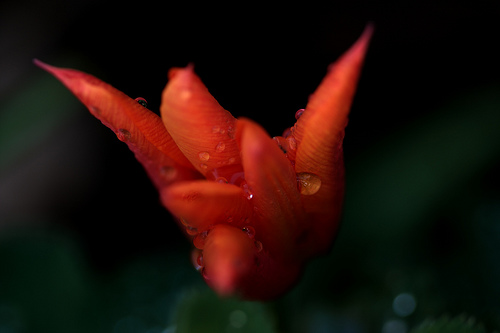
Freshness

We had such welcome rain last night. We are already on water restrictions here. Ok, maybe not good for the planned barbecue, but great for the plants and the garden, and especially for the farmers.  There is a freshness that only comes after a storm, as well as growth that only comes with the rain. The law is universal, not just for Nature but also for our inner life.  There are times we need to shelter a while but in the morning after we  find everything fresher and more alive.

Climb the mountains and get their good tidings. Nature’s peace will flow into you as sunshine flows into trees. The winds will blow their own freshness into you, and the storms their energy, while cares will drop off like autumn leaves.

John Muir

Roots in the past 2: Suffering has an internal cause

Suffering comes from how the mind interacts with pain. Because your mind is conditioned by past life events, when it encounters an experience it perceives as painful or unpleasant, there is immediate and direct suffering that is far greater than the actual discomfort of the situation. The increased discomfort happens in your mind, not in the actual experience. This means suffering has an internal cause, and you therefore have the ability to affect how much you suffer – you can dance with life and be a partner in how your life unfolds. With mindfulness of the cause of suffering, what is unpleasant simply remains unpleasant, even though it is not your preference.

Philip Moffitt, Dancing with Life

Sunday Quote: Reflections after welcome rain

The body endures the storms of the present only,

the mind those of the past and future as well as the present.

Epicurus

Making space for the words under the words

A morning walk in the cool woods, with the sounds of the birds and the sight of the poppies flourishing at the sides of the fields. Summer is incredible early and beautiful this year. Walking without expectation or goal. The Eastern idea of apranihita –  aimlessness. No need to have a purpose or to run after something. Making light space on the journey after some full, rich days. What is important is not necessarily what we are experiencing,  but how we relate to it.

My grandmother’s voice says nothing can surprise her.

She knows the spaces we travel through,  the messages we cannot send — our voices are short  and would get lost on the journey.

Farewell to the husband’s coat, the ones she has loved and nourished, who fly from her like seeds into a deep sky.   They will plant themselves. We will all die.

My grandmother’s eyes say Allah is everywhere, even in death.  

When she talks of the orchard and the new olive press,  

when she tells the stories of Joha and his foolish wisdoms,  

He is her first thought, what she really thinks of is His name.

“Answer, if you hear the words under the words—

otherwise it is just a world with a lot of rough edges,  

difficult to get through, and our pockets full of stones.“

Naomi Shihab Nye, The Words Under the Words


Waiting for something to happen

We have a tendency sometimes to put our lives on hold or believe that conditions will somehow be different in the future and then we will start to put our plans into action. Or maybe we find ourselves looking for something to come from outside  or waiting on  someone else’s plans. In  this way,  we risk missing out on opportunities which already present themselves or on what was right in front of our noses all the time, and which we do not take for fear of making a mistake or because we are waiting for some “perfect” moment.

You must live in the present, launch yourself on every wave, find your eternity in each moment. Fools stand on their island opportunities and look toward another land. There is no other land, there is no other life but this.

Thoreau