 Wherever we are
we have the capacity to enjoy the sunshine,
the presence of each other
and the wonder of our breathing.
Thich Nhat Hahn
Wherever we are
we have the capacity to enjoy the sunshine,
the presence of each other
and the wonder of our breathing.
Thich Nhat Hahn
 I tell mindfulness practitioners to listen to the tone their inner voice uses to comment on their experience. I ask them to consider whether, if they had a friend who spoke that way, they would keep that friend.
The moment in which people discover they are not holding themselves in compassion, not speaking kindly, is often startling and always sad. That awareness is sometimes enough to cause the critic’s voice to soften, and the soother’s voice to be heard.
Sylvia Boorstein, I’m Not ok, you’re not ok – and thats ok
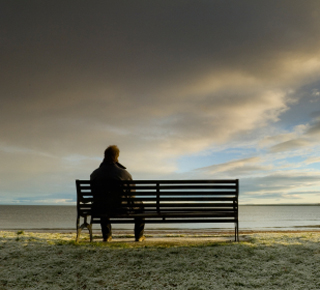 The main trend in the maturational process can be condensed into the different meanings of the word “integration” Winnicott
Wholeness is not achieved by cutting off a portion of one’s being, but by integration of the contraries. Jung
What am I looking for this year? One answer coming from modern society and from some branches of psychology seems to indicate that I should continue to work on my self along a path toward greater development or some notion of perfection.
This drive toward change and perfection is everywhere today. Society suffers from a type of inner anorexia – continually, unhappily, looking at its shape in the mirror and seeing problems with it. It is never where it wants to be. Last evening, during a lovely celebration with friends, I listened as talk turned to the unrelenting pressure and push to reach deadlines at work. In my own work this last year I have seen the faces of people, drained, feeling cut off and empty, confused and alone – sometimes even after they have met with the success that they have sought. I feel it myself in the unrelenting message of the media, promoting, as easily attainable, a perfect body, the perfect job, the perfect friend, perfect children, the perfect lover, a perfect life. On TV or in the cinema, I see people leading perfect lives every day, not having to struggle with the unattractive realities or ordinariness of everyday living as imperfect human beings, and I look at myself in the mirror and wonder as I see aspects of my life, “What is up with me….. I must be doing something wrong.”
Everyone has their own version of the perfect image to which they cannot match up, linked to a fear of never being accepted. Often the striving for perfection is a defense against anxieties, or against engagements with others that may disappoint us. For me, it is a struggle which drains and exhausts me, because it is linked to a self-image or concept of who I think I should be. I was well grounded in this fear and internalized, while young, that anything less than an ideal was not good enough. And over the years I have applied that mainly in my relationship with others. I have linked my feeling right about myself to the amount of giving I can do – without asking for much in return – while hoping that this will remove a sense of emptiness which I experience as residing in myself. As time passes I see that it is not so much that I have new experiences, but the same pattern, over and over again. I run to take refuge in the safe haven of my mind from the anxieties for perfection felt deep in the cells of the body. However, this just reinforces the dynamics that I mistakenly think it will overcome .
So this year, rather than demanding perfection of myself or of others, this year I intend to allow myself be the “relative failure” which Winnicott has said is normal – human beings “fail and fail….in the course of ordinary care”. I do not have to be perfect in giving. I can see that we are never fully integrated, and demanding continual improvement, despite what others may say, is wrong for us. Our path is towards wholeness rather than perfection, and wholeness includes being able to live with contrasts within ourselves, such as having needs while responding to others. It also means that I can live with a fundamental emptiness without immediately thinking that it needs to be fixed. And this is the key insight of meditation practice: Opening a non-judgmental holding space around our inner experience, without taking the feelings of imperfection personally. We need to rest with our experience of ourselves, without trying to feel more than we actually do. We can live with the absence of perfection.
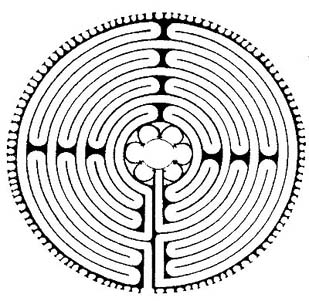 Your soul knows the geography of your destiny. Your soul alone has the map of your future, therefore you can trust this indirect, oblique side of yourself.
If you do, it will take you where you need to go, but more important it will teach you a kindness of rhythm in your journey.
John O’Donohue, Anam Chara
 [Some] people feel that their real identity is working on themselves, and some work on themselves with such harshness. Like a demented gardener who won’t let the soil settle for anything to grow, they keep raking, tearing away the nurturing clay from their own heart, then they’re surprised that they feel so empty and vacant. Self-compassion is paramount. When you are compassionate with yourself, you trust in your soul, which you let guide your life.
Your soul knows the geography of your destiny. Your soul alone has the map of your future, therefore you can trust this indirect, oblique side of yourself.
If you do, it will take you where you need to go, but more important it will teach you
a kindness of rhythm in your journey.
John O’Donoghue
 Modern society likes to portray everything as being within our grasp, so long as we apply ourselves with determination and ambition. Its unrelenting positive message and preference for distraction does not allow for any complexity or for anything which cannot be explained easily. Success in life comes from building up, getting more, going higher. Prompted by this model, we can sometimes believe that we are fully in charge of our lives, when in fact we have depths and motivations that we are often unaware of. A lot of what is important or which shapes and drives our life is hidden from us, deep in the unconscious. We have wounds that have not healed but still have an influence, fundamental assumptions and powerful unmet needs. Hidden also, is a natural understanding of the direction we should go, as well as potential riches which we are often too timid to take hold of. However, at crucial moments in our lives, growth involves us going down into the depths, paying attention to what has been neglected, hidden or buried. This can happen in the mid to late twenties when we are forced to finally leave the shadow of our parents or in the “mid-life” years when we awaken to these depths as their demands oblige us to redefine our understanding of who we truly are. At these times we are called to a more genuine relationship to our deepest selves and the journey we are on. This can be prompted by a loss or a period of deeper reflection, or by a restlessness or boredom which leads us to see that we are not fully content.
At moments like this we are led to consider the values which will lead us to living a richer, larger life. The way we have lived life’s challenges to date may no longer feel authentic to us. Although it may feel like a crisis or be deeply uncomfortable, we know we are being called to deepen the paradigm which we use to guide us through life. The question of our most real identity will not go away. The untended parts of our lives seek expression. Do we have the courage to go with this new prompting and be rewarded with a deeper, more fulfilling story?
One’s own self is well hidden from one’s own self;
Of all mines of treasure, one’s own is the last to be dug up.
Friedrich Nietzsche
 Mindfulbalance