Grumbling and complaining

Not far from where I live now is the Cistercian Abbey at Moone, where the monks keep an established routine of prayer and silence starting at 4.15 in the morning until Night Prayer at 20.15. On Monday  Fr Ambrose spoke about the human capacity for grumbling and complaining, as he reflected on a passage in the Old Testament where the people of Israel began to complain about their life in the desert, even though they had just been freed from a life of slavery in Egypt.  They contrasted their life now, even with freedom,  to their life in the past, and their thinking mind – which does not need much stimulus – sprang into action:  “Think of the fish we used to eat free in Egypt, the cucumbers, melons, leeks, onions and garlic!”.  As Ambrose said, this reveals a persistent behaviour in our human nature, and one that does not always lead to greater happiness or inner peace.

It would seem that comparing ourselves with others evolved as a necessary survival skill. When there were scarce resources and ever-present dangers, it was necessary to see who was stronger, who were the potential allies and threats,  and who could ultimately kill you. This survival necessity became deeply embedded in our consciousness as an alertness, a certain vigilance. However, how that useful skill actually manifests itself is in the mind’s tendency to generate comparing thoughts with others or with other times in our life, just as the people of Israel did. We can find ourselves making comparison judgments about  who is smarter, prettier or richer; who has a fitter body or a better car. Or we compare ourselves to a better version of ourselves, one who is more disciplined, who does not procrastinate, who should be doing better, who is getting things done faster.  The world of advertising and the media likes to nurture this sense of dissatisfaction, and therefore our minds have been acclimatised to achieving the latest, the better-than, the newest model, ideals that have a sense of compulsion in them  For example, here in Ireland the car registration plates for the year 2013 have been split into two, 131 for the first six months and 132 for months starting with July. The desire to show others that you have a newer car, with a 132 registration plate, seems to have worked, as sales are up by 132% on last years July figures.

This grumbling normally starts as some sort of unease, which the mind interprets as something wrong and then gets to work. So the uncomfortable feelings gets interpreted in terms of things should be better. The mind likes to project how my self could be and moves away from working with how things actually are.  Immediately,  thoughts are generated, a range of possibilities and alternatives.  It would seem that we are always seeking new becomings rather than resting in the space where we actually  are. Through our thinking minds we create plenty of ways to  get away, to become some thing else.  This normally means that we become dissatisfied and need either to get something different, or to get away from something else.

This can be quite subtle and arise instinctively. Frequently it is dressed up as a laudable need to improve ourselves or get our lives or careers moving forward.  I notice this in myself at this time of change, when not everything goes according to the schedule in the mind and I find it hard to stick with how things actually are, not as I think they should be. So grumbling and doubt sets in.  However, all this does is take me away from how this moment or my  life is,  and thus causes suffering.  It does not allow us accept ourselves as we actually are.

It is good to shift from believing the content of these thoughts, to noticing the continual process of generating them. The mind will always compare.  The Buddha drew attention to this by stating that life has an ‘unsatisfied’ sense. Ambrose said that it seems to be in our nature. Noticing the comparing mind is therefore a good practice on the way towards reducing stress and being happy in our own skin. If we spot these thoughts for what they are – mere perceptions and judgments of the mind – then they have less capacity to pull us out of the moment. Outside of our mind, the relative concept of “better” has no sense.  So next time we notice ourselves grumbling, see if you can inquire into the process and stay with the original sense of unease, without making it into a story about how your life is going. 

Stories of who we are

portmarnock sun

The arrogant mind never stops looking for identity and  this identity always defines itself through attributes: “the beautiful  one”, “the smart one”, “the creative one”,  “the successful one”… We are always searching for something to be.

Dzigar Kongtrul Light Comes Through

Any time you visit a new country – or move to one, as is my case – your senses are heightened and a lot of impressions are made, simply because things are often done differently or in new ways. And sometimes we draw comparisons, or make judgments, such as “it was done better there” or “this is not so good”. It seems that the mind is always trying to fit our current experience into some kind of story, and likes to use comparisons to guide itself in that. It prefers a coherent narrative. We are always thinking about things such as where we are going, where we’ve come from, what we’re going to do. So when, the other day, I got a mail from a friend asking “What is it like to be back in Ireland”, I noticed that the mind immediately moved to present a response, even though it was too early to say anything. We like our identities to be defined, and so a story about our life is always there in the background. What I notice is that these stories can frequently put us under pressure and reflect expectation which we, or others, place on ourselves.

However, what is clear to me these days is that our practice in life is about dropping the habit of identifying with our limited and limiting stories which are often rooted in fear and instead about sticking closer to the confidence of our true nature and what the present moment brings. So a huge part of our meditation practice is relating to our experience in a fluid, non-fixed sense. Intellectually this is easy to see – we are, at all levels, constantly evolving and growing. On a physical level, we are always in process, changing every time new food is taken in,  with each breath we take, and as the body changes with growth and age. What we see, if we look closely, is a constant state of flux. Knowing this in an experiential sense is harder – we have to practice applying this to our experience and to whatever passes through the mind in the form of thoughts or emotions. This helps us to see life as  a series of moments of consciousness arising in succession, one at a time and then falling away.

So in this succession of experiences in every moment, and every day,  does it help us to try to establish a solid identity or attach categories to our experience? On one level I have found that is not and we are  actually not wishing for one. At any moment we have a working story of who we are, and maybe even have more than one. If we bring awareness to these stories we notice how they frequently create separation and suffering, as we often rush to defend the “self” created by them. We place a lot of energy into keeping solid this image – this concept –   of ourselves, and less energy into directly relating to our experience, moment by moment. If we do not  hook into,  or identify with,  many of the passing moods and thoughts which arise and fall away, a lot of our experience become easier, and  we are in a better position to welcome whatever happens. We find it easier to not define ourselves by our roles, our status, our relationships and our possessions, and consequently are not as threatened when these things change. Letting go of the story means that it is easier to give up on the expectations that we bring to each event and harder to see our “identity” as threatened,  or our life path not working out as “intended” , since we have given up on having that predetermined end. It means that we recognize and work better with the continually changing nature of experience and fight with it less. Holding this aspect of our self more loosely ironically means that our deepest self is more content.

Our real destination

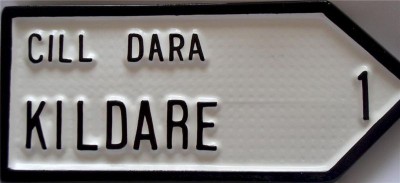
kildare

It is not a matter of looking for happiness

or trying to avoid suffering

but of going to the place beyond happiness or suffering

Ajahn Chah


Times and places that nourish

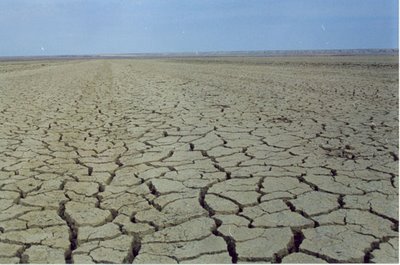
dry desertIn the south of Kildare there is the small town of Castledermot, the Gaelic name of which is Diseart Diarmad. I was struck by this name as we passed it the other day, as the word diseart means “desert”.  This refers to the monastery founded around 800 by the  father of St. Diarmuid, after which the town takes its name. So the space where the monks lived was called a desert, even though, as you can imagine, dry deserts are somewhat hard to find in Ireland. However, in most religious traditions we find references to the desert.  So what does it mean and is it relevant to us today?

The first obvious meaning of the word desert refers to a place where nothing grows and conditions are simple, even harsh. This absence of growth means that a person is removed from normal distractions and encouraged them to focus on what was really necessary. Familiar patterns and habits no longer apply.  So for example in the Old Testament, the Prophet Hosea says that “The desert will lead you to your heart where I will speak”.  I find it interesting that people found the need to create deserts in eight century Ireland when things were very quiet and remote compared to today. In a hectic pace of life,  like todays, some creation in our schedules  of a similar uncluttered space, both externally and internally, is even more necessary.

However, the desert can also be a metaphor for periods in our lives, as all of us can pass through moments when nothing seems to be moving or growing in us, when things seem barren and dry, or when familiar ways no longer seem to work. It can be said that at such times we enter our own “desert” where  we are forced to re-evaluate what is important and simplify things down to what is really needed.  Periods of change and difficulty – when we are faced with the removal of our usual points of reference or with no sustenance – can be somewhat frightening and confusing.  We can no longer follow our old habits of fantasy, escape or distraction. When this happens it is hard to believe that our own empty and desolate moments can be in any way positive or moments of growth. And yet, one theme which we find  in both eastern and western writers on meditation is that our problems become the very places where we can discover greater wisdom and depth. Sometimes we are encouraged to make “difficulties into the path”.

Not always easy. However, the word desert, and the name of the town remind me to hold difficulties in a different light. They may not be all negative. It would seem that the secret of the desert is learning to lose, to let things go, to simplify. Periods of dryness or confusion or doubt are challenges to stay with ourselves, to observe, to learn gentleness and allowing. The frequently found theme of the desert teaches us the importance of slowing down, of being patient and waiting for the meaning or the growth to appear in its own time. Difficult periods can be, as the Prophet says, a time for journeying deeper into our own heart.

A change in climate

rain-puddle

Let me say this before rain becomes a utility that they can plan and distribute for money. By “they” I mean the people who cannot understand that rain is a festival, who do not appreciate its gratuity, who think that what has no price has no value, that what cannot be sold is not real, so that the only way to make something actual is to place it on the market. The time will come when they will sell you even your rain. At the moment it is still free, and I am in it. I celebrate its gratuity and its meaninglessness.

Nobody started it, nobody is going to stop it. It will talk as long as it wants, this rain.

As long as it talks I am going to listen.

Thomas Merton, Rain and the Rhinoceros

Procedures, memories, patterns

We all have well-established habits of thought, emotion, reaction and judgement, and without the keen awareness of practice, we’re just acting out these patterns.

When they arise, we’re not aware they’ve arisen.
We get lost in them, identify with them, act on them  —  so much of our life is just acting out patterns.

Joseph Goldstein

As I was washing my hands the other evening  before the meal I turned on the tap marked “C” and started to wash.  After a moment something registered, and I thought “this water is cold, it should be getting warm by now”. And then I realized that “C” in an anglophone country like Ireland refers to “cold” whereas “C” in a francophone bathroom would indicate hot water. I noticed that my behaviour had been automatic, done without conscious awareness,  based on procedural,  formed,  memories. I had turned the “C” tap without thinking and gradually my brain caught up with the fact that this was not France and that the patterned behaviour would not get the desired result.

Frequently we operate on procedural memories or knowledge. This is fine for something like driving, which is fairly automatic regardless of whether one is driving on the right or the left. However, doing things in an automatic way can mean that we fit things into familiar boxes, or do not see things as new but presume that they will be the same as before. We do not give the moment a chance to reveal any new riches, because we have it figured out even before it happens. We can reduce others and,  even more frequently,  ourselves,  to limited pre-defined expectations and not believe in any possibility for change.