The sun and the moon and the stars

File:Moon rises above the trees at the Mississippi River Headwaters, May 19, 2016.jpg

From the 17th to the 23rd of December a special sequence of invocations have been used since at least the 5th Century.  Today’s one – “O Wisdom,  Come to teach us the way of prudence” – reflects the age-old quest for a  balanced way of being,  that will lead to our hearts being fulfilled,  faced with all the demands on our time.

Every day we bump into things that challenge us to keep our hearts soft when fears and disappointments try to convince us to harden and close down. The temptation is to say “What can we do? It is as it is” .  However, this never-ending wisdom practice consists in keeping open to experience in all its changing forms  – its joys and its sorrows – having the courage to meet whatever comes our way with a spacious heart. We dare to believe in the underlying mystery, behind the busyness of the day.  Things may change, the attitude of the heart doesn’t:

The water in the stream may have changed many times,

but the reflection of the moon and the stars remains the same.

Rumi

More fun

File:Crossing Stepping Stones in Bolton Abbey - England.jpg

I think perfectionism is based on the obsessive belief that if you run carefully enough, hitting each stepping-stone just right, you won’t have to die. The truth is that you will die anyway and that a lot of people who aren’t even looking at their feet are going to do a whole lot better than you, and have a lot more fun while they’re doing it.

Anne Lamott,  Bird by Bird: Some Instructions on Writing and Life

photo Barney Moss

Not visible

harvest

Some days or weeks we work with limited vision. The true meaning is hidden. We rely on inner values and on the commitment we have made.

Bringing in a full harvest from human effort has always been difficult, because what is worth bringing in is almost always hidden from us: think of the hard, protected kernel of the wheat amidst a waving sea of gold, or the the walnut nestled in its dense, unyielding skin of green and white, think of how common a much-wanted, simple understanding is needed, hidden by our complex thoughts; or the attempt to fully forgive when even forgiving a little seems to be the last thing we want to do; and lastly, the wish to love and to be loved, when loving is what we are most afraid to do.  

David Whyte, Letters from the House

Trust

File:BBGMonarchButterflyWings.jpg

With no mind, flowers lure the butterfly;
With no mind, the butterfly visits the blossoms.
Yet when flowers bloom, the butterfly comes;
When the butterfly comes, the flowers bloom.

Ryokan, 1758 – 1831, Buddhist monk, hermit and poet.

Sunday Quote: Wholeness

leaf-blurWe can sometimes feel fragmented in our inner life, sucked into a crisis,  pulled in all directions, but…
There is not a “fragment” in all nature,

for every relative fragment of one thing

is a full harmonious unit in itself.

John Muir, A Thousand Mile Walk to the Gulf

Every day is a good day

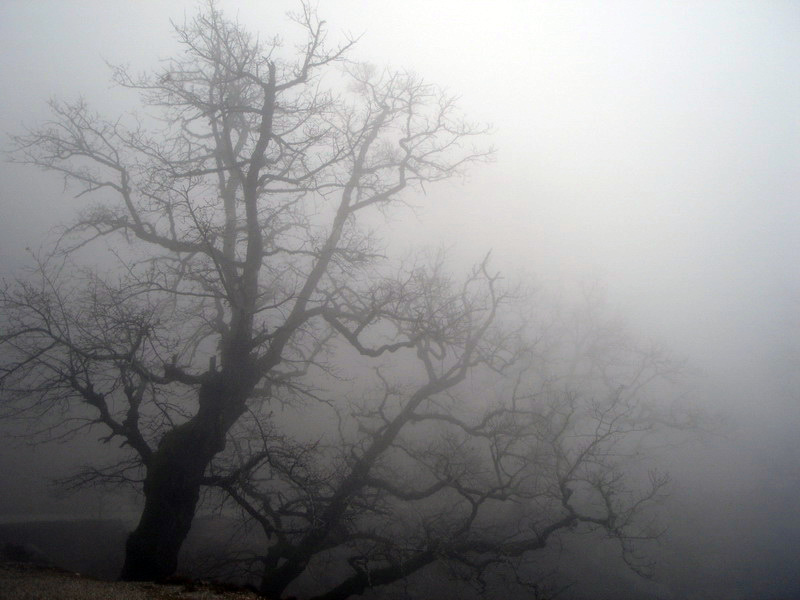
File:Fog.jpg

In Zen practice a koan is a phrase, a conversation, or a saying that a mediator reflects on in order to point to a way of being in the world. The phrase in held in mind –  sometimes for months or years at a time –  to unravel an openness in practitioners, allowing them to enter into inner regions beyond knowing.

I like keeping this one in mind, which is presented here in a commentary on a saying of Ummon, an 8th Century Zen Master. It challenges my normal commentary and takes me out of the thoughts I buy into every day. Maybe I already have everything I need right now: 

Ummon introduced the subject by saying:

I do not ask you about fifteen days ago. But what about in fifteen days time? Come, say a word about this.

He himself replied for them: Every day is a good day.

Commentary by Suzuki : Today does not become yesterday, and Dōgen states that today does not become tomorrow.

Each day is its own past and future and has its own absolute value.

From  a transcript of a talk by Suzuki-roshi,  Thursday, November 1st, 1962