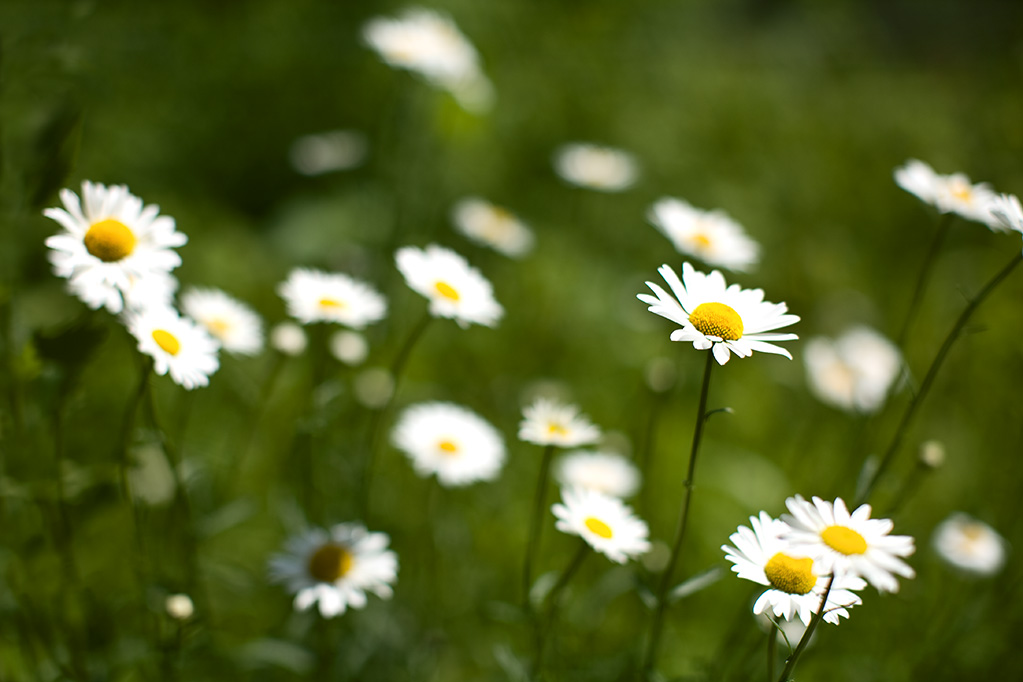
 I saw a programme recently on G.K Chesterson and was reminded of this quote, similar in theme to the poem published yesterday morning. In it he encourages us to have eyes like children, seeing things as if for the first time, not tired and dulled by the fact that we have seen them before:
Because children have abounding vitality, because they are in spirit fierce and free, therefore they want things repeated and unchanged. They always say, “Do it again”; and the grown-up person does it again until he is nearly dead. For grown-up people are not strong enough to exult in monotony. But perhaps God is strong enough to exult in monotony. It is possible that God says every morning, “Do it again” to the sun; and every evening, “Do it again” to the moon. It may not be automatic necessity that makes all daisies alike; it may be that God makes every daisy separately, but has never got tired of making them. It may be that He has the eternal appetite of infancy; for we have sinned and grown old, and our Father is younger than we.
G.K Chesterson
 Mindfulness practice means that we commit fully in each moment to being present. There is no “performance”. There is just this moment. We are not trying to improve or get anywhere else. We are not even running after special insights or visions. Nor are we forcing ourselves to be non-judgmental, calm, or relaxed. And we are certainly not promoting self-consciousness or indulging in self-preoccupation. Rather, we are simply inviting ourselves to interface with this moment in full awareness, with the intention to embody as best we can an orientation of calmness, mindfulness and equanimity right here and right now.
 When we learn to be where we are, we gain perspective on life. Yesterday loses its hold on us and tomorrow loses its allure. Where we are becomes the ground of our salvation, the reason for our joy and the acme of our salvation…..Mindfulness calms the storms of life and gives them meaning. [It] makes the present, present and gives us back the energy that endless worry and countless calculation drain. It concentrates what has become scattered and brings us home to ourselves.
