Times and places that nourish

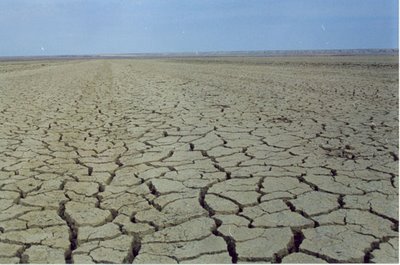
dry desertIn the south of Kildare there is the small town of Castledermot, the Gaelic name of which is Diseart Diarmad. I was struck by this name as we passed it the other day, as the word diseart means “desert”.  This refers to the monastery founded around 800 by the  father of St. Diarmuid, after which the town takes its name. So the space where the monks lived was called a desert, even though, as you can imagine, dry deserts are somewhat hard to find in Ireland. However, in most religious traditions we find references to the desert.  So what does it mean and is it relevant to us today?

The first obvious meaning of the word desert refers to a place where nothing grows and conditions are simple, even harsh. This absence of growth means that a person is removed from normal distractions and encouraged them to focus on what was really necessary. Familiar patterns and habits no longer apply.  So for example in the Old Testament, the Prophet Hosea says that “The desert will lead you to your heart where I will speak”.  I find it interesting that people found the need to create deserts in eight century Ireland when things were very quiet and remote compared to today. In a hectic pace of life,  like todays, some creation in our schedules  of a similar uncluttered space, both externally and internally, is even more necessary.

However, the desert can also be a metaphor for periods in our lives, as all of us can pass through moments when nothing seems to be moving or growing in us, when things seem barren and dry, or when familiar ways no longer seem to work. It can be said that at such times we enter our own “desert” where  we are forced to re-evaluate what is important and simplify things down to what is really needed.  Periods of change and difficulty – when we are faced with the removal of our usual points of reference or with no sustenance – can be somewhat frightening and confusing.  We can no longer follow our old habits of fantasy, escape or distraction. When this happens it is hard to believe that our own empty and desolate moments can be in any way positive or moments of growth. And yet, one theme which we find  in both eastern and western writers on meditation is that our problems become the very places where we can discover greater wisdom and depth. Sometimes we are encouraged to make “difficulties into the path”.

Not always easy. However, the word desert, and the name of the town remind me to hold difficulties in a different light. They may not be all negative. It would seem that the secret of the desert is learning to lose, to let things go, to simplify. Periods of dryness or confusion or doubt are challenges to stay with ourselves, to observe, to learn gentleness and allowing. The frequently found theme of the desert teaches us the importance of slowing down, of being patient and waiting for the meaning or the growth to appear in its own time. Difficult periods can be, as the Prophet says, a time for journeying deeper into our own heart.

A change in climate

rain-puddle

Let me say this before rain becomes a utility that they can plan and distribute for money. By “they” I mean the people who cannot understand that rain is a festival, who do not appreciate its gratuity, who think that what has no price has no value, that what cannot be sold is not real, so that the only way to make something actual is to place it on the market. The time will come when they will sell you even your rain. At the moment it is still free, and I am in it. I celebrate its gratuity and its meaninglessness.

Nobody started it, nobody is going to stop it. It will talk as long as it wants, this rain.

As long as it talks I am going to listen.

Thomas Merton, Rain and the Rhinoceros

Procedures, memories, patterns

We all have well-established habits of thought, emotion, reaction and judgement, and without the keen awareness of practice, we’re just acting out these patterns.

When they arise, we’re not aware they’ve arisen.
We get lost in them, identify with them, act on them  —  so much of our life is just acting out patterns.

Joseph Goldstein

As I was washing my hands the other evening  before the meal I turned on the tap marked “C” and started to wash.  After a moment something registered, and I thought “this water is cold, it should be getting warm by now”. And then I realized that “C” in an anglophone country like Ireland refers to “cold” whereas “C” in a francophone bathroom would indicate hot water. I noticed that my behaviour had been automatic, done without conscious awareness,  based on procedural,  formed,  memories. I had turned the “C” tap without thinking and gradually my brain caught up with the fact that this was not France and that the patterned behaviour would not get the desired result.

Frequently we operate on procedural memories or knowledge. This is fine for something like driving, which is fairly automatic regardless of whether one is driving on the right or the left. However, doing things in an automatic way can mean that we fit things into familiar boxes, or do not see things as new but presume that they will be the same as before. We do not give the moment a chance to reveal any new riches, because we have it figured out even before it happens. We can reduce others and,  even more frequently,  ourselves,  to limited pre-defined expectations and not believe in any possibility for change.

Staying put

File:Abbaye-de-tamié-savoie.png

In meditation we discover our inherent restlessness. Sometimes we get up and leave. Sometimes we sit there but our bodies wiggle and squirm and our minds go far away. This can be so uncomfortable that we feel it’s impossible to stay. Yet this feeling can teach us not just about ourselves but also about what it is to be human. All of us derive security and comfort from the imaginary world of memories and fantasies and plans. We really don’t want to stay with the nakedness of our present experience. it goes against the grain to stay present. The  instruction is,  Stay…stay…just stay.  So whenever we wander off, we gently encourage ourselves to “stay” and settle down.

Pema Chodron, The Places that Scare you

Today the stage of the Tour de France takes place around Annecy and goes up the Col de Tamié. On last Sunday I was fortunate enough to be in that part of the world as I went to the liturgy in Cistercian Abbey of Tamie, founded in 1132. As always,  I was struck by the silence as I sat in the ancient church, as the thick walls keep out most sounds and I was conscious of a depth of stillness. I have visited the place often and I recognized the faces of the monks. They have been there, every day since I last visited, performing the same work in that isolated place, without been seen, repeating the same chants and prayers seven times a day, starting at 4 in the morning until 8 in the evening, in the depth of the cold winter and the relative warmth of the summer. And then on Monday I visited the monastery of Bolton Abbey in Kildare, a place I had not seen for over 10 years. Again, the same monks, the same liturgy, even though years have passed.  A continuity across miles and across years.

The founder of Western monasticism, Saint Benedict, placed an emphasis on this capacity to stay put.  He saw in the latin word “stabilitas” –  to be still, to stop, to persevere – a remedy for the troubles of his age, namely, insecurity, the movements of people, cultural and political upheavals. “Staying put” for Benedict meant that the person resisted the temptation to move from idea to new idea, and instead remained in the monastery where they had entered long enough to put down roots in order to grow and bear fruit. Perhaps he can teach us something today in this similar age, with the added distraction of increased communication and media. Many people today have lost their points of reference, and have little sense of community or family. Commitment is often presented as against personal growth and rituals seen as stifling or boring.

Benedict was drawing attention to a psychological fact, the need to stay put, to not run away or move when we come face to face with our internal restlessness.  He echoes the psychological wisdom found in the Desert Fathers who said frequently that the first work we had to do was to learn to stay, and quieten the mind in this manner. As Abba Moses replied simply when a visitor requested some novel, wise words “Go into your room and sit there, and your room will teach you all you need to know”. There is no substitute for learning to befriend ourselves. There is some link between calming the body’s desire for novelty and movement and calming the mind.

These words are not far from those we find in meditation teachers from a different tradition today. The basic  practice which we return to each day is taking our seat and staying there. Slowly it settles the mind. Gradually something is transformed in us and an interior peace can grow. We come face to face with our deep interior confusion, but we decide not to run away. It worked in the time of Saint Benedict and for those monks in the quiet valley of Tamie and the plains of Kildare.  It can also work for us in our restless age with its desire for novelty and 15 minutes of fame.


Intention

tearmann

Breathing in, breathing out, feeling resentful, feeling happy, being able to drop it, not being able to drop it, eating our food, brushing our teeth, walking, sitting — whatever we’re doing could be done with one intention. That intention is that we want to wake up, we want to ripen our compassion, and we want to ripen our ability to let go, we want to realize our connection with all beings. Everything in our lives has the potential to wake us up or to put us to sleep. Allowing it to awaken us is up to us.

Pema Chodron, Comfortable with Uncertainty

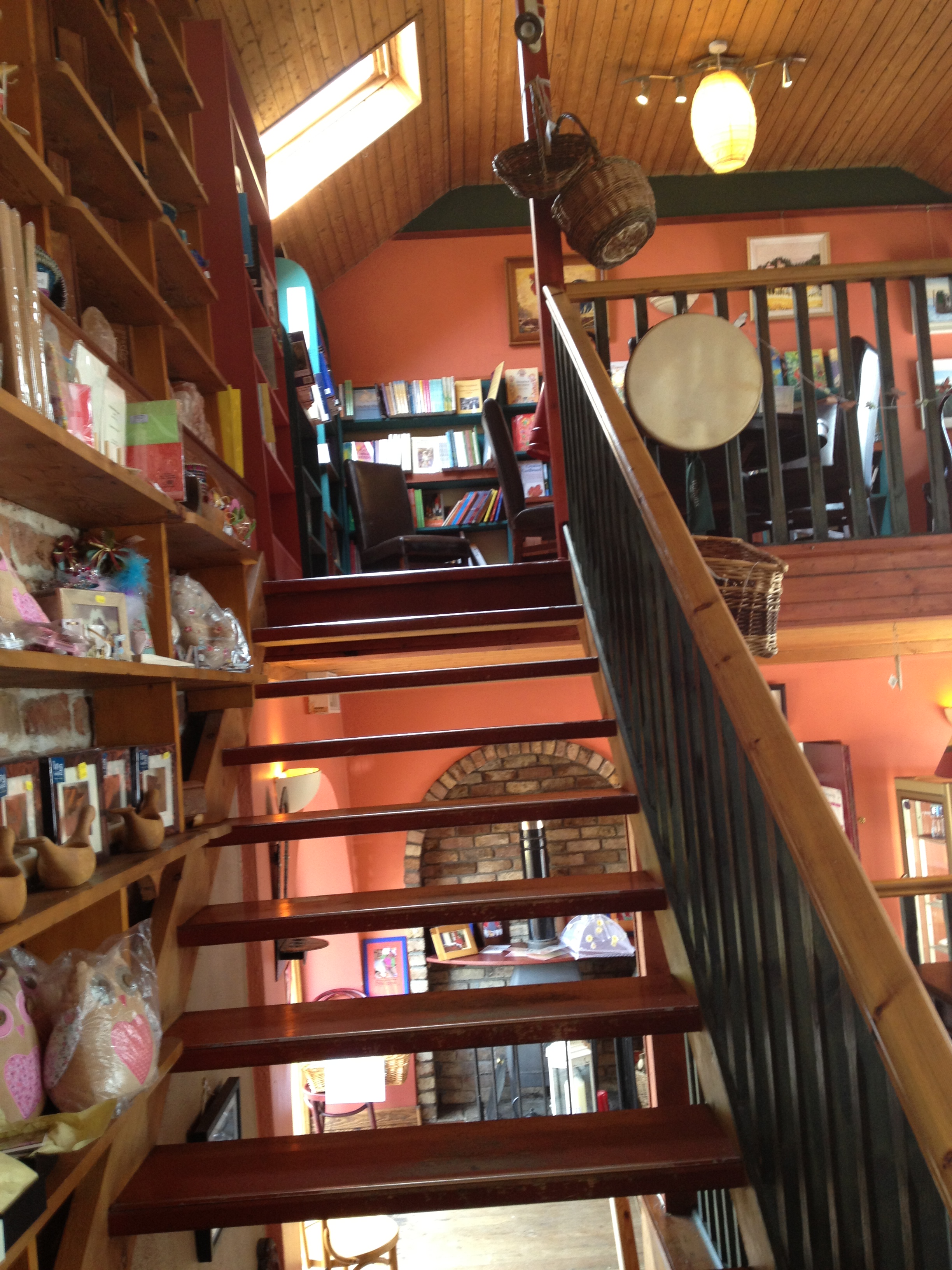
I had lunch yesterday in the coffee shop run by the Camphill Community  in the lovely village of Kilcullen, County Kildare, about 25 miles south of Dublin.  It was about 10 years since I was last  there  but I found it as inspiring and nourishing –  in every sense – as before.  The Camphill communities focus on creating meaningful and inclusive lives for people with intellectual disabilities and special needs, where everyone contributes at the level of their ability, and where the contribution of everyone is valued. As the Henri Nouwen quote this morning reminds us, our value resides more in what we are, even though we frequently seek it in what we do.

The apt name of the coffee shop is the Gaelic “An Tearmann” which means “Refuge” or “Sanctuary” and it raises funds that support the community living and working near Kilcullen as they work towards creating an environment for healing and development. I was struck by some words on the front of the menu, where they thanked visitors for their support in the creation of an “intentional community”. It reminded me that every moment, even lunch or a cup of coffee, can be made more intentional or conscious, and that we are challenged to reflect on the overall direction or intention of our lives, and what values our choices support.