In our darkest night

No seed ever sees the flower.

Zen saying

 November is the beginning of Winter in the Celtic Calendar and so today signals the beginning of the “darker half” of the year. The balance between light and darkness continues to shift. In the northern hemisphere the earth becomes colder and nature more dormant. Similar processes can occur in our lives. For example, we can choose to go with the rhythm of nature and become more reflective in this period, slowing down and simplifying things. Or our lives can have parts that seem dormant and not going anywhere. Or maybe difficulties are occurring which can seem dark and we see no escape.  However, darkness does not mean that nothing is happening.  I really like this saying from the Zen tradition – things that are now hidden or buried will eventually be seen or bear fruit.  That what is now just germinating will be full of life in time. As humans we like to see immediate results. However, for now, all we can do is wait and trust. Peace comes from knowing the right way to let go. 
Sunday Quote: Kindness

Modern society prizes intelligence, achievements or efficiency…

What wisdom can you find

that is greater than kindness?

Jean-Jacques Rousseau

Quelle sagesse trouverez-vous supérieure à la bonté?

We rush through the day, we miss so much

Another Autumn Saturday, two more poets.

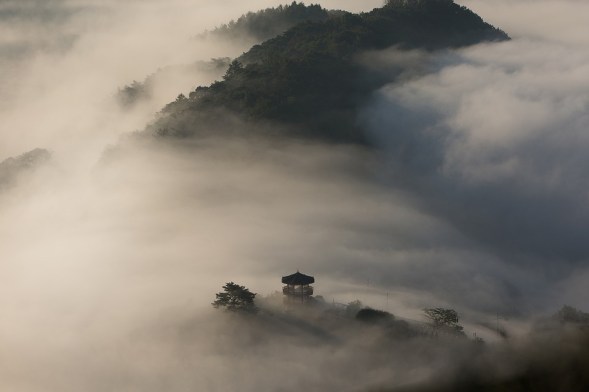
Very foggy all day yesterday, a good metaphor for how we live our lives sometimes. 

Sometimes the mountain
is hidden from me in veils
of cloud, sometimes
I am hidden from the mountain
in veils of inattention, apathy, fatigue,
when I forget or refuse to go
down to the shore or a few yards
up the road, on a clear day,
to reconfirm
that witnessing presence.

Denise Levertov, Witness. 

Instructions for living a life: Pay attention. Be astonished.

Mary Oliver, Sometimes      

The place from which all other parts are named


It is always a trauma for the human psyche when those elements it has over-invested itself in at the periphery of life are withdrawn, and the spring-like world of growth and opportunity seems to close down, as if the old currencies have become worthless while we as yet do not know how to value or harvest the following season. But this form of trauma has also been seen by many of our great religious, contemplative and artistic traditions as an invitation back to another kind of valuation, a return to a more internal focus, an opportunity to revive an old friendship with the place from which all the peripheries are recognized, priced and named. This internal, alchemical, almost catalytic core of identity-making and decision-making has long been associated with the soul of an individual; the part of us attempting to belong to the world in the biggest way it can; the part that witnesses our outer actions, stirs our conscience and quite often seems to be at odds with those other parts of us trying to game the system at the periphery.

David Whyte

Like a mirror

The perfect man employs his mind as a mirror;

it grasps nothing; it refuses nothing;

it receives, but does not keep.

Chuang-tzu, 4th Century BC

One world at a time

Satisfaction is very close and simple: the strange happiness of completely joining with whatever we are doing in that moment… When the writer Thoreau was on his deathbed, a visitor asked him – “from where you lie, so close to the brink of the dark river, can you say how the opposite shore looks to you?”

It is said that he replied gently, “One world at a time”

Susan Murphy, Upside Down Zen: Finding the Marvelous in the ordinary