Missing the view, now

The chief obstacle to our happiness is our concept of happiness. Above all we tend to think that certain conditions must be present for us to be happy. We think we cannot be happy until we meet certain life goals. All  of this future-orientated thinking, instead of making us happy, becomes a reason for us to be unhappy now. And if we aren’t happy now, the postponement of our happiness regresses into an infinitely receding future. We chase the horizon in endless anticipation and continual frustrations. We never get there, because we always hope to arrive there someday. It’s as if we are on a beautiful hiking trail, where there are spectacular mountains, lush meadows, cool streams, quiet lakes and beautiful trees, but we’re unhappy because we’re caught up in the concept that the view around the next corner will be better, while the one surrounding us is nothing at all.

Thomas Bien, The Buddha’s way of Happiness

Sunday Quote: The cure for unhappiness

There are people who are unhappy regardless of the work they do or the relationship they are in, and yet they continuously fool themselves into thinking that an external makeover will affect them internally.
Tal Ben-Shahar, Happier: Learn the Secrets to Daily Joy and Lasting Fulfillment

Made up of moments of choice

If I could live again my life,  In the next – I’ll try, – to make more mistakes, I won’t try to be so perfect,
I’ll be more relaxed,
I’ll be more full – than I am now,
In fact, I’ll take fewer things seriously,
I’ll be less hygienic, I’ll take more risks,
I’ll take more trips, I’ll watch more sunsets,
I’ll climb more mountains, I’ll swim more rivers,
I’ll go to more places – I’ve never been,
I’ll eat more ice creams and less (lime) beans,
I’ll have more real problems – and less imaginary
ones,
I was one of those people who live
prudent and prolific lives –
each minute of his life,
Of course that I had moments of joy – but,
if I could go back I’ll try to have only good moments,

If you don’t know – that’s what life is made of,
Don’t lose the now!

I was one of those who never goes anywhere
without a thermometer, without a hot-water bottle,
and without an umbrella and without a parachute,

If I could live again – I will travel light,
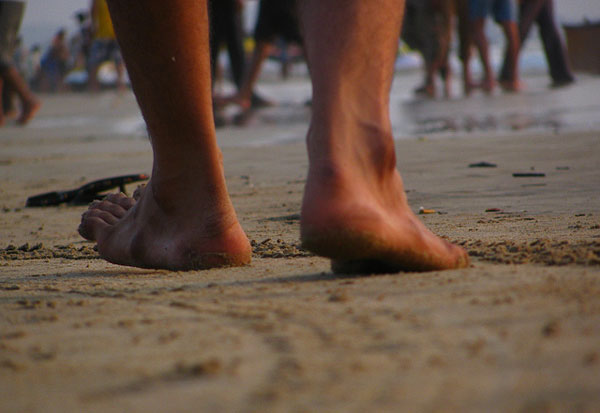
If I could live again – I’ll try to work bare feet
at the beginning of spring till the end of autumn,
I’ll ride more carts,
I’ll watch more sunrises and play with more children,
If I have the life to live – but now I am 85,
– and I know that I am dying …

Jorge Luis Borges, Instants

Doing nothing

There are times, then, when in order to keep ourselves in existence at all we simply have to sit back for a while and do nothing. And for a man who has let himself be drawn completely out of himself by his activity, nothing is more difficult than to sit still and rest, doing nothing at all. The very act of resting is the hardest and most courageous act he can perform: and often it is quite beyond his power. We must first recover the possession of our own being before we can act wisely or taste any experience in its human reality.

Thomas Merton

Allowing and letting go

We’ve never really accepted boredom as a conscious state. As soon as it comes into the mind we start looking for something interesting, something pleasant. But in meditation we’re allowing boredom to be. We’re allowing ourselves to be fully consciously bored, fully depressed, fed up, jealous, angry, disgusted. All the nasty unpleasant experiences of life that we have repressed out of consciousness and never really looked at, never really accepted, we begin to accept into conscious-ness not as personality problems any more, but just out of compassion. Out of kindness and wisdom we allow things to take their natural course to cessation, rather that just keep them going round in the same old cycles of habit. When we get used to looking through a dirty window everything seems grey, grimy and ugly. Meditation is a way of cleaning the window, purifying the mind, allowing things to come up into consciousness and letting them go.

Ajahn Sumedho,

Touching the pain of life

To live in the present demands an ongoing and unwavering commitment.  Over and over we feel the familiar tug of thoughts and reactions that take us away from the present moment. When we stop and listen, we can feel how each thing that we fear or crave (really two sides of the same dissatisfaction) propels us out of our hearts into a false idea of how we would like life to be. If we listen even more closely, we can feel how we have learned to sense ourselves as limited by that fear and identified with that craving. From this small sense of ourselves, we often believe that our own happiness can come only from possessing something or can be only at someone else’s expense. […]

To stop the war and come into the present is to discover a greatness of our own heart that can include the happiness of all beings as inseparable from our own. When we let ourselves feel the fear, the discontent, the difficulties we have always avoided, our heart softens. Just as it is a courageous act to face all the difficulties from which we have always run, it is also an act of compassion. According to (various) scriptures, compassion is the “quivering of the pure heart” when we have allowed ourselves to be touched by the pain of life. The knowledge that we can do this and survive helps us to awaken the greatness of our heart. With greatness of heart, we can sustain a presence in the midst of life’s suffering, in the midst of life’s fleeting impermanence. We can open to the world – its ten thousand joys and ten thousand sorrows.

Jack Kornfield, A Path With Heart