Responding or reacting

The two modes of living, Responsive and Reactive, are the foundation of human nature. We have no choice about the vital aims they serve – avoiding harms, approaching rewards, and attaching to others – nor about the brain’s capacity to be in either mode. Our only choice is which mode we’re in.

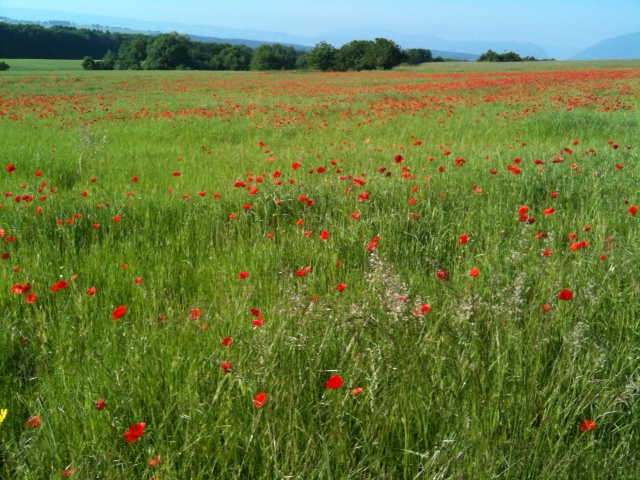
Happily, the Responsive mode is the resting state, the default, of body and mind. It’s what you return to when you’re not rattled. In the language of systems theory, the Responsive mode is the most fundamental “strange attractor” in the dynamic processes of your brain. Therefore, this mode is your underlying nature – not the Reactive one. You don’t have to scratch and claw your way to the mountaintop; if whatever is disturbing you comes to an end, you’ll soon come home to the lovely sunny meadow that has always been here – even if was hidden by the fogs and shadows of a troubled body or mind. Your deepest nature is peace not hatred, happiness not greed, love not heartache, and wisdom not confusion.

Rick Hanson

Showing up in our lives

One of the more difficult paradoxes to accept is that this abundance of gifts is always quietly present and that it is we who drift in and out of seeing it. The one recurring doorway to this vitality is our simple participation in life. When we slip into heartless watching, the abundance seems to vanish. When we dare to show up and be fully present, grace and wonder and mystery start to appear, even in the midst of pain. Not as planned dreams, or as images of lovers, or as scripts of success designed by our fantasies of ourselves. But as oddly shaped pods of vitality bursting to multiply and bring us further into the mystery of living.

Mark Nepo, The Exquisite Risk: Daring to Live an Authentic LIfe

Staying awake in difficult times

I am fascinated by what it takes to stay awake in difficult times. I marvel at what we all do in times of transition — how we resist, and how we surrender; how we stay stuck; and how we grow. Since my first major broken-open experience — my divorce — I have been an observer and a confidante of others as they engage with the forces of their own suffering. I have made note of how fiasco and failure visit each one of us, as if they were written into the job description of being human. I have seen people crumble in times of trouble, lose their spirit, and never fully recover. I have seen others protect themselves fiercely from any kind of change, until they are living a half-life, safe yet stunted. But I have also seen another way to deal with a fearful change or a painful loss. I call this other way the Phoenix Process — named for the mythical phoenix bird who remains awake through the fires of change, rises from the ashes of death, and is reborn into his most vibrant and enlightened self.

Elizabeth Lesser, Broken Open

Simple instructions for staying present

Remember to use your body as a vehicle for awakening. It can be as simple as staying mindful of your posture. You are probably sitting as you read this. What are the sensations in your body at this moment? When you…stand, feel the movements of standing, of walking to the next activity, of how you lie down at the end of the day. Be in your body as you move, as you reach for something, as you turn. It is as simple as that.

Joseph Goldstein, Insight Meditation

Not too tight, not too loose

[Once] the Buddha asked a musician how he tuned his instrument before playing. The musician said “If I tune the strings too tight they break. If I tune them too loose, no sound will come out. So not too tight and not too loose works best” To which the Buddha replied “This is how you should hold your mind in meditation”. It works the same way with fear. If we immediately begin busying ourselves with explanations, solutions and rationalizations, then we haven’ t allowed space for perspective to develop – we’ve responded with too much tightness. If we fail to look at what frightens us, if we blow it off or continually procrastinate about acknowledging our fears, we’re missing an opportunity for self-knowledge and skilful action.  This is too loose. Fear invariably makes us do one of two things in response to this uncertainty and unpredictability: Either we tighten up around it too quickly, and begin imposing structure and rules on something not as yet fully defined, or we pretend that what frightens us is no big deal. We stop paying attention and space out.

Susan Piver, How not to be Afraid of your Life

No criticism, no struggle

Mindfulness is first of all the ability to recognize what is happening in the present moment. It is a simple recognition – without judgment or criticism, without suppression or attachment. I breathe in and I am aware that the in-breath is here. I breathe out, and I am aware that the outbreath is here. There is no criticism or struggle. There is no effort to reject anything or grab on to it.

Thich Nhat Hahn, You are Here

Field of Poppies, May 28, 2012