Every moment gives an opportunity

There is no question that the real mindfulness teacher, and the real meditation practice, is life itself. Every moment is an opportunity to realign ourselves with the actuality of what is unfolding, however challenging or mundane, and thereby choose not lose ourselves in our interpretations and stories about what is going on. This is easier than you may think. It is also hugely liberating each time we make even a momentary gesture in that direction. And those moments, those conscious realigning gestures can add up to a different life, a more mindful and emotionally balanced life. Not only that: they can influence your future in ways that may be not only beneficial to you, but transformative. Because if you take care of this moment, now, with kindness and awareness, the next moment will be different because of your having taken care of this one, because of your gesture of sanity, trust, and balance.

Jon Kabat Zinn

Real Happiness

Authentic happiness is not linked to an activity; it is a state of being, a profound emotional balance struck by a subtle understanding of how the mind functions. While ordinary pleasures are produced by contact with pleasant objects and end when that contact is broken, sukha – lasting well-being – is felt so long as we remain in harmony with our inner nature.

Matthieu Ricard, Happiness

Being happy in our life

“Rejoice always.” 1 Thess 5:16

It is not fitting, when one is in God’s service, to have a gloomy face or a chilling look. – St. Francis of Assisi

Last Sunday was the third Sunday of Advent, which is known as Gaudete Sunday –  from the Latin word Gaudete, meaning “rejoice”. The season of Advent originally was a fast of forty days in preparation for Christmas, starting the day after the feast of St. Martin (12 November), and was called “St. Martin’s Lent” from as early as the fifth century. This Sunday was a break from the penitential atmosphere in that it focused on joy because the coming celebration was near. There seems to be a number of fundamental themes occurring in all cultures around this time of year, reflecting deep anthropological or archaic desires. One of them is the desire to keep hope and joy alive in the face of shortening days. We can see this theme expressed as hope, patience and looking forward in the Christian season,  due initially to the belief in the immanent return of Jesus. Nowadays the injunction becomes an inner wisdom, directing us to notice what is good and not stay with the mind’s habitual tendency to struggle and focus on what is negative. It also points us towards finding true contentment with how our life is actually at this moment. Practically this means that we cultivate the practice of joy, smiling at the beauty we see each day and being grateful for the good things we receive. Not taking ourselves too seriously, but keeping light and unforced,  is also a useful practice, as the Thich Nhat Hahn quote this morning said,  and as Chesterton reminds us here:

Angels can fly because they can take themselves lightly. This has been always the instinct of Christendom, and especially the instinct of Christian art. Remember how Fra Angelico represented all his angels, not only as birds, but almost as butterflies. Seriousness is not a virtue. It is really a natural trend or lapse into taking one’s self gravely, because it is the easiest thing to do. For solemnity flows out of men naturally; but laughter is a leap. It is easy to be heavy: hard to be light. Satan fell by the force of gravity.

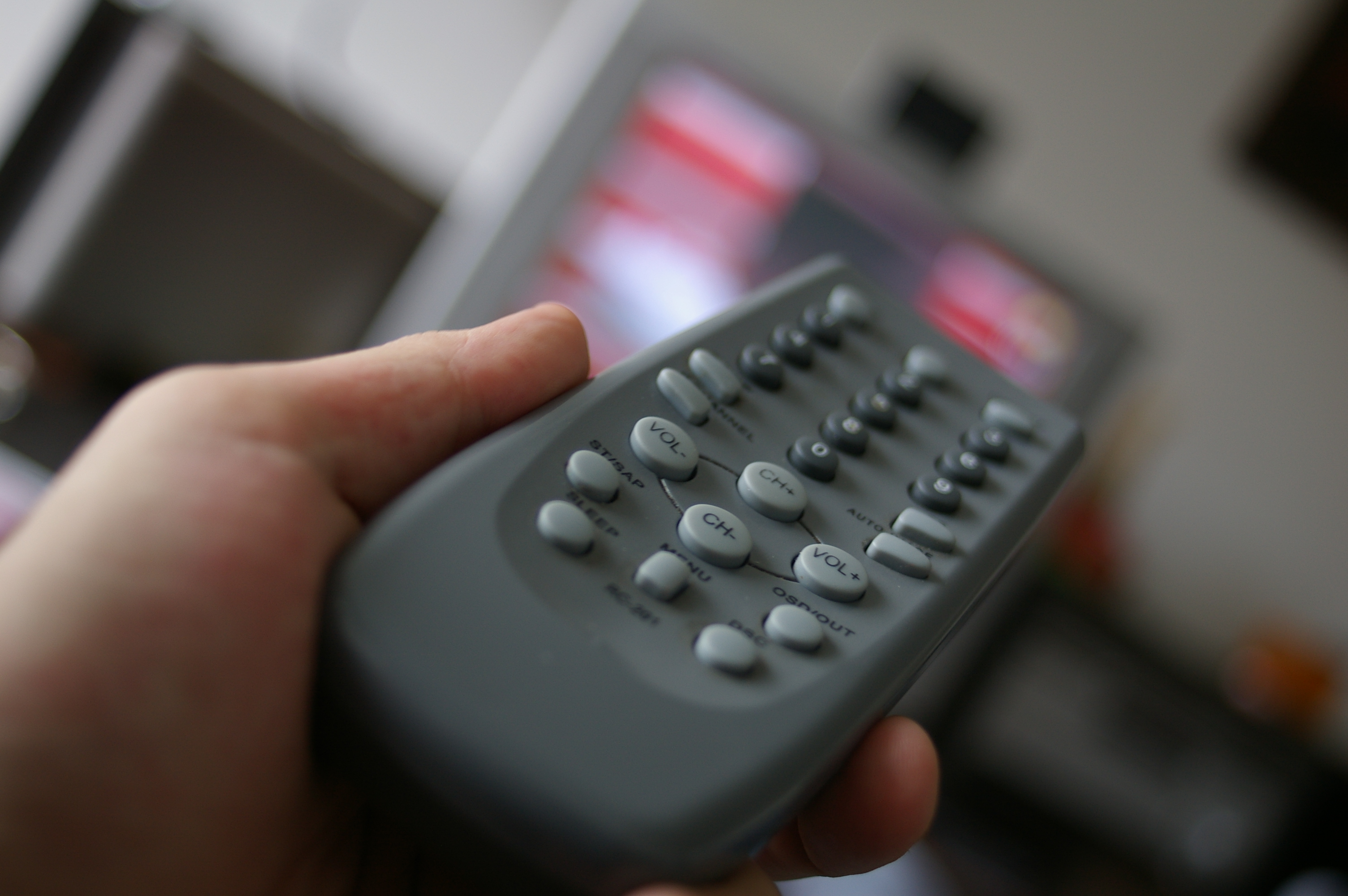
When meditation is like watching television

You have to learn the correct spirit of sitting. If you make a lot of effort when you sit, you become tense and that creates pain all over your body. Sitting should be pleasant. When you turn on the television in your living room, you can sit for hours without suffering. Yet when you sit for meditation, you suffer. Why? Because you struggle. You want to succeed in your meditation and so you fight. When you are watching television you don’t fight. You have to learn to sit without fighting . If you know how to sit like that, sitting is very pleasant. When Nelson Mandela visited France he was asked what he like to do the most. He said that because he was always busy, what he liked to do the most was just to sit and do nothing. Because to sit and do nothing is a pleasure – you restore yourself. The problem is not to sit or not to sit, but how to sit.

Thich Nhat Hahn, Be Beautiful, Be Yourself, Shambala Sun

Visualizing our day

What do you visualize before you start work? Do you imagine yourself managing the day successfully and calmly? Or do you anticipate all the stressful things that might come up an d how overwhelmed you’ll feel? Many of us tend to ruminate or catastrophize about the negative events we expect to happen at work. Maybe you worry about dealing with irate customers, dread making a phone call, or cringe at the prospect of hurting your back again. Regardless of whether or not these scenarios may happen or not, we often don’t imagine ourselves handling them very well. When we worry, we are prone to focus on how bad something will be, without doing any concrete problem solving or realizing that life will continue, even if this anticipated disaster occurs. Before work, rather than worry about the coming day…visualize in a positive way what will happen today. Imagine yourself having a nice day. If you’re likely to encounter obstacles or setbacks, visualize managing them well. Research shows that this kind of mental rehearsal improves later performance.

Jonathan S. Kaplan, Urban Mindfulness

Where we focus the mind


Sometimes a lot of our thoughts and feelings can be connected with what we do not have, or by what has been done to us. The mind seems to have a great desire to hold on to things or events,  and this is the same no matter if the experience is positive or negative. We can see this when we find ourselves remembering negative words spoken years ago, or encounter people holding decades-old grudges. If we focus on what we do not have, we frequently  compare our condition to other more “desirable” conditions.  And when we look at our life in terms of what did not work out for us, we can feel a deep sense of lack and go on to cultivate a profound sense of dissatisfaction. However, if we are spending ongoing time noticing what we have lost or do not have, rather than what we actually have, it is clear that, paradoxically, it is not truly lost, but is still present and recurring in a transformed form, to remind us or even haunt us with its presence. Meditation is essentially a practice of de-grasping- of working with a mind that likes to push away or hold onto reality – by patiently sitting with conditions as they actually are. 

Losing too is still ours;
and even forgetting still has a shape in the kingdom of transformation.

When something’s let go of, it circles;
and though we are rarely the center of the circle,
it draws around us its unbroken, marvelous curve.

Rilke, For Hans Carossa