Living your life in tune with all of life

To me this would be the best way to live — to situate yourself within your life in such a way as to feel that your own life was unfolding with the pattern of all of life. I suppose this might seem megalomaniacal, but I see it as quite humble. My life isn’t mine, it is just life living itself through me. I think, if you lived your life like that, then a lot of what bothers you wouldn’t bother you any more, and a lot of things that don’t bother you now would seem very important, very personal.

Norman Fischer

Making every thing new, each day

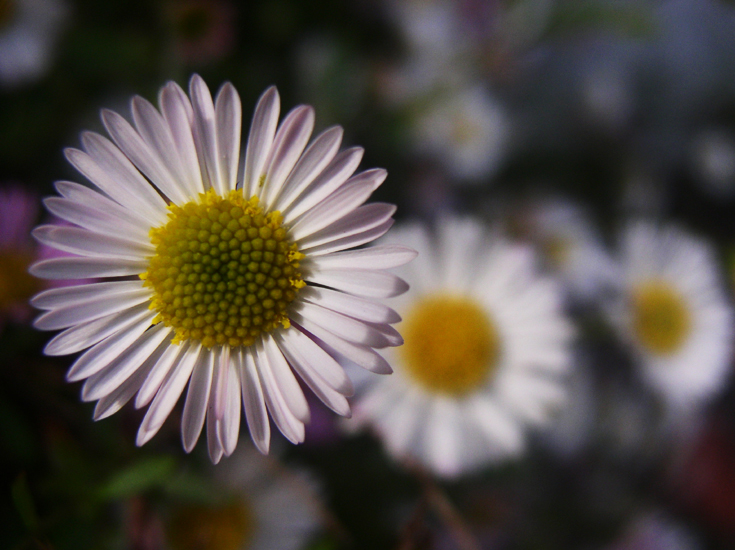
A child kicks its legs rhythmically through excess, not absence, of life. Because children have abounding vitality, because they are in spirit fierce and free, therefore they want things repeated and unchanged. They always say, Do it again; and the grown-up person does it again until he is nearly dead.  For grown-up people are not strong enough to exult in monotony. But God is strong enough… It is possible that God says every morning, Do it again, to the sun; and every evening, Do it again, to the moon. It may not be automatic necessity that makes all daisies alike: it may be that God makes every daisy separately, but has never got tired of making them. It may be that He has the eternal appetite of infancy; for we have sinned and grown old, and our Father is younger than we.

G.K. Chesterson


Where we are stuck

The process of practice is to see through, not to eliminate, anything to which we are attached. We could have great financial wealth and be unattached to it, or we might have nothing and be very attached to having nothing. Most practice gets caught in this area of fiddling with our environment or our minds. “My mind should be quiet.” Our mind doesn’t matter; what matters is nonattachment to the activities of the mind. And our emotions are harmless unless they dominate us (that is, if we are attached to them) — then they create disharmony for everyone. The first problem in practice is to see that we are attached. As we do consistent, patient practice we begin to know that we are nothing but attachments: they rule our lives.

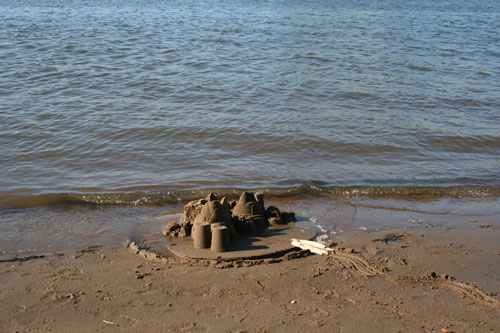
But we never lose an attachment by saying it has to go. Only as we gain awareness of its true nature does it quietly and imperceptibly wither away; like a sandcastle with waves rolling over, it just smoothes out and finally — where is it? What was it?

Charlotte Joko Beck, Everyday Zen

Becoming one who sees

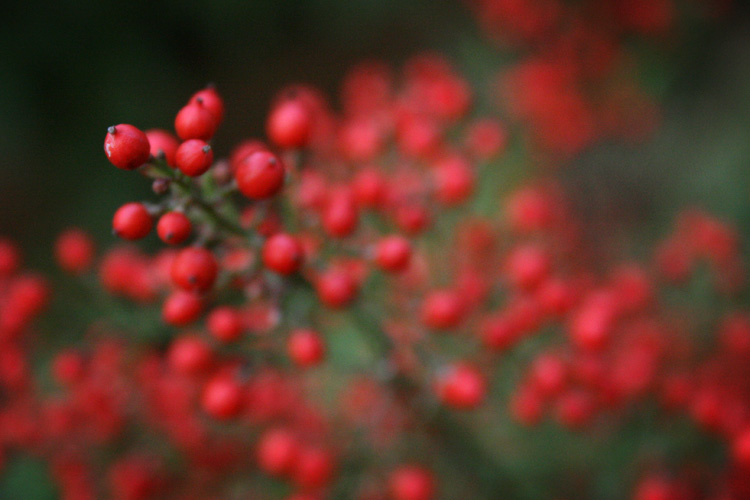
Despite the incredibly warm weather, the berries have appeared on the bushes in the garden. They reminded me of this quote,  and its encouragement to see into the heart of things, happening in each moment of the day. Sometimes we are just to preoccupied and hurried to notice.  We let life – and heaven – pass by,  unnoticed.

Earth’s crammed with heaven,
And every common bush afire with God:
But only he who sees, takes off his shoes…

Elizabeth Barrett Browning, Aurora Leigh


Noting, rather than reacting

Buddhadasa Bhikkhu said, “If there was to be a useful inscription to put on a medallion around your neck it would be ‘This is the way it is’.” This reflection helps us to contemplate: wherever we happen to be, whatever time and place, good or bad, ‘This is the way it is.’ It is a way of bringing an acceptance into our minds, a noting rather than a reaction.

The practice of meditation is reflecting on ‘the way it is’ in order to see the fears and desires which we create. This is quite a simple practice. Many methods of meditation are very very complicated with many stages and techniques – so one becomes addicted to complicated things.  However, the more simple we get, the more clear, profound and meaningful everything is to us.

So with the breath of the body, the weight of it, the posture of it, we are just witnessing and nothing, observing how it is, now, in this moment. The mood of the mind, whether we feel bright or dull, happy or unhappy, is something we can know – we can witness. And the empty mind, empty of the proliferations about oneself and others, is clarity. It’s intelligent, and compassionate. The more we really look into the habits we have developed, the more clear things become for us.

Ajahn Sumedho, The Way it is
Noticing what we see

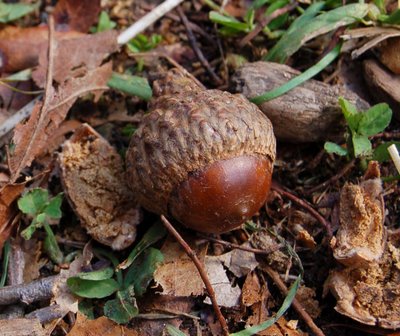
Another English writer to help us, maybe not as literary as Wordsworth, but just as insightful.

“Holmes you see everything!”  Watson exclaimed.

“I see no more than you,

but I have trained myself to notice what I see“, said Holmes.

Sir Arthur Conan Doyle, The Adventure of the Blanched Soldier