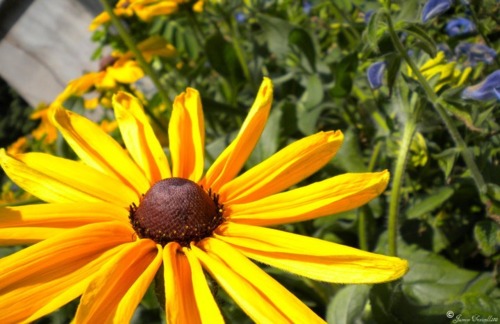
If we look at the world with a love of life,
the world will reveal its beauty to us.
Daisaku Ikeda
If we look at the world with a love of life,
the world will reveal its beauty to us.
Daisaku Ikeda

As strange as it sounds, meditation may reveal that we are happier than we thought we were. We may discover that ancient conditioning rather than present circumstances is causing our dissatisfaction, and that this moment is quite sufficient or even wonderful, and we simply hadn’t noticed.
Wes Nisker
 A huge change in the weather yesterday and today, and objectively it is much grayer here. However, had a number of meetings with people who reveal an inner light and a courage in the face of difficulties. It is love which brightens each day and the capacity to appreciate what we have, not wishing things be different.
We are put on earth a little space,
That we may learn to bear the beams of love.
William Blake

The art of living…is neither careless drifting on the one hand nor fearful clinging to the past….on the other. It consists in being sensitive to each moment, in regarding it as utterly new and unique, in having the mind open and wholly receptive.
Alan Watts, The Wisdon of Insecurity: A Message for an Age of Uncertainty
 Mindfulness practice allows us to create a more spacious mind when we’re actually involved in our walking-around activities. This gives us that ability to actually check-in with our subjective experience, instead of just reacting out of our subjective experience….. it actually kind of stops you in your tracks; and you can have this “holding” of your own experience where you can continue to experience without doing the verbal or nonverbal or emotional reactivity that people do place on each other. It allows you to be able to have your own experience; and then a bit of freedom to respond to whatever is going on.
So here’s a definition of mindfulness: it’s a strengthening of your concentration so that you can be more precise and clear in recognizing your experience. It’s also a strengthening of your equanimity — your ability to be relaxed and open in the face of your experience. The concentration part of mindfulness is a little like drinking a cup of coffee; it kind of wakes you up. It’s like the straight spine of arousal or awareness. The equanimity part is like the relaxed limbs of the body. The spine is straight, and the limbs are relaxed. This relaxation part is a receptivity and acceptance to things as they are. It’s a kind of “friendly audience” to your own experience; a sort of “Hello. Wow! OK.” attitude — a gentle, matter-of-fact awareness of your experience, rather than a reactive pulling back. All mindfulness practices cultivate both of those, the concentration and the equanimity, so that you can be clearer, more precise and more relaxed in the face of whatever is happening to you —whether it’s loud noises coming in from a jackhammer running in the next building, or a pain in your knee, or your emotions about your spouse.
Polly Young-Eisendrath
Meditation begins 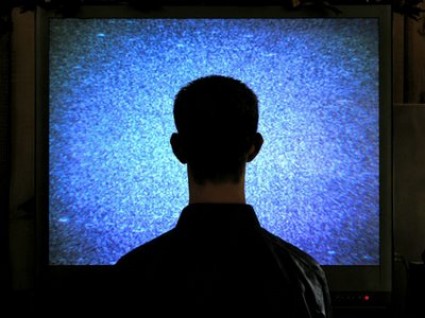 now, right here. If you wish to free yourself from the frantic television mind that runs our lives, begin with the intention to be present now. Nobody can bring awareness to your life but you.
Meditation is not a self-help program – a way to better ourselves so we can get what we want. Nor is it a way to relax before jumping back into busyness. It’s not something to do once in a while, either, whenever you happen to feel like it. Instead, meditation is a practice that saturates your life and in time can be brought into every activity. It is the transformation of mind from bondage to freedom. In practicing meditation, we go nowhere other than right here where we now stand, where we now sit, where we now live and breathe. In meditation we return to where we already are – this shifting, changing ever-present now.
Steve Hagen

