A mind like a child’s

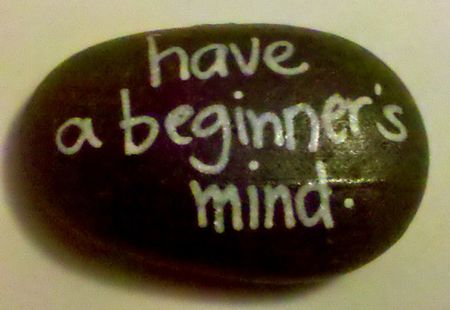
The quality of mind we are talking about……. is a mind which responds to something with attention and then returns to its own natural state. It doesn’t elaborate on it, doesn’t get caught up in it, doesn’t get excited about it. It just notes that this is what is happening. Every time it happens, it notes it. It doesn’t get blasé. It doesn’t become conditioned. In this way, it is like a child’s mind. When something interesting happens, it will note it and then let it go and move onto the next thing. This is what is meant by a childlike mind. It sees everything as if for the first time. It doesn’t have this whole backlog of preconditioned ideas about things. You see a glass and you see it as it is, rather than seeing all the other glasses you have seen in your life, together with your ideas and theories about glasses and whether you like glasses in this or that shape, or the kind of glass you drank out of yesterday. We are talking about a mind which sees the thing freshly in the moment. That’s the quality we are aiming for. We lose this as we become adults. We are trying to reproduce this fresh mind, which sees things without all this conditioning.

Tenzin Palmo, Reflections on a mountain lake: teachings on practical Buddhism

Following our heart

We must be willing to get rid of the life we’ve planned,

so as to have the life that is waiting for us.

Joseph Campbell

Remember this today

No matter what the situation

we are responsible  for our own mind states

Joseph Goldstein

Studying meditation and its effect on aging

A link to a report in yesterday’s Guardian newspaper about the effect meditation may have on genes and aging. It describes one of the largest pieces of research currently undergoing on the benefits of meditation.

http://www.guardian.co.uk/lifeandstyle/2011/apr/24/meditation-ageing-shamatha-project

Letting life flow

How can you follow the course
of your life
if you do not let it flow?

Lao Tzu

Opening to the soul in ordinary life

The three days of the Easter Festival contain a number of beautiful rituals  which have been celebrated  by human beings for thousands of years. These rituals  touch of the big themes of human life –  loss and death, betrayal and loyalty, meaning and love –  and do so in a way that  allow us ways to share significant emotions with others. The city of Geneva was quiet this morning, as it has been the last  few days.  It is good to have seasons and rhythms in our lives, periods of less activity with time to celebrate with family and friends.  These celebrations  can become familiar rituals in our lives – they bring us together and allow us to connect, and through connection find support and meaning. They open us up to something which is beyond the rush of each day and the limitations of work:

Ritual maintains the world’s holiness. Knowing that everything we do, no matter how simple, has a halo of imagination around it and can serve the soul enriches life and makes the things around us more precious, more worthy of our protection and care. As in a dream a small object may assume a significant meaning, so in a life that is animated with ritual there are no insignificant things. When traditional cultures carve elaborate faces and bodies on their chairs and tools, they are acknowledging the soul in ordinary things, as well as the fact that simple work is also ritual. When we stamp out our mass-made products with functionality blazoned on them but no sign of imagination, we are denying ritual a role in ordinary affairs. We are chasing away the soul that could animate our lives.

Thomas Moore, Care of the Soul