We chase after happiness: Bring the mind home today

We are fragmented into so many different aspects.

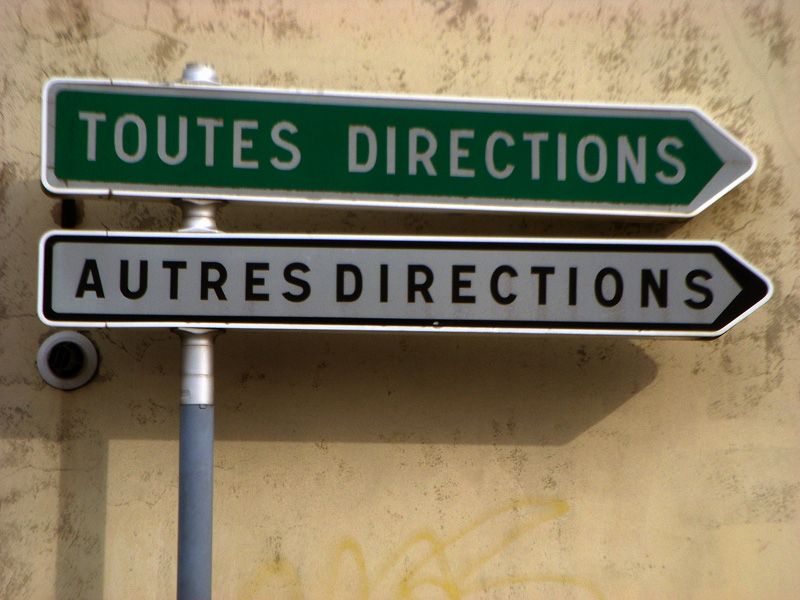
We don´t know who we really are, or what aspects of ourselves we should identify with or believe in. So many contradictory voices, dictates, and feelings fight for control over our inner lives that we find ourselves scattered everywhere, in all directions, leaving nobody at home.

Meditation, then, is bringing the mind home

Sogyal Rinpoche

Letting go of the outside search and turning within

Just as we tend to assume that the world is as we see it, we naively suppose that people are as we imagine them to be. Although the possibility of gross deception is infinitely greater here than in our perception of the physical world, we still go on naively projecting our own psychology into our fellow human beings. In this way everyone creates for himself a series of more or less imaginary relationships based essentially on projection.

C. G Jung

We can often feel divided and conflicted. We wish to integrate all the contrasting parts inside ourselves and develop a greater harmony within, a sense of direction that is solid and does not change from week to week. The first step in achieving this is to listen deeply to our own interior intelligence and find out what it is seeking.

Sometimes we notice that we are projecting onto others, or onto some outside  things,  the search for happiness which need to be anchored within first. We can see this  if we pay attention to our daydreams or our fears. It can happen that  an interior need becomes attached to another person or to our job or some plans and ambitions. In other words, we expect that the other person or the outside event fill in the missing parts of ourselves, rather than looking to do that work within ourselves first. We project the unconscious stage of our development onto another, and then act as if that person is what we imagine him or her to be. Frequently, however, the person is actually a mirror of our needs, which we have not yet come to recognize in ourselves. And as I have said before, our relationship with others reflects the current level of our relationship with ourselves.

It can be a great liberation to become aware that  our projections actually represent our interior unlived capacities. We turn within for what we sought outside, recognize our needs and hold them gently. We start to grow, because a part of us which was hidden is now coming to light. Sooner or later in life, we all have to come face to face with the question of who we really are. If we do not run away but  hold this question in ourselves, it can be the beginning of the greatest adventure in our lives. We can find the missing pieces inside ourselves, and in this way let go and move on to becoming whole.

……stop running


A traditional Jewish tale says: Rabbi Levi saw a man running in the street, and asked him, “Why do you run?” He replied, “I am running after my good fortune!” Rabbi Levi tells him, “Silly man, your good fortune has been trying to chase you, but you are running too
fast.”

Wayne Muller, Sabbath

Instead of trying to figure things out….

The practice of “letting go” is very effective for minds obsessed by compulsive thinking. You simplify your meditation practice down to just two words – letting go – rather than try to develop this practice and then develop that, and achieve this and go into that…. I did nothing but this for about two years – every time I tried to understand or figure things out, I’d say “let go, let go” until the desire would fade out. So I am making it very simple for you, to save you from getting caught in suffering.

Ajahn Sumedho

Why it is good to let go of the past

Just as a snake sheds its skin, so we should shed our past, over and over again

The Buddha

There is a lot of wisdom in this quote. From the moment we are conceived we are continually changing. However, this can produce anxiety, and we have a natural tendency to try and reduce this,  by stabilizing our life and looking for as much certainty as possible. We like to have identifiable projects and clear plans,  a coherent narrative, a life story that seems to make sense, at least to ourselves. So we create our own personal myth that will give us a unity and purpose in the world. And one of the difficulties of sitting in meditation just with present moment awareness is that we often prefer to go back to our story, replaying it again and again, believing it to be our life.

However, there may be alternative ways of working with life.  Our story is frequently selective, it emphasizes certain themes and ignores others. The mind has a negativity bias, and it often prefers to hold onto things that have gone wrong and which have been stored in our unconscious as worry and anxiety. Thus, it may be best to let those things go. Also when we have been hurt and let down it is good to discover the freedom that  comes from letting go. Practice draws attention to the fact that all things arise and pass away: all things are impermanent.  The past is not really happening any more, except in our minds. Our life is continually changing and it may be better to see our selves as a succession of selves and just rest in how we are, in this moment. We can drop the story, the continual commentary on how we are doing, the wondering how we measure up in terms of this myth we – or others – have crafted for us. It is good to move on.

This can save us from the tendency we have to compare.  We compare ourselves with versions of ourselves at other times – how we “should” be now –  or compare by noticing the loss of what we no longer have, such as youth, activities, friends, relationships. We also instinctively compare our stories to others or the dominant stories in society, which tell us what “success” or “happiness” should be. This can lead us to overlook the fact that happiness in life comes not from holding onto the past but by living in the present with appreciation. If we see this we resist the tendency to make things permanent – this always has to be so – and free ourselves to delight in life as it presents itself each day.

Most of our troubles are due to our passionate desire for and attachment to things that we misapprehend as enduring entities.

Dalai Lama
Stop the chatter in the mind


All we need to do is awaken to the here-and-now

– to stop jabbering to ourselves –

and be present in this moment.

Steve Hagen