Sunday Quote: Getting out in Nature

Perhaps the truth depends upon a walk around the lake.

Wallace Stevens


Reasons to be cheerful

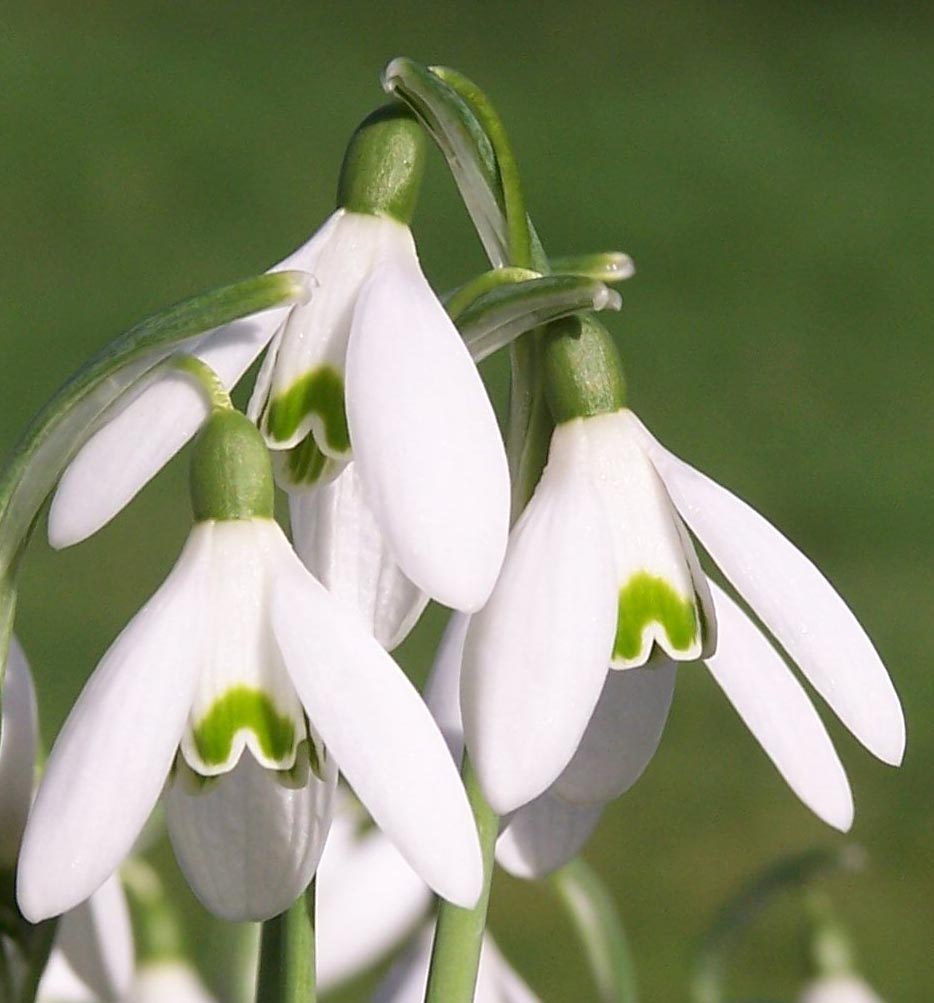
In this mild weather the first snowdrops are beginning to appear in the garden. I love the old legend about this flower. Adam and Eve were banished from the warmth and security of the Garden of Eden. They longed for the original sense of belonging and attunement which they once had. And then,  to make matters worse,  it became cold and started to snow. Eve began to cry, believing that she would never see  warmth and love again. Seeing this,  an angel felt sorry for her,   caught a snowflake in his hand, breathed on it, and when it hit the ground it turned into these delicate flowers. This beauty gave  her comfort and hope in the winter of her difficulties. Like Eve,  we all search for that original safety which we know deep down. We all need little signs to keep us going. We can look for them today.

Cheerfulness comes naturally with meditation. It is a quality of space created within the mind. When there’s space in the mind, the mind relaxes, and we feel a simple sense of delight. We experience the possibility of living a life in which we are not continuously aggravated by emotions, discursiveness, and concepts about the nature of things…. Despite all the ups and downs of our life, we are fundamentally awake individuals who have a natural ability to become compassionate and wise. Our nature is to be cheerful. This cheerfulness is deeper than temporary conditions. The day does not have to be sunny for us to be cheerful.

When we practice meditation, we are encouraging this natural state of cheerfulness. We don’t have to regard meditating as a somber activity; we can think of it as sitting there and being cheerful. We are using a technique to build clarity, strength, and flexibility of mind. In training our mind in pliability and power, we’re learning to relax, to loosen up, so that we can change our attitude on a dime. Strength of mind and pliancy are the causes and result of cheerfulness.

Sakyong Mipham Rinpoche

Seeing what really matters

From time to time we get glimpses of what really matters in this life.  Maybe  when we spend some time in silence,  or in being with others, or by the beauty of nature such as seeing the swans in a walk along the Lake today as echoed in this poem. If we allow those experiences inside us  they let us see what makes life worth living, what brings us joy.  We connect deeply and are filled with a sense of gratitude which stays with us forever. And even when they fly away and are out of sight, the wonder which they awoke stays in the heart.

Did you too see it, drifting, all night, on the black river? Did you see it in the morning, rising into the silvery air – An armful of white blossoms,
A perfect commotion of silk and linen as it leaned
into the bondage of its wings; a snowbank, a bank of lilies,
Biting the air with its black beak?
Did you hear it, fluting and whistling
A shrill dark music – like the rain pelting the trees – like a waterfall
Knifing down the black ledges?
And did you see it, finally, just under the clouds –
A white cross Streaming across the sky, its feet
Like black leaves, its wings Like the stretching light of the river?
And did you feel it, in your heart, how it pertained to everything?
And have you too finally figured out what beauty is for?
And have you changed your life?

Mary Oliver, The Swan

Working with things we wish were different

When meditating I use an App on my phone as a timer. When the timer elapses it rings a bell and a phrase appears on the screen. So for the last two years I have been greeted at the end of my practice by the words Anyone who understands impermanence ceases to be contentious.  By this time I know the words of this ancient phrase very well.  However, I realize there is a big difference between knowing the words and knowing this in reality. Sure, I know that things change, the seasons come and go, and mental states change frequently. But I still have a strong investment in things staying as they are. And so I struggle. And whenever we struggle with how life actually is we suffer to some extent.  So it seems to me that we really need to experience change in a very real and personal way in order to learn what it means to accept it as a fundamental principle of life. And sometimes  this is forced upon us when we lose something or someone dear to us, when we have to deal with  illness or when we are with someone who is close to death.

Sooner or later we all have to work with things in our life that we wish were different.  And distinguishing when to fight for something and when to let go is not always easy.  However, ther are times when we have to accept the message from others or from life that there is nothing we can do. When this is the case  we allow ourselves feel the sadness which these situations provoke because that is only natural and the pain is often substantial.   And then we try to do what  the wisdom traditions teach :  the best response to things that are beyond our control is to work at not struggling with them.  It is not an easy lesson to learn, and I find that this learning it is always ongoing. But it is the big challenge in this life, to become a knower of change and to let it teach us.

The wounds in our hearts

At some level we will always be afraid. And the world we live in is very competitive one, which means that we do not always feel secure enough to reveal our true selves. So there is a lot of loneliness in the world, despite modern advances in communication and networking. A great value is placed on  achievement and appearance, and  strength and competency are appreciated. We can get the same message in a different way in our families as we are growing up. Maybe a parent does not have the emotional space at that time in their life to provide a consistent response to our moments of neediness. So we can come to believe that our acceptance by others is based on us being competent or strong in some way, or by us doing something for them. Then as we grow we can get many experiences that confirm and reinforce this; we are disappointed and we pull back. We armour the heart.

And yet, deep within us, we long for someplace where we can feel completely accepted. We want to be in front of someone, not to have to do something to be welcomed. We want to let out the parts that we have hidden away. We look for someone who is attuned to us and who can see us in our brokenness without turning away. We especially wish for that person to be able to contain us when we come up against moments which we take as more proof that there is something wrong with us. And we approach situations or relationships with the deep-down hope that this time our needs will be held and met, rather than finding the same disappointment as before. At moments like that the other person becomes the place where our history and our unconscious needs are played out. We look for someone who will not disappoint us now.

What I am slowly learning in mindfulness practice, is that the way to work with my fears is not to try to fix them but to open a space around them first and allow them to be. As Pema Chodron says:  This is the primary method for working with painful situations….. We can stop struggling with what occurs and see its true face without calling it the enemy. It helps to remember that our practice is not about accomplishing anything—not about winning or losing—but about ceasing to struggle and relaxing as it is. That is what we are doing when we sit down to meditate. That attitude spreads into the rest of our lives. It’s like inviting what scares us to introduce itself and hang around for a while.

And what I have noticed is that people often find hardest at the start of mindfulness practice the idea of a non-judgmental attitude towards themselves, to stop beating themselves up when they find it hard to meditate. And frequently people say to me that the most difficult element in the loving-kindness practice is extending kindness towards themselves.

And it seems to me that is what is needed in relationships also. What we are seeking is someone who can accept us, hold us in our weakness and fears, allow us to be as we are.  Most people, myself included, have tried the alternate strategy, returning again and again to the wounds and fears deep inside them,  trying to “fix” them.  But what I find is that some wounds are slow to change and we have to accept that we will always have some trace of our deepest fears, of old patterns that can be triggered in new guises.  We will always be wounded in some way. What we seek in relationships is not someone who appreciates us in our strengths and achievements , but  someone who can hold the fears which we feel, without panicking or taking it personally. It is not necessary to heal the wounds, but simply to be able to look at them without turning away.
Sheltered from the wind

Experience follows intention. Wherever we are, whatever we do, all we need to do is recognize our thoughts, feelings, perceptions as something natural. Neither rejecting or accepting, we simply acknowledge the experience and let it pass. If we keep this up, we’ll eventually find ourselves becoming able to manage situations we once found painful, scary or sad. We’ll discover a sense of confidence that isn’t rooted in arrogance or pride. We’ll realize that we are always sheltered, always safe and always home.

Yongey Mingyur Rinpoche, The Joy of Living