Try a different approach: Don’t move on

The core issue is that we are not comfortable with life as it is – changing, with indistinct boundaries, not meeting our unrealistic expectation. As children most of us learn, from parents, relatives, peers, and caregivers, to want something else, such as external approval, the security of things that don’t change, only pleasurable experiences, or the self-satisfaction of always being in the right.

We are like the drug addict looking for an unending high. We don’t find it with one drug, so we try another drug, then another and another. The variations are wonderfully creative and endless. Looking for the perfect partner, job, community, or profession, can be the drug. Looking for the perfect spiritual teacher can also be the drug. We might hop from one to another, exuberant for a while, and then disappointed. We move on.

When we walk the path of mindfulness, we are encouraged to try a radically different approach. We calm our minds, we focus on the present moment, and we embrace what we find.

Pema Chodron

We grow our own future


The heart is like a garden.

It can grow compassion or fear, resentment or love.

What seeds will you plant there?

Buddha

….and endures all kinds of change

If we think of happiness as a way of being, as something that represents a state of flourishing, of fulfillment, of a well-being that endures through all events in life, even all different kinds of emotions and mental states, something that gives you the inner resources to deal with whatever comes your way—pleasant, unpleasant circumstances, helpful circumstances, adverse circumstances—something that gives you some kind of platform or way of being that’s behind all that, and that gives you the resources to deal with all that.

Matthieu Ricard

Happiness is already here…..

An interesting quote. Sometimes we look in all kinds of places for our happiness – a new relationship, a better car, a holiday, other people, a more prestigious job. However most research and practice shows that very little of happiness is due to changes in external circumstances, or getting the world to be as we think it should be. These things change all the time,  and even when we think we have gotten the mix right, and feel we are in control,  it is often a short-lived illusion. Rather, happiness  is a skill,  or a group of skills, that we can cultivate, based on a source of natural goodness already within us, with which we approach both good and bad in life as they arise and pass away before us. Looking for happiness creates a duality which is not always helpful. Always focusing outside of ourselves means that we do not often realize what we already have, and fail to live in this moment, as we work to change ourselves and our circumstances to “improve” them and ourselves.

I wish to draw attention to the following problem:

the idea of happiness presupposes that at present we are unhappy.

Kosho Uchiyama Roshi

Developing a more cheerful mind

Cheerfulness comes naturally with meditation. It is a quality of space created within the mind. When there’s space in the mind, the mind relaxes, and we feel a simple sense of delight. We experience the possibility of living a life in which we aren’t continuously bombarded by emotions, discursiveness and concepts about the nature of things. Lack of genuine cheerfulness is a result of claustrophobia in our mind and heart. There is simply too much going on; we feel overwhelmed and speedy. We were somehow under the impression that life was meant to be happy, and now we’re getting the short end of the stick. The harder we try to contort reality into our fantasy of happiness, the less happy we are, and the more chaotic our mind seems.

We can depend on random experiences to remind us of these truths, or we can go about it in a systematic way by engaging in a daily meditation practice. When we practice meditation, we are encouraging this natural state of cheerfulness. We don’t have to regard meditating as a somber activity; we can think of it as sitting there and being cheerful. We are using a technique to build clarity, strength and flexibility of mind. In training our mind in pliability and power, we’re learning to relax, to loosen up, so that we can change our attitude on a dime.

Sakyong Mipham Rinpoche

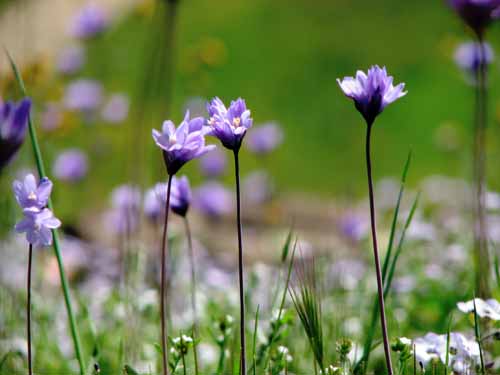
Practice for this day: Noticing beauty around us


Beauty and grace are performed

whether or not we will or sense them.

The least we can do is try to be there.

Annie Dillard