Trusting in your own goodness

We should find perfect existence through imperfect existence. Suzuki

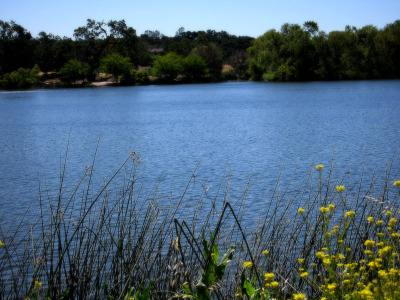
Was out walking this afternoon in the lovely mild sunshine. Saw the beginnings of growth after this strange short winter, and a farmer working at ploughing her field. Got me reflecting on the conditions that are needed for us to feel safe and grow. There is no such thing as a typical winter; just the winter we have had. We cannot oblige the seasons to start and end exactly when we want. And as Winnicott said, when we were young,  the conditions did not have to be perfect, just “good enough”. There just had to be enough security to allow us to be, before rushing us into doing. Parents just have to do their best  and then the basic good conditions that allow love to grow take over. We just have to trust that this is the case.

If we do not trust,  then we  doubt our fundamental goodness and begin to push too hard or not do enough.  The seeds may get laid down in infancy if a parent does not have an  interior space or is confused in his or her signals. This can leave the young psyches having to do too much, too early, leading to us being “caught up in a false self and a compulsive cycle of “doing” to conceal the absence of “being”. In the adult ironically this  lack of trust in being can manifest as the tendency to try to do more, to be perfect, to always give more.  I see that I can get caught in this believed thought, seeking my security there. Then if something goes wrong I feel that is due to the fact that I did not do enough. A lot of energy goes into this self-judgment because it is dealing with material that is laid down very early in life.

The best way to work with this is to sit in silence, to nourish “fundamental trust”.   There we return to just being and find contentment with that, no matter what the inner critical voice says. We do this in meditation. But we also  have to do it in our relationships with others. One does not have to be perfect in relationships, no matter how others may expect us to be.  There too, being is more important than doing : one just has to be present.  We should not wait for the moment to be “perfect” to reach out and do something for others. This moment is good enough. What is needed is trust in the present moment, in reality, which becomes the most important “holding environment” for us. Trust means that we accept  that things just happen in certain ways and are not due to personal failings on our side.  And then we work with the moment as it is. It can be imperfect, but it is where we grow, even if we would prefer it to be otherwise.

In order to communicate very openly with the world, you need to develop fundamental trust. This kind of trust is not trusting“in”something, but simply trusting. It is very much like your breath. You do not consciously hold on to your breath, or trust in your breath, yet breathing is your very nature. In the same way, to be trusting is your very nature. To be trusting means you are fundamentally free from doubt about your goodness and about the goodness of others.

Dr. Jeremy Hayward

A rule of life

Shall we make a new rule of life from tonight:

always try to be a little kinder than is necessary.

J.M. Barrie

More on Mind-Body medicine: Meditation’s effect on the brain

This study on the effects of the MBSR Course on the Brain, is getting a lot of attention. I posted about it last week already. Here is a link, which Carol sent me,  to a very nice piece in the New York Times. It summarizes well the current debate about the effects of meditation on the brain and health and links to some hard data in the area of mind-body medicine.

http://well.blogs.nytimes.com/2011/01/28/how-meditation-may-change-the-brain/

The goodness in life

It is a beautiful morning here, and as I said, being Irish, the Spring season has already started for me.  This Mary Oliver poem captures the day perfectly. It shows how attention to what is present in any moment, especially in the beauty of nature, and having the space to taste and hear it, leads to a deep joy in life. It is not always possible with the troubles and hassles of work, so we should take her advice: Go outside and just look, listen. Life is good.


It was spring
and finally I heard him
among the first leaves—
then I saw him clutching the limb

in an island of shade with his red-brown feathers
all trim and neat for the new year.
First, I stood still

and thought of nothing.
Then I began to listen.
Then I was filled with gladness—
and that’s when it happened,

when I seemed to float, to be, myself, a wing or a tree—
and I began to understand
what the bird was saying,

and the sands in the glass stopped
for a pure white moment
while gravity sprinkled upward

like rain, rising,
and in fact
it became difficult to tell just what it was that was singing—
it was the thrush for sure, but it seemed

not a single thrush, but himself, and all his brothers,
and also the trees around them,
as well as the gliding, long-tailed clouds
in the perfectly blue sky— all, all of them

were singing.
And, of course, yes, so it seemed, so was I.
Such soft and solemn and perfect music doesn’t last

for more than a few moments.
It’s one of those magical places wise people like to talk about.
One of the things they say about it, that is true,

is that, once you’ve been there, you’re there forever.
Listen, everyone has a chance.
Is it spring, is it morning?

Are there trees near you,
and does your own soul need comforting?
Quick, then— open the door and fly on your heavy feet; the song
may already be drifting away.

Mary Oliver, Such Singing in the Wild Branches

How to bring light into the dark places within us

In the Christian Calendar today is the feast of Candlemas. While not as old as the Celtic feast of yesterday, it does date from the 4th Century in Jerusalem, and reflects the same need to mark this period of winter with light and hope. Traditionally it was celebrated by a procession of candles and the blessing of candles for use in the home.

From time to time difficulties occur in our lives which can then seem dark and without hope. Bringing awareness to what is going on inside us at those moments can allow light to shine in the darkness. We sit and observe  what arises and passes away in the mind and body. We  name it – “there is anger“, “there is fear” – thus creating a gap and allowing what we experience to become something known. In this way, our mood and behaviour will not be shaped entirely by invisible, unconscious conditioning, but can become a more reflective response.

When we meditate, we kindle a fire that never dies away.

When we meditate, we’re not idly passing time. In following the breath and learning to deal with our thoughts, we’re laying the foundation for a shift in attitude that has the power to change our lives in a truly meaningful way. There’s a lot of darkness and aggression in our world. Developing our best qualities has an immediate effect on ourselves and others. When we apply ourselves in practice, we’re not only doing something very present; we’re also creating the conditions for how our lives can move forward.

Sakyong Mipham Rinpoche

Sunday Quote: Getting out in Nature

Perhaps the truth depends upon a walk around the lake.

Wallace Stevens