Reasons to be cheerful

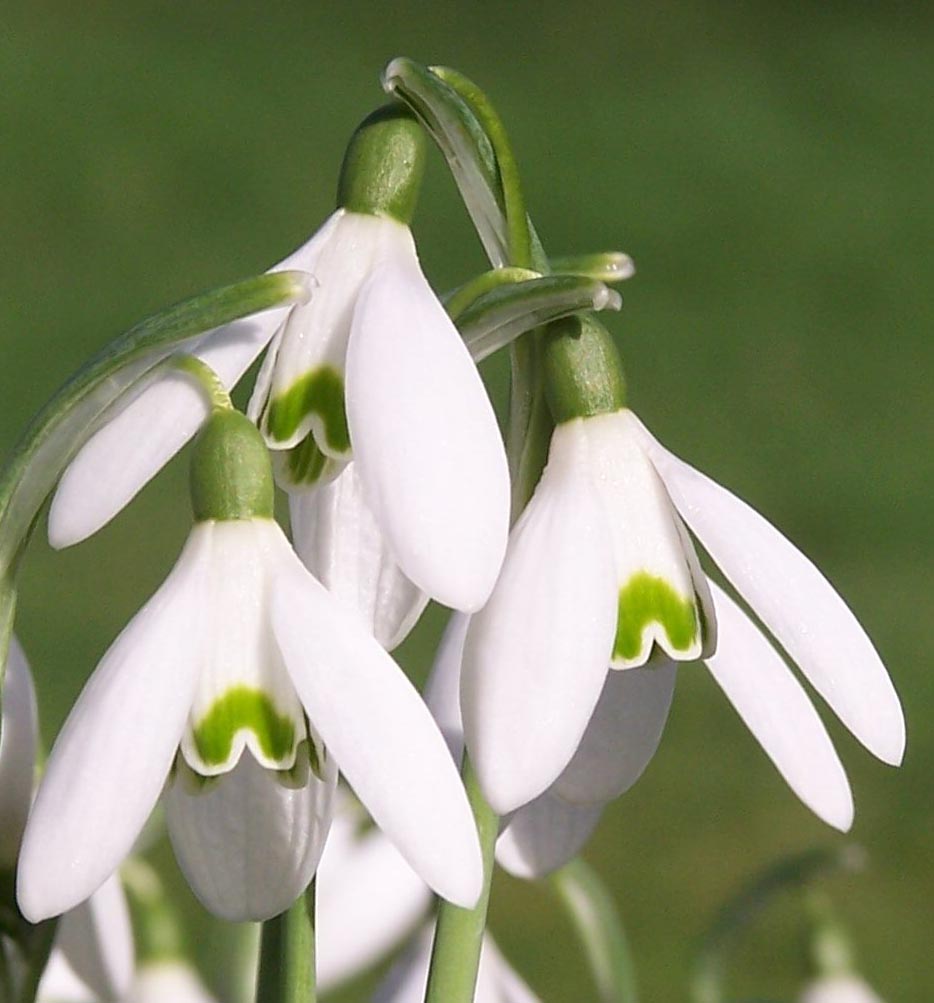
In this mild weather the first snowdrops are beginning to appear in the garden. I love the old legend about this flower. Adam and Eve were banished from the warmth and security of the Garden of Eden. They longed for the original sense of belonging and attunement which they once had. And then,  to make matters worse,  it became cold and started to snow. Eve began to cry, believing that she would never see  warmth and love again. Seeing this,  an angel felt sorry for her,   caught a snowflake in his hand, breathed on it, and when it hit the ground it turned into these delicate flowers. This beauty gave  her comfort and hope in the winter of her difficulties. Like Eve,  we all search for that original safety which we know deep down. We all need little signs to keep us going. We can look for them today.

Cheerfulness comes naturally with meditation. It is a quality of space created within the mind. When there’s space in the mind, the mind relaxes, and we feel a simple sense of delight. We experience the possibility of living a life in which we are not continuously aggravated by emotions, discursiveness, and concepts about the nature of things…. Despite all the ups and downs of our life, we are fundamentally awake individuals who have a natural ability to become compassionate and wise. Our nature is to be cheerful. This cheerfulness is deeper than temporary conditions. The day does not have to be sunny for us to be cheerful.

When we practice meditation, we are encouraging this natural state of cheerfulness. We don’t have to regard meditating as a somber activity; we can think of it as sitting there and being cheerful. We are using a technique to build clarity, strength, and flexibility of mind. In training our mind in pliability and power, we’re learning to relax, to loosen up, so that we can change our attitude on a dime. Strength of mind and pliancy are the causes and result of cheerfulness.

Sakyong Mipham Rinpoche

Seeing what really matters

From time to time we get glimpses of what really matters in this life.  Maybe  when we spend some time in silence,  or in being with others, or by the beauty of nature such as seeing the swans in a walk along the Lake today as echoed in this poem. If we allow those experiences inside us  they let us see what makes life worth living, what brings us joy.  We connect deeply and are filled with a sense of gratitude which stays with us forever. And even when they fly away and are out of sight, the wonder which they awoke stays in the heart.

Did you too see it, drifting, all night, on the black river? Did you see it in the morning, rising into the silvery air – An armful of white blossoms,
A perfect commotion of silk and linen as it leaned
into the bondage of its wings; a snowbank, a bank of lilies,
Biting the air with its black beak?
Did you hear it, fluting and whistling
A shrill dark music – like the rain pelting the trees – like a waterfall
Knifing down the black ledges?
And did you see it, finally, just under the clouds –
A white cross Streaming across the sky, its feet
Like black leaves, its wings Like the stretching light of the river?
And did you feel it, in your heart, how it pertained to everything?
And have you too finally figured out what beauty is for?
And have you changed your life?

Mary Oliver, The Swan

On how to turn the mind into a friend

Learning to be present for the moment is the beginning. By sitting still and training the mind to be with the breath, we begin to relax our discursiveness. We see how the mind creates our solid sense of self and begin to discover the mind’s natural state of being. With this experience we can being to cultivate our garden. The flowers of love compassion and wisdom gradually take over, and the weeds of anger,  jealousy and self-involvement have less and less room to grow. In peaceful abiding we become familiar with the ground of basic goodness. This is how we turn the mind into an ally.

Sakyong Mipham,  Turning the Mind into an Ally

Sheltered from the wind

Experience follows intention. Wherever we are, whatever we do, all we need to do is recognize our thoughts, feelings, perceptions as something natural. Neither rejecting or accepting, we simply acknowledge the experience and let it pass. If we keep this up, we’ll eventually find ourselves becoming able to manage situations we once found painful, scary or sad. We’ll discover a sense of confidence that isn’t rooted in arrogance or pride. We’ll realize that we are always sheltered, always safe and always home.

Yongey Mingyur Rinpoche, The Joy of Living

When your day is blue, or grey, look for red

The snow returned briefly yesterday, and today there is a bitter north wind.  When times are grey or cold, or if our mood is blue (as this week is purported to be) we need to consciously notice the moments of colour and warmth in our lives, explicitly savouring them a little longer. We have to let positive facts become positive experiences. Just as   Mary Oliver does when she pays attention to the red bird in this poem. What were  or are the moments of colour in your day today that you can be grateful for? Who or what brought warmth? Allow yourself  to feel good if you achieve something  however small,  if someone smiles or if you notice a good quality in yourself. As studies have shown, the more you take in the good in little details, the more your brain tilts towards the positive in an overall sense.

Still, for whatever reason —
perhaps because the winter is so long
and the sky so black-blue,

or perhaps because the heart narrows
as often as it opens —
I am glad

that red bird comes all winter,
firing up the landscape
as nothing else can do.

Work with your day as it is

To practice we must see exactly where we are. Of course we can always imagine perfect conditions, how it should be ideally, how everyone else should behave. But it’s not our task to create an ideal. It’s our task to see how it is and to learn from the world as it is. For the awakening of the heart, conditions are always good enough.

Ajahn Sumedho