Abba Poemen said about Abba Pior
that every single day he made a fresh beginning.
Abba Poemen (c. 340–450) was an Egyptian monk and one of the early Desert Fathers
Abba Poemen said about Abba Pior
that every single day he made a fresh beginning.
Abba Poemen (c. 340–450) was an Egyptian monk and one of the early Desert Fathers

“Let everything happen to you: beauty and terror.
Just keep going. No feeling is final.”
Rainer Maria Rilke, Beauty and Terror
I was intrigued reading over these words, just this morning as I sat watching my faithful pup breathe out a most-contented sigh : It’s as if in these short moments, simple flecks of time, he is able to surrender fully to all of life and that which life brings us. And just by breathing in…he settles in.
A friend joked the other day that he and his dog both suffered the troubles of a “5 minute memory”…as if, this was such a very bad thing. But, perhaps that is the trick of it, isn’t it? To allow things to sit, for only just a little bit — and then bid them farewell as they slip away into another day.
“No feeling is ever final.” Too often, we find ourselves struggling to hold onto happiness — fearing it forever lost in the wash of emotions that life carries with it. And we are left to wonder, how we may embrace the absolute richness of this life when we ourselves appear to weaken. How do we create a happiness that is big enough to experience all of these moments — the fear, the pain, the heartache and sorrow, and that will also allow for continuous gratitude, as well?
It’s this very impermanence that creates a space of ‘fully living.’ So, my dears, instead of worrying so very much over ‘what might have been’… “ flare up like a flame and make big shadows” .. for true happiness to settle in.
Pema Chodron, Finding Happiness Amongst Uncertainty
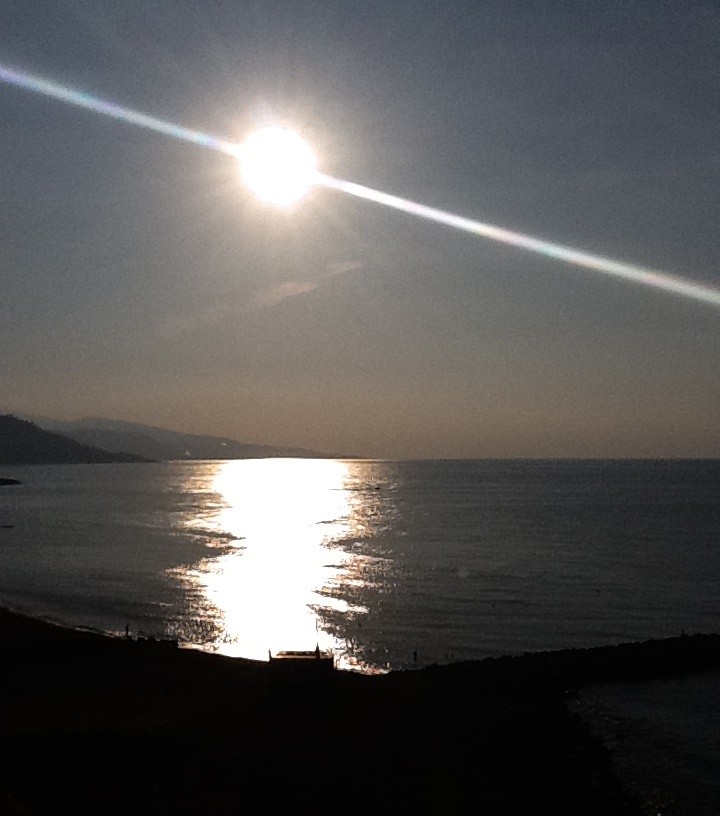
photo eugene0126jp

Many of us don’t allow ourselves to be relaxed. Why do we always try to run and run, even while having our breakfast, while having our lunch, while walking, while sitting? There’s something pushing and pulling us all the time. We make ourselves busy in the hopes of having happiness in the future. In the sutra “Knowing the Better Way to Live Alone,” the Buddha said clearly, “Don’t get caught in the past, because the past is gone. Don’t get upset about the future, because the future is not yet here. There is only one moment for you to be alive, and that is the present moment. Go back to the present moment and live this moment deeply, and you’ll be free.”
Thich Nhat Hanh, The Moment is perfect

Four Rules For Life
Show up.
Pay attention.
Tell the truth.
Don’t be attached to the results.
Angeles Arrien, 1940 – April 24, 2014
 Yesterday saw huge winds hit Ireland and England, causing power cuts and fallen trees, and a lot of disruption to travel. This winter has seen a series of storm systems pass over, some more violent than others, each one disrupting routines and delusions of stability. In a similar way, despite our best efforts to stay constant, our moods can go up and down – sometimes as frequently as the weather – and certainly emotions can appear unexpectedly over which we have little control. We have successes that we work for and yet also have things happen that we did not see coming and cannot understand. Life brings its own troubles and there is no need to go looking for them. Chögyam Trungpa Rinpoche once repeated an old teaching which said that there is no cure for hot and cold. He meant that in our lives we can have periods of good things and bad, things go well but we have self-doubt, we are confident but find ourselves anxious. And in our minds we have a succession of thoughts and emotions, good intentions and petty thoughts, kindness followed by self-seeking aspirations. He reminded us that this is the human condition and also the normal nature of the human mind. As Pema Chodron says in her commentary on this phrase, There is no cure for the facts of life. If we do not struggle with this fact, relaxing into life as it is, we not only can stop the complaining that goes on in our mind, but also be pleasantly surprised by what each new day blows into our lives.
The way to dissolve our resistance to life is to meet it face to face. When we feel resentment because the room is too hot, we could meet the heat and feel its fieriness and its heaviness. When we feel resentment because the room is too cold, we could meet the cold and feel its iciness and its bite. When we want to complain about the rain, we could feel its wetness instead. When we worry because the wind is shaking our windows, we could meet the wind and hear its sound. Cutting our expectations for a cure is a gift we can give ourselves. There is no cure for hot and cold. They will go on forever.
Pema Chodron

Last evening it snowed here in Ireland. Not a real fall of snow such as you would see in Switzerland but enough to stick on the ground for a while and prompt thoughts of having to travel to work in more difficult circumstances, of getting stuck by bad roads. It does not take much sometimes for the mind to feel trapped and blocked, not seeing a way out. And frequently thoughts shift to ones of blame as we feel we should be stronger and able to dig ourselves out of the difficulty we are in, However, strange as it seems, getting out of narrow places sometimes requires that we accept that we are stuck. Most blocks come from fear; getting out requires that shift our relationship towards it .
What shuts down the heart more than anything is not letting ourselves have our own experience, but instead judging it, criticizing it, or trying to make it different from what it is. We often imagine there is something wrong with us if we feel angry, needy and dependent, lonely, confused, sad, or scared. We place conditions on ourselves and our experience: “If I feel like this, there must be something wrong with me… I can only accept myself if my experience conforms to my standard of how I should be.”
Meditation cultivates unconditional friendliness through teaching you how to just be—without doing anything, without holding onto anything, and without trying to think good thoughts, get rid of bad thoughts, or achieve a pure state of mind. This is a radical practice. There is nothing else like it. Normally we do everything we can to avoid just being. When left alone with ourselves, without a project to occupy us, we become nervous. We start judging ourselves or thinking about what we should be doing or feeling. We start putting conditions on ourselves, trying to arrange our experience so that it measures up to our inner standards. Since this inner struggle is so painful, we are always looking for something to distract us from being with ourselves.
In meditation practice, you work directly with your confused mind-states, without waging crusades against any aspect of your experience. You let all your tendencies arise, without trying to screen anything out, manipulate experience in any way, or measure up to any ideal standard. Allowing yourself the space to be as you are—letting whatever arises arise, without fixation on it, and coming back to simple presence—this is perhaps the most loving and compassionate way you can treat yourself. It helps you make friends with the whole range of your experience.
John Welwood
photo kenneth allen
 Mindfulbalance