Stories 2: How the past defines us

More on story and myth, this time from an excellent recently-published Buddhist perspective:

The Buddha taught that,  over time, the unobserved thought settles into character. Character is more than our temperament and personality; it is the fundamental way we see life, including our suppositions, ideas and views of who we are and what life is. When we look out of our eyes we see what we have been conditioned to see, and part of that conditioning is the assumed reality of the person who is having the experience.

Character is reinforced through our narrative, the ongoing story of “me”. We confirm our current reality through the recollection of how we have always been. For instance, if we have assumed a victim mentality from our past, we may have a predisposition to overcompensate and react strongly when we are imposed upon. Our personal narrative reveals our strengths and limitations, and engenders a self-attitude. As our story moves on, each chapter predisposes “me” to behave in a certain way, and though this proliferating tendency was never specified in our early history, the ongoing story gets captured within its momentum.

Rodney Smith, Stepping out of Self-Deception

Stories 1: The Myths that sustain us

We are always guided by some myths, whether we are aware of it or not. From an early age we gather the elements which will come together as our personal myth. In our first relationships of love we get the attitudes and information which will determine the story we tell ourselves about the trustfulness of others. In this way,  our basic sense of self is consolidated in the first two or three years of life.

Dan McAdams*, Professor of Psychology and Professor of Human Development and Social Policy at Northwestern University, has studied the stories which we tell ourselves as we make our way through life. He says that we have already by age three established a narrative tone, which lasts with us into adulthood. This narrative tone can be optimistic, stating that the world is trustworthy, predictable, knowable and good, or it can be pessimistic, believing that the world is unpredictable and unsafe, and that stories will end up with unhappy endings. Thus, as yesterdays post said, deep down we see life as fundamentally friendly or as frightening. This narrative tone is the most pervasive element underlying  the personal myth which we use to guide us throughout our adult years, and gives our life a unity. For some people this unity can take the shape of an ongoing worry or fear, for others a belief that hope will prevail.

*Dan P. McAdams, The Stories we live by: Personal myths and the making of the self

Lessons learnt from a little kitten

The lesson of spiritual life is not about gaining knowledge, but about how we love. Are we able to love what is given to us, love in the midst of all things, love ourselves and others?

Jack Kornfield, After the Ecstasy, the Laundry

Our neighbours have a new little black kitten, who is just starting to explore her area.  “Minette” as she is called, comes bounding onto our terrasse, with no fear and pure playfulness. She trusts completely, plays easily and then runs away to scamper up the trees at the end of the garden, only to return two minutes later to start over again. She wanders into the house and out again to hide among the olive and geranium flower pots waiting to pounce. Everything is a wonder for her, a piece of string, a blade of grass.

It is so easy to be at ease with and love any creature when they are confident and without fear, when they approach without defenses.  We too were born that way, before our life’s experiences led us to develop caution and defenses.  What we try to do in our practice is to get in touch with the natural confidence and joy which is within us , and which is there before the spinning mind takes over. Meditation is simply learning to stay in that natural calm, moving away from the spinning stories by sitting with the here-and-now.

The last two days were lovely and sunny and I took more time for quiet practice, walking and reading. They were calm,  easy days. Today it rains, so walks outdoors are less an option, but the same calm remains, even with the noise of the heavy rain.  To help myself do this I am concentrating on having a view of this moment, as one that is not attached to any  outcome, just as the little kitten demonstrates. A sense of wonder in the newness of each experience, wonderful in itself, a whole world to discover. Jon Kabat Zinn reminds us that this moment is the only moment which we can be sure of. Whatever is happening in this moment is the best that is, with no need to seek for other outcomes. When I do not focus on an outcome,  I am in less danger of splitting into me and it, or me and them, making the world and my experience  dualistic, dependant on something outside me.

Normally when I am confused or frightened, it is a sign that I have moved from this moment into some story of them and me, good and bad, blame and feeling hurt. And in those moments I find it harder to trust and to love. Letting go of the storylines, however, means that I find it easier to respond to needs beyond my own. So they are all linked: touching into natural confidence leads to joy and joy leads to being able to love. As Jack Kornfields quote reminds us, for real wisdom to open, it has to rest in and demonstrate compassion.  It does not remove us from the fulness of life. Minette shows the way. She plays,  she trusts, she exists fully without always living in her self-centred mind. She is at ease. She loves.
Having more love than fear

Fear-based decisions prevent us from accessing our deepest needs, values, and wishes. We are sometimes driven or stopped by fear because it feels too overwhelming for us. Fear may convince us that the worst will happen and that we will be unable to handle it. This is the powerlessness that makes fear so sinister.

Adult relating is in the capacity to commit ourselves without being immobilized by the fear of abandonment if someone pulls too far away, or by the fear of engulfment if someone gets too close. It will seem as if these fears result directly from the behavior of our adult partner, but these are phantom fears from childhood. What is hurting us is gone but still stimulates. We are reacting to the inner landscape of our own past, a landscape ravaged by archaic plunder that has never been acknowledged, restored, or forgiven.

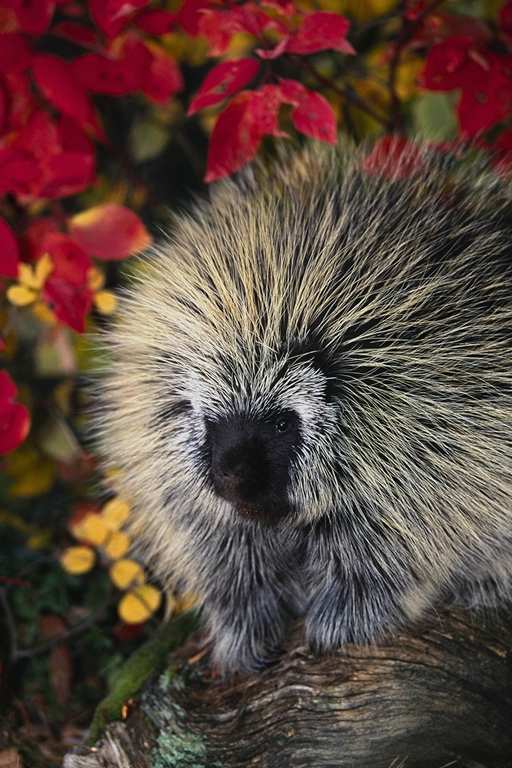
Fearlessness does not consist in having less fear or no fear but having so much more love that we go beyond fear! Fear is the porcupine on the trail as we hike: interesting, but not stopping us and not to be eliminated, since it belongs to the ecology of the psychic path. We rally our power with the conviction that there is an alternative to what the frightened mind has construed and that we do have it within us to handle whatever comes our way.

David Richo

Happiness is found within

All experience is preceded by mind
led by mind, made by mind.

Speak or act with a troubled mind, and suffering will follow, Like the cart-wheel follows the hoof of the ox

Speak or act with a peaceful mind,
and happiness will follow,  Like a never departing shadow.

Dhammapada, The Way of Truth, I, 1 – 6

A Morning Prayer: Gratitude

I join my hands in thanks
for the many wonders of life;
for having twenty-four brand-new hours before me.

Thich Nhat Hanh, Call Me by My True Names