The key question

As I go through all kinds of feelings and experiences in my journey through life — delight, surprise, chagrin, dismay — I hold this question as a guiding light: “What do I really need right now to be happy?” What I come to over and over again is that only qualities as vast and deep as love, connection, and kindness will really make me happy in any sort of enduring way.

Sharon Salzberg
Listening to the soul

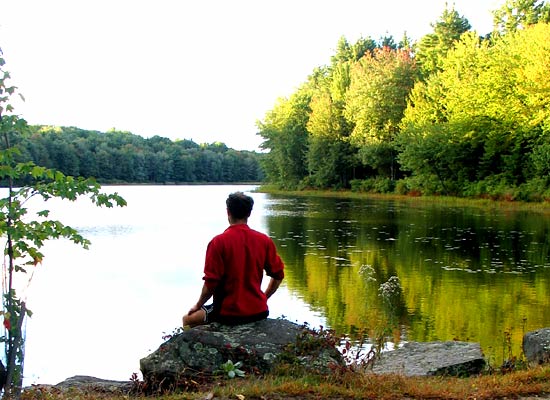
Things do fall apart. It is in their nature to do so. When we try to protect ourselves from the inevitability of change, we are not listening to the soul. We are listening to our fear of life and death, our lack of faith, our smaller ego’s will to prevail. To listen to your soul is to stop fighting with life – to stop fighting when things fall apart; when they don’t go our way, when we get sick, when we are betrayed or mistreated or misunderstood. To listen to the soul is to slow down, to feel deeply, to see ourselves clearly, to surrender to discomfort and uncertainty and to wait.

Elisabeth Lesser.

The mind needs training too

The Tibetan word for meditation is “gom”. It essentially means “getting used to, familiarizing”. Meditation, then, is the act of familiarizing your mind with what you want it to do. That process fo familiarity is just taking qualities and abilities that the mind naturally has, focusing on them in a methodical way, and thus building your base. The bones and tendons of the mind are mindfulness and awareness. Mindfulness is the mind’s strength and awareness is its flexibility. Without these abilities we cannot function. When we drink a glass of water, drive a car or have a conversation, we are using mindfulness and awareness. Unless we train it, the mind does the minimum necessary to fulfill a function. in that way it is like the body.Without conditioning, even a sudden dash to keep our kids out of harm’s way – or to catch a plane or a bus – will tire us out.

Sakyong Mipham Rinpoche, Running with the mind of meditation. 

Claim your own happiness

One of the greatest disciplines of existence, especially as we grow older, is the discipline of innocence and of keeping the sense of wonder and enlargement and surprise alive in your own heart. And the moment that you stop, in a sense, living from your innocence is the moment where you start to feel besieged by existence and the moment you need defences and walls. And no matter how high you build these walls, the encroaching sea of existence will actually scour them away. And you will somehow be revealed. But because you lived in exile from what is innocent and real about yourself, what frightens you most in life is your own happiness. I think one of the most difficult things in life is claiming your own happiness.

David Whyte, The Creative Imperative

We have more, but less

We have bigger houses but smaller families; more conveniences, but less time;

We have more degrees, but less sense; more knowledge, but less judgement; more experts, but more problems; more medicines, but less healthiness;

We’ve been all the way to the moon and back, but have trouble crossing the street to meet the new neighbour.

We built more computers to hold more information to produce more copies than ever, but have less communication;
We have become long on quantity, but short on quality.
These are times of fast foods but slow digestion;
Tall man but short character; Steep profits but shallow relationships.
It is time when there is much in the window, but nothing in the room.

The Dalai Lama, The Paradox of our Age

Not depending on something else to make us happy

In Tibet they have a saying, “The joy of a king is no greater than the joy of a beggar”.  It isn’t what we possess — it’s what we enjoy. This means the experience of genuine cheerfulness cannot be bought or sold. What makes it genuinely cheerful is that we are free from fixation and attachment. We are free of having to depend on something else to make us happy. We can bask freely in the natural radiance of our mind. This is the equanimity of true cheerfulness — nothing more, nothing less.

Sakyong Mipham Rinpoche, The Power of Being Cheerful