 There are different wells within your heart.
Some fill with each good rain,
Others are far too deep for that.
Hafiz
There are different wells within your heart.
Some fill with each good rain,
Others are far too deep for that.
Hafiz
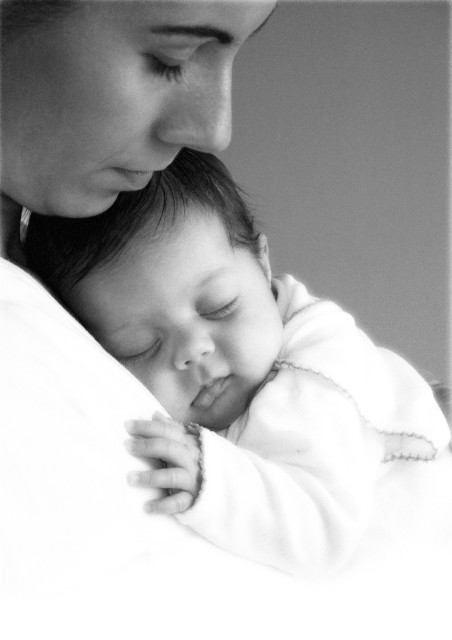 All around the world the popular Christmas song, Stille Nacht/Silent Night is sung on this day. The German word stille has some deeper connotations than what is conveyed by the English word “silent”. It has its roots in the verb “stillen”, meaning to suckle, to quieten a child and put to rest. The mother feeds and comforts the hungry child so that it becomes calm and content, able to close its eyes and sleep. For us too, the calm which we all desire inside our hearts is related to our awareness of being safe, which allows us to become still inside.
As an adult, can we ever get back to this early awareness of calm? Maybe never fully, but there are some things we can do. It seems that this interior stillness is related to exterior quiet. It has been found that noise raises cortisol levels, the hormone related to stress and anxiety and that taking some quiet time lowers these levels. It has even been measured. Apparently 12 minutes of quiet will bring down cortisol levels in the brain and lay the foundation for calm. However, these days, this is not se easy to do. We are continually bombarded by noise: the TV, radio, iPods, mobile phones, and computers hardly stop for a second. We also live in an age of visual stimulation that leaves us craving louder and brighter, kinds of entertainment. These means that a lot of us are extremely uncomfortable with silence and have become so unfamiliar with it that even momentary periods of quiet are quickly filled with sound or anxiety.
And yet, we all long to silence the noisy chatter of our thoughts, the crying of our needs and emotions, and develop a place of quiet and calm within us. A place which is safe, away from the judgments, expectations and demands placed on us by our own critical mind or by others. At some times in our lives we find it relationships with others, or in the embrace of our family. However, what this day and all the wisdom traditions remind us, is that real, lasting peace is to be found within our hearts, a quiet space where nothing can harm us, untouched by all the stuff that others may wish to impose upon us. If we do not find that stillness within, it is hard to find it in the outside circumstances of our lives. Only when we have found this inner place of peace can we have contact with others without anxiety. We can rest, and be still, without fear of being hurt.
 As yesterday’s post said, one way we cope with anxiety is that we live somewhat in the future, imagining a better time which is going to happen soon. The capacity of the brain for imagining and predicting the future is an important survival tool, which evolved over billions of years to enable us remember and avoid dangerous situations. The same capacity functions in our early years when it is vital that the child receives consistent and responsive caregiving from the parents. When this is lacking in some key ways, the child forms an picture of how unreliable and unsafe the world is and how much people can be trusted. This knowledge then becomes “encoded” in the brain as a paradigm of how to feel secure. In other words, the child makes a prediction of how relationships will have to be managed from its experience of how it is in its relationships with its parents.
This prediction becomes a working model which stays with us as we navigate our way through relationships in adult life. Thus, we tend to behave in relationships based on how we predict or imagine people will treat us, in line with our early experiences. The problem with this is that, while our early model may have worked in keeping us safe as a child, it can make us be overly distrustful and hyper-vigilant as adults. Something which was adaptive when young frequently becomes maladaptive in adulthood where it is not necessary to the same degree. In this way, the predictive capacity of the brain can become a liability. The stored fears and anxieties of childhood – which are unfortunately quite resistant to change – can exert a huge influence in adulthood, leading to an avoidance of intimacy and resulting in the person feeling as emotionally isolated as they did in childhood. The brain can continually predict danger, and takes the model it has learnt to be the only way to behave. When it meets new situations, or new people, it makes predictions which give preference to fear-based scenarios, rooted in the past. It then conspires to bring about the scenario it is most familiar with. Sadly, as psychoanalyst Regina Pally reminds us, we learn from the past what to predict for the future and then live the future we expect. In this way – in a phenomenon which Freud termed the “repetition compulsion” – we frequently end up in the situation which our defenses were set up to avoid, recreating the same dynamics and destructive scenarios that we experienced as children, despite the brain believing that we are doing differently.
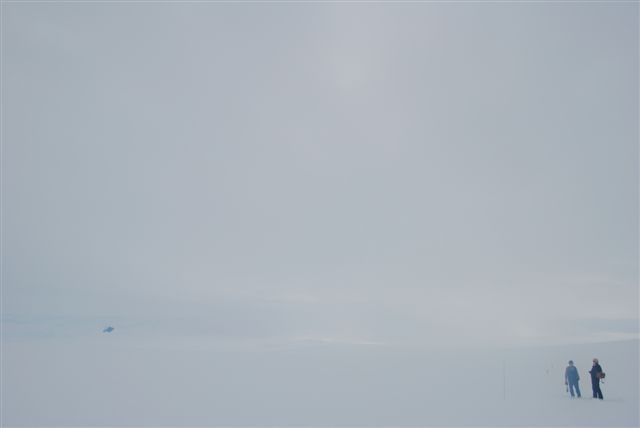 Were I able to shut, my eyes, ears, legs, hands
and walk into myself for a thousand years
perhaps I would reach – I do not know its name –
what matters most.
Anna Swir, To that which is Most Important.
 A similar theme to the Mary Oliver poem posted this week. Sometimes we feel lost and do not know where we are going. We feel powerless, having nothing to offer, with empty hands. We have to leave behind all we have relied on up to now. We utter a heartfelt wish that things could become clearer. It is in the stillness that wisdom speaks to the heart and reveals what we have been looking for.
In this high place
it is as simple as this:
leave everything you know behind.
Step toward the cold surface,
say the old prayer of rough love
and open both arms.
Those who come with empty hands
will stare into the lake astonished.
There, in the cold light
reflecting pure snow,
is the true shape of your own face.
David Whyte
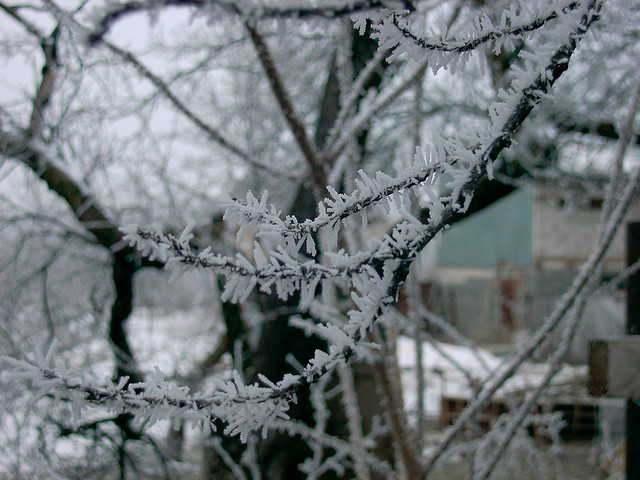 Pema Chodron also reflects here on snow and ice. She reminds us to touch in with the springs of warmth which still exist inside us, no matter how cold a place we find ourselves in. When we are in an emotional or psychological midwinter, it is hard to believe that warmth and growth will return. We are tempted to disconnect or detach, to bury ourselves even deeper. However, we are encouraged here to keep the heart open, by allowing our deepest self stay in connection with the deepest self of another person or thing. In this way we allow ourselves receive warmth from the presence or thought of another person when it is hard to generate warmth in oneself.
Our habits and patterns can feel just as frozen as ice. But when spring comes, the ice melts. The quality of water has never really disappeared, even in the deepest depths of winter. It just changed form. The ice melts, and the essential fluid, living quality of water is there. Our essential good heart and open mind is like that. It is here even if we’re experiencing it as so solid we could land an airplane on it.
When I’m emotionally in midwinter and nothing I do seems to melt my frozen heart and mind, it helps me to remember that no matter how hard the ice, the water hasn’t really gone anywhere. It’s always right here.
So I work on melting that hardness by generating more warmth, more open heart. A good way for any of us to do this is to think of a person toward whom we feel appreciation or love or gratitude. In other words, we connect with the warmth that we already have. If we can’t think of a person, we can think of a pet, or even a plant. Sometimes we have to search a bit. But as Trungpa Rinpoche used to say, “Everybody loves something. Even if it’s just tortillas.” The point is to touch in to the good heart that we already have and nurture it.
Pema Chodron, Shambala Sun, 1998
 Mindfulbalance