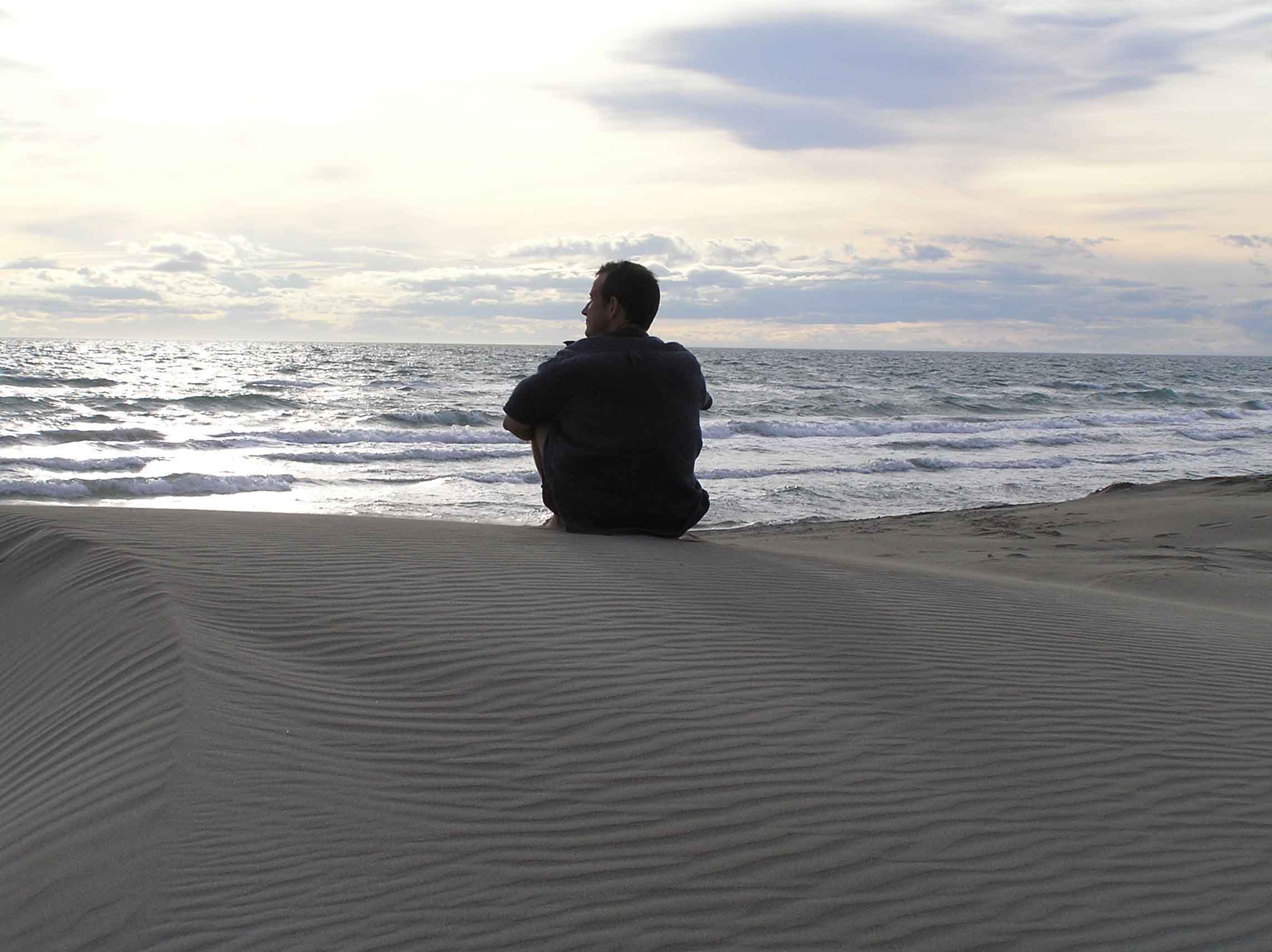
Accepting a fundamental aloneness

There is a wisdom in having moments of quiet in our lives. Learning to stay – being by ourselves and being comfortable with that –  is a prerequisite for all work and any relationships. We are good at distracting ourselves and a good number of the problems which we experience  are due to this capacity for distraction. We can easily identify with the flow that these activities cause.  But there is deeper part of ourselves. When we stop working, slow down and stop moving, and let go of distracting ourselves, we are getting in touch with the  silence within and a fundamental truth about our human condition:

All human beings are alone. No other person will completely feel like we do, think like we do, act like we do. Each of us is unique, and our aloneness is the other side of our uniqueness. The question is whether we let our aloneness become loneliness or whether we allow it to lead us into solitude. Loneliness is painful; solitude is peaceful. Loneliness makes us cling to others in desperation; solitude allows us to respect others in their uniqueness and create community.

Letting our aloneness grow into solitude and not into loneliness is a lifelong struggle. It requires conscious choices about whom to be with, what to study, how to pray, and when to ask for counsel. But wise choices will help us to find the solitude where our hearts can grow in love.

Henri Nouwen

Not needing to hide

Our practice aims to free our hearts from the fears that provoke us to exclude and reject others. It is based on an understanding that everyone, fundamentally,  wishes to be happy,  and at the same time everyone’s heart is wounded. So we all hope for peace and connection,  but are at the same time frightened of love:

We human beings are all fundamentally the same. We all belong to a common broken humanity. We all have wounded, broken hearts. Each one of us needs to feel appreciated and understood; we all need help. Every child, every person needs to know that they are a source of joy; every child, every person, needs to be celebrated. Only when all of our weaknesses are accepted as part of our humanity can our negative, broken self-images be transformed.  Fear closes us down; Love opens us up.

Jean Vanier, Becoming Human

The fear of showing our vulnerability leads us to hide because we do not want others to see our interior poverty: To have our ‘poverty’ seen by others and ‘our profound vulnerability’ touched by them, makes us fear that we will be abandoned….We must be honest with ourselves and acknowledge an important truth: I am not superior to you, I am not better than you, I am like you. I have frailty, my limitations which, perhaps, I have often hidden; you have limitations, perhaps more visible, but behind your limitations you are a person, your heart is.

Jean Vanier, Speech, Rome 2006

Noticing the strategies

The basic practice, that underlies all practice,  as Pema Chodron reminds us,  is learning to stay. It flies against our normal instinct which is to rush towards whatever gives us a sense of security, a sense of ground. I had a lovely talk yesterday with a friend who observed that these days even much of the spiritual path is presented like products to be consumed, something which we feel compelled to get in order to deal with the deep unease within us. We can notice this because they tend to pull us outside ourselves and end up actually increasing our sense of dissatisfaction with how we actually are.

We all follow some strategy for getting away from this deep dissatisfaction within us. Sometimes this strategy can seem quite spiritual, but it is still a seeking for some sense of ground, of stability.  This shows that we have a strong fear of not being in control, and do not like not knowing what the future is. However this desire for security is deluded, because the deep truth is that we are never in control. We can never be on hundred percent sure of any thing. That’s how things are and this brings up a lot of panic and fear.

Our practice is to try and relax with this and accept that groundlessness  is actually the human condition. This means that we move to accept the fear and panic that comes with it. rather than running away from it.

Do you know which strategies you use to guarantee some sense of safety and familiarity, to avoid facing the fears—of rejection, loss, unworthiness or failure—that lie beneath the surface of your thoughts and actions?  For example, do you try to maintain a sense of order and control, to avoid feeling the fear of chaos, of things falling apart? Do you try to gain acceptance and approval, to avoid the fear of rejection, of not fitting in? Do you try to excel and attain success, to avoid the fear of feeling unworthy? Or do you seek busyness, to avoid the deep holes of longing and loneliness? All of these strategies have one thing in common: they keep us encased in our artificial or substitute life.

Ezra Bayda