Loaves and fishes

This is not the age of information.

Forget the news,
and the radio,
and the blurred screen.

This is the time of loaves
and fishes.

People are hungry,
and one good word is bread
for a thousand.

David Whyte, Loaves and Fishes from The House of Belonging

What happiness is not

We tend to equate happiness with two things, pleasure and lack of tension. Hence we fantasize that for us to be happy we would need to be in a situation within which we would be free of all the tensions that normally flood into our lives from: pressure, tiredness, interpersonal friction, physical pain, financial worry, disappointment in our jobs, frustration with our churches, frustration with our favorite sports teams, and every other headache and heartache that can appear. Happiness, as it is superficially conceived of, means perfect health, perfectly fulfilled relationships, a perfect job, no anxiety or tension in life, no disappointments, and the time and money to enjoy the good life.

But that isn’t what constitutes happiness. Meaning is what constitutes happiness and meaning isn’t contingent upon pain and tension being absent from our lives. C.S. Lewis taught that happiness and unhappiness color backwards: If our lives end up happy, we realize that we have always been happy even through the trying times, just as if our lives end up unhappy we realize that we have always been unhappy, even during the pleasurable periods of our lives. Where we end up ultimately in terms of meaning will determine whether our lives have been happy or unhappy. Happiness has a lot more to do with meaning than with pleasure.

Ron Rolheiser, Meaning and Happiness.

Sunday Quote: Being comfortable in our own skin


If we seek to relieve our loneliness, we will be distracted from the path.

Instead, we must make a relationship with loneliness until it becomes aloneness.

Chogyam Trungpa Rinpoche, The Myth of Freedom and the Way of Meditation

Love and risk

To love at all is to be vulnerable. Love anything, and your heart will certainly be wrung and possibly broken. If you want to make sure of keeping it intact, you must give your heart to no one, not even to an animal. Wrap it carefully round with hobbies and little luxuries; avoid all entanglements; lock it up safe in the casket or coffin of your selfishness. But in that  casket –  safe, dark, motionless, airless – it will change. It will not be broken; it will become unbreakable, impenetrable, irredeemable.

C.S. Lewis, The Fours Loves

Getting a handle on the mind

To train the mind, first we have to get a handle on it. We are thinking all the time. If we observe that thinking process for a second, we’ll see that it is triggered by the five sense faculties: sight, sound, smell, touch, and taste. We smell something or we see something, and we’re distracted. It’s hard to train the mind by using just the five sense consciousnesses — just smelling or just tasting, for example. We need to get hold of the discursive mind itself, the consciousness of thoughts, memories, and dreams. It’s being pulled in a lot of different directions, so we need a technique to stabilize it.

Training the mind is dependent upon the body. We reduce the body’s activity to focus the mind, so posture is very important. Then we use the breath, which is stable and consistent, as a focus for our intention. Joining our mind with the breath in meditation is often compared to the horse and the rider. The horse is the breath and the rider is the mind. We want those elements to be in continual contact. We have to be pragmatic about our practice. The mind is powerful. After racing around all day, it’s hard to follow through with the intention, “I’m going to stabilize my mind for one whole hour.” Instead, at the beginning of our session, we take the attitude, “Now I am going to focus.” Focus will bring us to moments of stillness and deepening, which profoundly affect the mind.

Sakyong Mipham Rinpoche

Dealing with difficulties as arising and falling away.

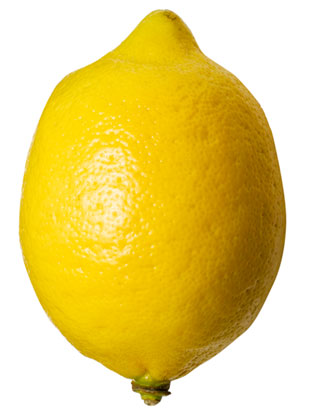
Some people say that suffering is a fixed part of the mind, that it has been there forever. I try to explain that suffering is not intrinsic to the mind. It arises in the present moment. You have a mood of aversion in the mind and you experience suffering now. Think about a lemon. If you leave it alone is it sour? Where is the sourness then? It’s when the lemon contacts the tongue that sourness occurs. If you aren’t experiencing it, it’s as if it isn’t there. When there is contact with the tongue it arises at that moment. And from there arise dislike and afflictions. These afflictions are not intrinsic to the mind, but are momentary arisings.

Ajahn Chah, Being Dharma