The gap between words

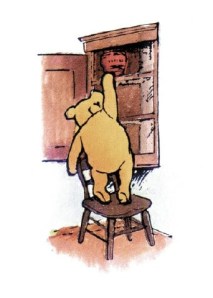
Well,” said Pooh, “what I like best,” and then he had to stop and think.

Because although Eating Honey was a very good thing to do, there was a moment just before you began to eat it which was better than when you were, but he didn’t know what it was called.

A. A. Milne, The House on Pooh Corner

Knowing oneself gently

File:Mmmmm lunch (4977315962).jpg

Dogen Zen-ji said, “To know yourself is to forget yourself.” We might think that knowing ourselves is a very ego-centered thing, but by beginning to look so clearly and so honestly at ourselves—at our emotions, at our thoughts, at who we really are — we begin to dissolve the walls that separate us from others. Somehow all of these walls, these ways of feeling separate from everything else and everyone else, are made up of opinions. They are made up of dogma; they are made of prejudice. These walls come from our fear of knowing parts of ourselves. There is a Tibetan teaching that is often translated as, “Self-cherishing is the root of all suffering.” It can be hard for a Western person to hear the term “self-cherishing” without misunderstanding what is being said. I would guess that 85% of us Westerners would interpret it as telling us that we shouldn’t care for ourselves….. But that isn’t what it really means. What it is talking about is fixating.

Pema Chodron, To Know Yourself is to Forget Yourself

photo U.S fish and wildlife service
Conscious living

File:RuWiki.Confer.20071028.Informal Discussion.jpg

The real goal of a therapy is not a “cure”, for the human condition is not a disease. Yes, real, resistant problems of daily life can and must be addressed and the resources of consciousness brought fully to bear on their resolution. But the real gift of a therapy, or of any truly considered life, is that one achieves a deepened conversation around the meaning of one’s journey – a conversation without which one lives a received life, not one’s own, a superficial life, or a life in service to complexes or ideologies.

James Hollis, What Matter most: Living a more considered Life

photo alexei kuprianov

Taking things personally

lakes

It’s true that different people have different mind stuff to work with, but essentially there comes about a realization that the core of the feeling of suffering comes from something we all do: we take things personally. And you can’t stop doing this simply as an idea. The practice involves cessation – letting go of “self” through directly knowing “self”. This must occur by feeling out and examining some pretty well-known positions ….”I cant do it” is one of them, and the list goes on through every kind of self-view about “I’m not worthy/good enough”, “It’s not good enough for me” ” I have a lot of karma to work out”…In the course of practice, all of these self-views come and go continually until gradually the realization of their impermanence begins to sink in.

Ajahn Sucitto, The Dawn of the Dhamma

The key to balance

File:Parenting.JPG

More wisdom, this time from the Taoism tradition, on keeping our sense of self fluid:

Can you call your mind back from its wandering
and keep to its original oneness?
Can you concentrate the energy of life
and keep it supple like a newborn child?

Can you deal with the most vital matters
by letting events take their course?
Can you step back from your own mind
and in this way understand all things?

Giving birth and nourishing,
having without possessing,
acting with no expectations,
leading and not trying to control:
this is the supreme virtue.

Lao Tzu, Tao Te Ching, 10

photo amolnaik3k

Happiness and not judging anything

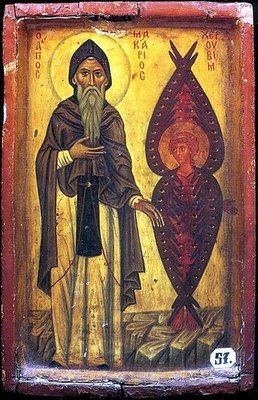
File:St Macarius the Great with Cherub.jpg

Some of the early Christian Desert Fathers saying are almost  Zen-like in their simplicity. In this example we find echoes of yesterdays post. It contains an instruction on what leads to us being content –  finding rest from our inner agitations: Turn the mind away from judgments, either about ourselves or others, keep the self fluid and in this way stop sticking labels on what is happening. Good advice for today.

Abba Poeman said to Abba Joseph, “Tell me how to become a monk”

He said, “If you want to find rest here below…in all circumstances say ‘who am I’ and do not judge anyone”