from Jane Hirshfield, Lake and Maple
Learning from water
from Jane Hirshfield, Lake and Maple

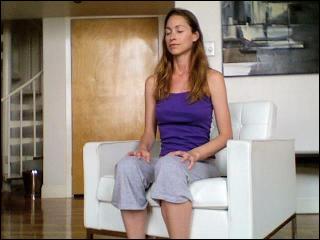
Settle down in your room at a moment when you have nothing else to do. Say “I am now with myself,” and just sit with yourself. After an amazingly short time you will most likely feel bored. This teaches us one very useful thing. It gives us insight into the fact that if after ten minutes of being alone with ourselves we feel like that, it is no wonder that others should feel equally bored! Why is this so? It is so because we have so little to offer to our own selves as food for thought, for emotion and for life. If you watch your life carefully you will discover quite soon that we hardly ever live from within outwards; instead we respond to incitement, to excitement. In other words, we live by reaction… We are completely empty, we do not act from within ourselves but accept as our life a life which is actually fed in from the outside; we are used to things happening which compel us to do other things. How seldom can we live simply by means of the depth and the richness we assume that there is within ourselves.
Archbishop Anthony Bloom, Learning to Pray
We must come to love ourselves, love our life in its vulnerability, in its impermanence, not in spite of all its flaws, but because of them
Because the vulnerability, the changes, the flaws, make us who we are.
The death of the self may be full of the fear of letting go, of stepping off into the void, thinking that nothing will stop our fall, not recognizing that the void is our true nature. The void is the vastness in which we are occurring, it is the truth itself, and the whole idea of “someone” stepping off is just another bubble passing through. And we don’t any longer need to define who we are, because who we become each moment is so much more than what we ever imagined. There’s no need to limit who we really are with any definition. We are all of it. And only the contents of this vastness of mind, once identified with as a separate self, limit who we are.
Steven Levine, A Gradual Awakening
We just need to remember to practice relaxing into our life, in all its joys and sorrows, and to relinquish the need to know what’s going to happen next. The third element of patience is acceptance of the truth, meaning that we accept our experience as it is – with all its suffering – rather than how we want it to be. We recognize that because our experience is continually changing, we don’t need it to be different than it is. This acceptance of “things as they are” requires profound wisdom and compassion, which takes a long time to evolve; we must therefore develop a long-enduring mind that will enable us to understand time from a radically new perspective.
Michele McDonald, Finding Patience