Where contentment comes from

Doesn’t contentment come from the heart rather than from having everything you want? This sense of gratitude and contentment creates a mental state that’s very pure and conducive for seeing clearly. Our society is very restless, very critical, very aware of what’s wrong. We’re always thinking of ways to make things better than they are…. We’ve developed the intellect — the ability to experiment, the wonders of modern science and so forth — but we’ve done it mostly out of curiosity and greed. If we had developed wisdom as well, then our intelligence would work in harmony with nature rather than by exploiting it.

Ajahn Sumedho, There’s No Place Like Here

Why looking for self is not needed

We all hope for success. We hope for health. We hope for enlightenment. We have all sorts of things we hope for. All hope, of course, is about sizing up the past and projecting it into the future.

However, anyone who sits for any length of time sees that there is no past and no future except in the mind. There is nothing but self, and self is always here,  present. It’s not hidden. We are racing around like mad trying to find something called self, this wonderful hidden self. Where is it hidden? We hope for something that’s going to take care of this little self because we do not realize that already we are self.

Charlotte Joko Beck, Everyday Zen

Creating breaks in the chatter

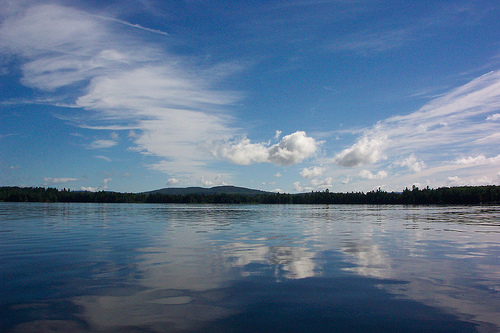
When we cling to thoughts and memories, we are clinging to what cannot be grasped. When we cling to thoughts and memories, we are clinging to what cannot be grasped. When we touch these phantoms and let them go, we may discover a space, a break in the chatter, a glimpse of open sky. This is our birthright—the wisdom with which we were born, the vast unfolding display of primordial richness, primordial openness, primordial wisdom itself. When one thought has ended and another has not yet begun, we can rest in that space.

Pema Chodron, Comfortable with Uncertainty: 108 Teachings on Cultivating Fearlessness and Compassion

Not needing to journey

We shall not cease from exploration and the end of all our exploring will be to arrive where we started… and know the place for the first time. 

T.S. Eliot, The Waste Land

Salvation, if we can talk about it at all, is the end of ambition, which is when you become completely one with your experience. Knowledge becomes one with wisdom…. You realize that you never needed to make the journey at all, because the journey and the goal are there already. It’s not so much that you are achieving liberation, but it is more that you realize that liberation is right there and that you needn’t have sought for it.

Chögyam Trungpa, Transcending Madness: The Experience of the Six Bardos

Our capacity for happiness

Whether success or failure: the truth of a life really has little to do with its quality. The quality of life is in proportion, always, to the capacity for delight.

The capacity for delight is the gift of paying attention.

May Sarton.

Noticing, naming …gratefulness and happiness

It may sound corny, but the research clearly demonstrates that you would be happier if you cultivated an “attitude of gratitude.” Gratitude helps us thwart hedonic adaptation. Hedonic adaptation is illustrated by our remarkable capacity rapidly to adjust to any new circumstance or event. This is extremely adaptive when the new event is unpleasant, but not when a new event is positive. So, when you gain something good in your life – a romantic partner, a genial officemate, recovery from illness, a brand-new car – there is an immediate boost in happiness and contentment. Unfortunately, because of hedonic adaptation, that boost is usually short-lived. As I’ve argued, adaptation to all things positive is essentially the enemy of happiness, and one of the keys to becoming happier lies in combating its effects, which gratitude does quite nicely. By preventing people from taking the good things in their lives for granted – from adapting to their positive life circumstances – the practice of gratitude can directly counteract the effects of hedonic adaptation.

Sonja Lyubomirsky, The How of Happiness