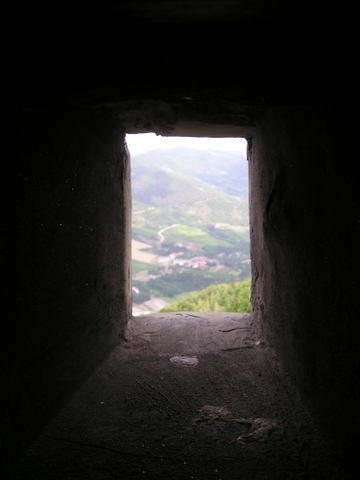
A short meditation exercise for when you feel under pressure

Close your eyes gently. Let your body be at rest and your breathing be natural. Begin to listen to the play of sounds around you. Notice those that are loud or soft, far and near. Notice how sounds arise and vanish on their own, leaving no trace. 

After you have listened for a few minutes, let yourself sense, feel or imagine that your mind is not limited to your head. Sense that your mind is expanding to be open like the sky – clear, vast like space.  Feel that your mind extends outwards beyond the most distant sounds. Imagine there are no boundaries to your mind, no inside or outside. Let the awareness of your mind extend in every direction, like the sky.

 Relax in this openness and just listen. Let every sound you hear – people, the breeze, your breath – arise and pass away like a could in the open space of your mind.  Let thoughts and feelings – pleasant, unpleasant – come and go without resistance or struggle. Relax and rest in this openness.  Let sensations float and change. Pay attention to consciousness itself. Notice how the open space of awareness is clear, transparent, timeless and without conflict – allowing for all things, but not limited by them. This is your own true nature. Rest in it. Trust it. It is home.

Jack Kornfield, The Wise Heart

Everyday life is muddy

The essence of the practice life involves cultivating awareness. This process has two basic aspects. The first is clarifying the mental process. The second is experiencing — entering into awareness of the physical reality of the present moment. When we’re standing in the muddy water of everyday life, practice is often not simple and clear. But part of our challenge is to bring a certain precision and impeccability to our efforts. That’s why it’s important to keep returning to these two basic aspects of practice: first, seeing through the mental process, with all its noise; and second, entering the non-conceptual silence of reality as-it-is. As practitioners we learn to honestly and relentlessly observe the mental or conceptual process — thoughts, emotional reactions, strategies and fears — and then bring ourselves back again and again to the physical reality of the present moment.

Ezra Bayda, How to Live a Genuine Life  

How to defeat fear

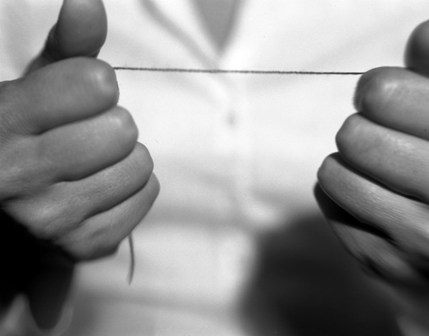
Once there was a young warrior. Her teacher told her that she had to do battle with fear. She didn’t want to do that. It seemed too aggressive; it was scary; it seemed unfriendly. But the teacher said she had to do it and gave her the instructions for the battle. The day arrived. The student warrior stood on one side, and fear stood on the other. The warrior was feeling very small, and fear was looking big and wrathful. They both had their weapons. The young warrior roused herself and went toward fear, prostrated three times, and asked, “May I have permission to go into battle with you?” Fear said, “Thank you for showing me so much respect that you ask permission.” Then the young warrior said, “How can I defeat you?” Fear replied, “My weapons are that I talk fast, and I get very close to your face. Then you get completely unnerved, and you do whatever I say. If you don’t do what I tell you, I have no power. You can listen to me, and you can have respect for me. You can even be convinced by me. But if you don’t do what I say, I have no power.” In that way, the student warrior learned how to defeat fear.
Pema Chodron

Where the tension in our lives comes from

The moment we stray from where we are, we create a tension between two places – where we are and where we are thinking of being. It is this tension that blocks us from the sensation of being fully alive, because being split in our attention prevents us from being authentic – even though managing many tasks at once (being skilful in splitting our attention)  is considered intelligent.

For most of us, straying from where we are and coming back is a never-ending task, very much like blinking and breathing. When we incorporate the fullness of attention into our daily lives, we seldom notice it. But if we should interrupt our flow of being, we will stumble just as surely as if we were to stop seeing or breathing. That we stray from the moment is not surprising. The more crucial thing is that we return. 

Mark Nepo, The Book Of Awakening

Welcoming whatever is present today with kindness

Mindfulness is an act of hospitality. A way of learning to treat ourselves with kindness and care that slowly begins to percolate into the deepest recesses of our being while gradually offering us the possibility of relating to others in the same manner. Working with whatever is present is enough. There is no need to condemn ourselves for not feeling loving or kind. Rather, the process asks us to entertain the possibility of offering hospitality to ourselves no matter what we are thinking or feeling.

[Today] try taking some time to explore the possibility of sitting with yourself as if you were your own best friend. Dwelling in the awareness of the breath, allowing thoughts and feelings to come and go, experiment with the possibility of embracing yourself as you would embrace another person who is dear to you and needs to be held. If you like try silently repeating a phrase on your own behalf. You might offer yourself one or more of the following: “May I be safe”. “May I be free from suffering”. “May I be peaceful”.

Saki Santorelli, Letting Ourselves Heal

Coming home to rest

Movement is one part of life but to be in a state of no movement is also a substantial part of our life… The way we live, we go on collecting things on the material level, knowledge on the intellectual level, experience on the sensual and psychological level. We go on acquiring and the I, the Me, the Ego that goes on acquiring becomes stronger by every experience, with every achievement and we create an enclosure around us by our own knowledge, experience, possessions. In that enclosure we live and we feel secure in that. We live secluded, isolated from the Whole, because of the sense of possessions.

Meditation is a way of living that introduces us to that other part of our life. Meditation is coming home, to relax, to rest. If that takes place and one finds that though one has withdrawn and retired from activity, the inner movement goes on, thoughts come up, memories come up, then you begin to observe them. Till now you were busy carrying out functional roles, you were either the doer or the experience. From these two roles you have set yourself free voluntarily. You are now the observer. The inner movements come up, the involuntary movement comes up though the voluntary has been discontinued. You sit there quietly, you do not prepare to see, but if thoughts appear, then they are seen by you. It is a lovely state, the state of observation.

Vimala Thakar, Meditation In Daily Life