
If you start looking at life with joy,
sadness starts disappearing.
You cannot have heaven and hell together,
you can have only one.
It is your choice.
Osho
If you start looking at life with joy,
sadness starts disappearing.
You cannot have heaven and hell together,
you can have only one.
It is your choice.
Osho
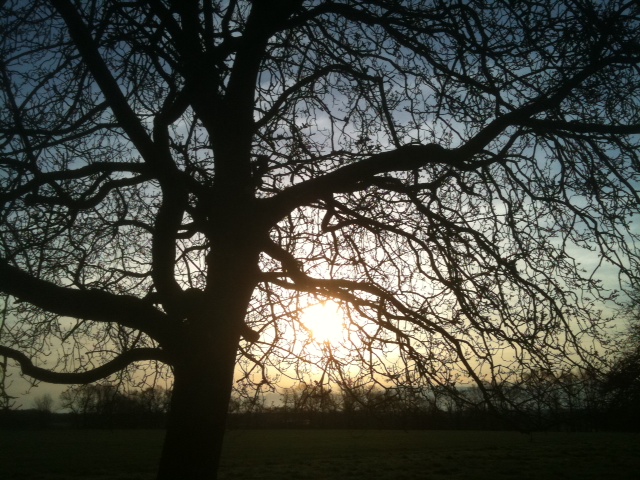 Both winter and spring are part of what’s true as are summer and autumn in their turn. In welcoming awakening’s seasonal transformations, we discover a greater truth that shows us a new way of trusting the very change that we once thought a problem. Awakening has its ebbs and flows. People get discouraged when nothing seems to be happening in their spiritual life. But because something isn’t apparent in our conscious awareness doesn’t mean that it’s not happening at all. When the field appears fallow, we can learn to trust what’s going on underground, in the dark, invisible to us. In fact, it’s essential that along with the lightning comes the quiet dark, when radiant bursts are taken in and made part of the whole. To agree to all the seasons and tides of awakening means that we are always walking the Way: while there are times we won’t understand, there are no detours, no causes for disappointment. Thouhg sometimes obscured by clouds, there is only the rising dawn, long and slow, that we walk within.
Joan Sutherland, Seasons of Awakening
 In the traditional Christian understanding, this Saturday – between Good Friday and Easter – is the day of growth and hope hidden deep in our existence, despite all evidence to the contrary. It is a day for patience and quiet reflection. And indeed, despite all the work we do, and our best efforts, much of life remains unresolved, incomplete, frustrating and un-reconciled. We do not see all the answers or why some things are as they are. That is why days which encourage us to be silent and to wait – to get used to this in-between state – are useful. They balance the desire of the mind to know everything and to be in control.
It’s important to be heroic, ambitious, productive, efficient, creative, and progressive, but these qualities don’t necessarily nurture soul. The soul has different concerns, of equal value: downtime for reflection, conversation, and reverie; beauty that is captivating and pleasuring; relatedness to the environs and to people; and any animal’s rhythm of rest and activity.
Thomas Moore
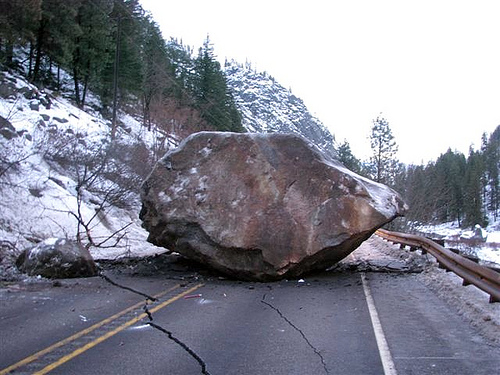
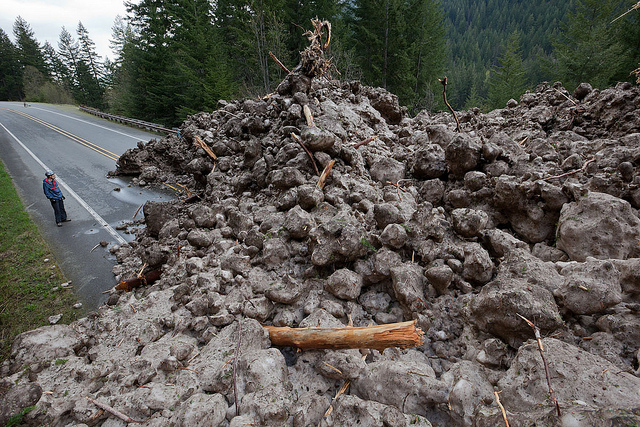
Sometimes the things that are weighing us down in our lives can feel pretty big. We feel pinned down by them, constantly burdened. It could be confusion over where our career is going; we could have financial worries; often it is family or relationship issues that cause restless nights; we can feel lonely and afraid. All that used to give us some joy has slipped away. At moments like these life seems to be sucked out of us, and we feel physically tired, unable to find real rest. We give up, not wanting to put ourselves in the position to be hurt again, or to grieve again, or to be frustrated and angered, humiliated, disappointed. One image used in the Christian liturgy today – that of the boulder blocking the tomb – captures well this sense of helplessness and despair. Sometimes we can feel like we are being slowly buried alive, spent and weary, trapped in our own “tombs” . We long for freedom, for a hint of new sense of life or hope to come to us through the seeming loss and rubble of our life. Sometimes we can find that when we make space and gain a new perspective outside the scene. At other times however, we need support – a word of encouragement, a friendly face, some “angel” to visit us, to reach down into our darkness and help us bear or overcome the load. We all have occasions to be that angel, in that we can all hold space for another, kinder, reality for another person. We simply have to be willing to add our fresh shoulder to someone else’s bruised one, and stand with them in their time of need.
Sometimes the boulder is rolled away, but I cannot move it when
I want to. An angel must. Shall
I ever see the angels face
or will there only be
that molten glow outlining every
separate hair and feather quill,
the sudden wind and odour, sunlight,
music, the pain of my bruised shoulders.
Ruth Fainlight, The Angel
 No matter how much we practice, when the going gets rough or we’re in a tight spot, when you’re in that [tight] place, as far as I’m concerned, that is the main place that all the … teachings are pointing to. You could say they’re pointing to full, complete awakening — and that would be true— but the moment of truth is when we’re caught in an habitual way and we just do the habitual thing. The main thing is how we talk to ourselves at that point. I know that one of the main story lines is: “I’m not good enough,” in some kind of form. And we get hooked by something along those lines.
If at that point, you could just say to yourself, “This is a familiar moment, this is just a common, ordinary occurrence in everyday life, and the choice is mine, again and again and again. And I’ll get plenty of opportunities to work with this. I don’t have to get it right this time. Do I want to proceed with a blocked, frozen life force or do I want to experience it [as] free-flowing?” Do we want to block the possibility of our human life, the creative, life force, the basic energy of our being, which has the potential, when fully recognized and fully experienced, is the experience of full awakening — complete open heart, complete open mind to everything. Do we want to have access to that in this very brief human life that we have? It’s so short, and the whole thing, from the moment we’re born until we die, is like a chance that we’re given to either unblock ourselves or block ourselves further.
Pema Chodron
 In the Christian Calendar, the three most important days of the year begin, ones which give meaning to sustain the rest of the year. They are days for reflection, punctuated by old familiar rituals of water and fire. We all need rhythms in our lives, moments of celebration – religious or otherwise – allowing us time to pause and take a break from the rush of our working lives. Ritual days like these, which mark the passing of time are very important, especially in this modern age which blends each day and each season into periods of work and possibilities for more shopping. We need to ensure that there are real moments of non-work in our lives where we celebrate other realities and other rhythms, not just evenings where we crash, tired from work, trying to recharge before it starts again the next day. These rhythms are indispensable for balance and for nourishing our deepest self. We take time off, we slow down, we rest and reflect. In doing so we find that each element in the familiar patterns becomes, even though they are known through repetition, fresh and meaningful again. The messages that come around again in the great cycle of things are always new.
Wherever the arts are nourished through the festive contemplation of universal realities and their sustaining reasons, there in truth something like a liberation occurs: the stepping-out into the open under an endless sky, not only for the creative artist himself but for the beholder as well, even the most humble. Such liberation, such fore-shadowing of the ultimate and perfect fulfillment, is necessary for man, almost more necessary than his daily bread, which is indeed indispensable and yet insufficient. In this precisely do I see the meaning of that statement in Aristotle’s Nichomachean Ethics, ‘We work so we can have leisure.’
Josef Pieper, Only the Lover Sings: Art and Contemplation

