Six Simple Strategies for a Stress-Free Summer, 5.

Allow yourself to be Bored

Summer sometimes marks a change from our usual routines. And even though we may have been looking forward to it, we can sometimes find that we have the thought “I am bored”. To most of us boredom feels uncomfortable and we try to avoid it. We immediately believe the thought and then ask ourselves “what else can I do?” and our head plans and looks for a different activity. This summer, try to notice when you are feeling bored and just sit with it.  Boredom is one of the more interesting thoughts to work with. It tries to draw us away from this moment by suggesting that our lives should be elsewhere. The secret to contentment is being in each moment fully. And sometimes our systems need to do nothing and feel the tension of transition from the rush of our normal lives to a deeper calm.

Six Simple Strategies for a Stress-Free Summer, 4.

Practice Compassion & Kindness:

Studies show that when we perform acts of kindness,  there is a sharp reduction in stress and a release of the body’s natural painkillers, the endorphins. Acts of kindness and compassion can lead to an experience of improved emotional well-being. So this day, look around at others and think beyond yourself. All kinds of opportunities to help, some big and some small, will present themselves if we pay attention.  Regardless of the size of the act, there is no wrong way to perform simple acts of kindness. The possibilities are endless! This day ask: How will I  practice spreading kindness in my life?

Do you have time to love?

To love is, above all, to be there. But being there is not an easy thing. Some training is necessary, some practice. If you are not there, how can you love? Being there is very much an art, the art of meditation, because meditating is bringing your true presence to the here and now. The question that arises is: Do you have time to love?

Thich Nhat Hahn

Truly present

The deep meaning of many rules of conduct and more principles of the past — so many of which have been abandoned without our understanding their real roots in human nature — involved the cultivation and development of the uniquely human power of attention, its action in the body, heart and mind of man.  To be present, truly present, is to have conscious attention.  This capacity is the key to what it means to be human.

It is not, therefore, the rapidity of change as such that is the source of our problem of time.  It is the metaphysical fact that the being of man is diminishing.

Jacob Needleman, Time and the Soul

Meditation reduces the perception of pain.

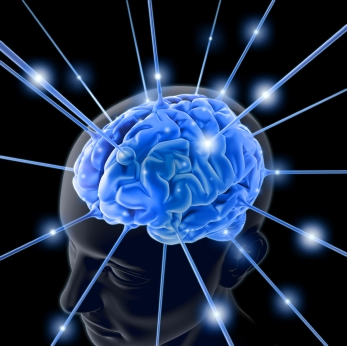
A recent study, conducted by researchers at the University of Oxford,  has found that our physical experience of pain is influenced by the mood we are in at that moment. In other words,  our brain influences how we perceive and deal with the pain we are going through, as a low or anxious mood  disrupts a portion of our neurocircuitry related to regulating emotion, causing an enhanced perception of pain. The low mood may go as far as to drive the pain and make it feel worse. Mind and body are intimately linked when it comes to health and wellness.
Mindfulness meditation has been shown to affect the way we attend to what is happening in our lives at any moment,  and can impact upon mood in a positive manner. Therefore it is probably not surprising to read that a 2010 University of Manchester study, to be published in the Journal Pain,  noted that experienced meditators found pain  less unpleasant than did non-meditators. It seems that regular meditation can train the brain to anticipate pain less and reduce its emotional impact.

Dr Christopher Brown, who led the research,  stated “Meditation is becoming increasingly popular as a way to treat chronic illness such as the pain caused by arthritis. Recently, a mental health charity called for meditation to be routinely available on the NHS (the National Health Service)  to treat depression, which occurs in up to 50% of people with chronic pain.”

The finding is a potential boon to the estimated 40% of people who are unable to adequately manage their chronic pain. Dr Brown suggests that the reason meditation works  is due to the fact that it is a training in remaining focused on the present moment and not anticipating future problems: “The results of the study confirm how we suspected meditation might affect the brain. Meditation trains the brain to be more present-focused and therefore to spend less time anticipating future negative events. This may be why meditation is effective at reducing the recurrence of depression, which makes chronic pain considerably worse.”

You can read more on the University’s website: http://www.manchester.ac.uk/aboutus/news/display/?id=5801

A simple practice for reducing stress today

If at times today you find yourself getting anxious or stressed,  you may like to try this simple practice of dropping into your breathing. We use the breath as an anchor to steady us at moments of confusion or distress. The breath is always with us. We do not need any special skills or practices to simply notice it. We do not need to go anywhere, other than where we are at that moment:

Our breathing is a stable solid ground that we can take refuge in. Regardless of our internal weather- our thoughts, emotions and perceptions- our breathing is always with us like a faithful friend. Whenever we feel carried away, or sunken in a deep emotion, or scattered in worries and projects, we return to our breathing to collect and anchor our mind.

We feel the flow of air coming in and going out of our nose. We feel how light and natural, how calm and peaceful our breathing functions. At any time, we can return to this peaceful source of life.

We may like to recite: “Breathing in I know that I am breathing in.
Breathing out I know that I am breathing out.”

We do not need to control our breath. Feel the breath as it actually is. It may be long or short, deep or shallow. Conscious breathing is the key to uniting body and mind and bringing the energy of mindfulness into everyday life.

Thich Nhat Hahn