Working with Negative Thoughts, part 3

In the last post in this series, we imagined the mind as a clear sky with all thoughts –  negative, positive and neutral –  as clouds moving across that sky. When we have worked on our ability to do this – to create a non-judgmental space around all thoughts- we can move on to the next step, that of naming the thoughts. We do this by simply putting  a label onto the thoughts we are having – such as “there is worrying” or “there is planning” – without going into the content of the thinking at all. As one teacher said, we simply touch the thought lightly with the words and let it go. For the moment this is all we will do. Do not get carried away into the content of any of the thoughts, do not hook into any of them. Simply touch them lightly and let them go, and return to your awareness of the mind as a vast spacious blue sky or of the breath entering and leaving the body. Notice the attitude you bring to the labelling, avoiding any harshness or disappointement. There is nothing wrong with thinking. We simply, gently, and with a friendly approach, label the thought and let it go.

Thus, if we put the first three steps together, we practice becoming aware of our breath coming in and going out. We keep our attention there. As thoughts arise we simple return to the breath. We can imagine the mind as a clear blue sky, with thoughts simply as clouds passing through. If certain thoughts repeat, we gently label them, and continue to let them pass through, keeping our focus on the breath. We gently practice this for a short dedicated period each day, say for ten minutes.

Patience

In a sense,  sitting practice is waste of time because it is a dedicated period of non-doing. On an outward level it appears to achieve nothing. To make things even worse, nothing really seems to change from day to day: you sit, you get distracted, you return to the breath, you get distracted…. It may seem pointless. It feels hard to presevere because the results are not immediately tangible while the actual practice can be difficult.

However, the “point” to meditation,  is precisely by doing “nothing” and slowing down, gaps are created between activities and we develop our capacity to be aware of what is going on. And it seems that when one is aware, things have a greater tendency to fall as they should, in harmony with our deepest self.

There is increasing scientific backing showing that this “pointless” activity is, in fact, achieving something simply while we are sitting. It has been found that people who meditate activate the part of their brain that is associated with less anxiety and a better outlook on life. By not activating the anxious parts of the brain  for certain periods of each day, our bodies are less likely to be tense, and our minds less likely to trigger well-conditioned patterns when faced with difficulties.

Tara Bennett-Goleman  suggests that meditation works because it changes the relationship between the amygdala and the prefrontal cortex. The amygdala is the part of the brain that decides, among other things, if we should get angry or anxious. The pre-frontal cortex is the part that makes us stop and think about things. However, the amygdala can be over-cautious and makes mistakes, such as seeing problems or exaggerating anxiety where there is none. It can make us anxious even when there is no real danger present.  Because there is a time gap between the time an event occurs and the reaction of the amygdala, the slowing down we practice in meditation may allow the pre-frontal contex intervene before an automatic reaction takes over. We can redirect it into more constructive or positive feelings. In other words, meditation develops emotional brain fitness and therefore this pointless activity may not be pointless after all.

In the case of meditaton, your goal is to transform yourself over the course of months and years. The progress you make is usually hardly noticeable from day to day
like the hands of a clock you hardly see moving.

Haste and meditation do not go together ; Any profound transformation is bound to take time.

Matthieu Ricard,  The Art of Meditation

How our fears manifest

Good practice is about fear. Fear takes the form of constantly thinking, speculating, analyzing, fantasizing. With all that activity we create a cloud to keep ourselves safe in make-believe practice. True practice is not safe; it’s anything but safe. But we don’t like that, so we obsess with our feverish efforts to achieve our version of the personal dream. Such obsessive practice is itself just another cloud between ourselves and reality. The only thing that matters is seeing with an impersonal spotlight: seeing things as they really are. When the personal barrier drops away, why do we have to call it anything? We just live our lives.

Charlotte Joko Beck

Mindfulness Meditation and Lower Back Pain

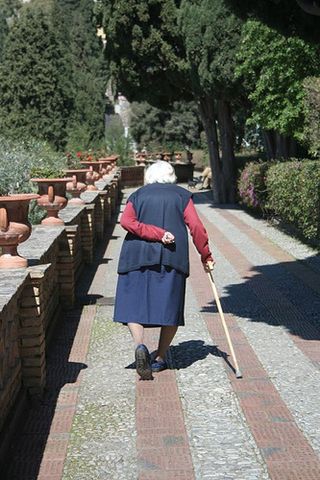
An interesting study was carried out to see how effective mindfulness meditation would be for older adults who suffer with chronic lower back pain.  Among older adults, this is a common problem that can have devastating consequences. Traditional pain therapies have their limitations and side-effects. The study wished to see if mindfulness meditation, as a non-invasive method not requiring any special equipment, could contribute to the treatment of this problem.  There are significant psychological and cognitive fac­tors which contribute to the pain inten­sity and disability associated with this chronic pain. The researchers wished to see if the MBSR Programme could be adhered to by this age group and whether it could help with the perception and tolerance of pain, along with the associated stress.

Participants were 37 community-dwelling older adults aged 65 years and older with chronic lower back pain of moderate intensity occurring daily or almost every day. Participants were randomized to the 8-week mindfulness-based meditation program or to a wait-list control group. After the 8 weeks, the intervention group displayed significant improvement in pain acceptance and physical function. Furthermore, the majority of participants continued to meditate at 3-month follow-up suggesting that they had incorporated meditation into their daily lives and may indicate that they experienced ongoing benefit from mindfulness meditation.

As a result of this study, it is argued that integrative mind-body therapies such as the MBSR program are a promising, non-pharmacologic, addition to current pain treatment for older adults.

Natalia E. Morone, Carol M. Greco, and Debra K. Weiner. Mindfulness meditation for the treatment of chronic low back pain in older adults: A randomized controlled pilot study, Pain. January 2008. Vol. 134. Pp. 310-319.

Developing your Meditation Practice, Stage 1 continued

The first of these posts talked about placement – we consciously place our awareness on the breath, intentionally moving away from whatever activity we were doing before.  At the same time, just as we sit down to practice, we simultaneously form our intention. One Zen teacher once gave a conference speech in which he summed up the whole of meditation in two words – “intention” and “attention”. S o the first stage in meditation involves forming an intention, right at the start,  the moment one sits. Our intention should be something like, I will use this period to consciously observe the mind and get to know it better. In a sense, we set a gentle model for our activity over the next twenty or thirty minutes.

Why is this so important? Because if we rush into sitting without consciously being aware of changing our activity and forming our intention we can find the mind wandering very quickly. After a minute or two we find ourselves in the same daydreaming we were involved in for much of the day or continuing the activity we have just finished. We may very quickly fall into the activity of checking how we are doing in this meditation and comparing it to yesterday’s or to a model of meditation which we have in our heads.

So the first stage in meditation is focused on how we sit. It seems obvious but is of vital importance. If we start well there is a greater chance that our whole sitting will go well. In the next post we will look at stage two, how to work with thoughts.

Letting the past go

Do not go after the past, Nor lose yourself in the future. For the past no longer exists, And the future is not yet here.

By looking deeply at things just as they are, in this moment, here and now, the seeker lives calmly and freely. You should pay attentive to what is really going on today, for waiting until tomorrow is too late.

The one who knows how to live calmly and attentively night and day is the one who knows the best way to be independent.

Bhaddekaratta Sutra