Looking at time and busyness

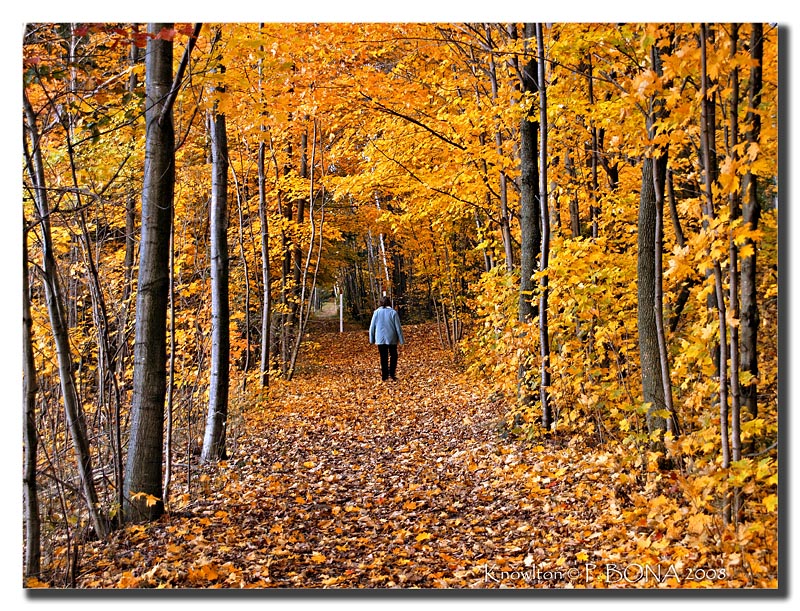
In Ireland the Gaelic name for October is Deireadh Fomhair, meaning the “last harvesting” – the last days of gathering whatever was  planted earlier in the year. It marks a change in energy, a winding-down for those who work on the land as they prepare for the dark days of winter. For us too, it can be a moment to look back on the work we have done this year, the way we have expended our energy, on how we have used our time. So, as our focus naturally turns more inward, we can use it as a season to reflect and find our balance  between our past and our future. We can take stock of what we are investing in and harvesting in our lives. We can begin to create space, recognizing unwise activity and busyness that only creates more distraction in our minds, keeping us running a lot but ultimately feeling more empty and less productive.

Naturally there are different species of laziness: Eastern and Western. Western laziness ……consists of cramming our lives with compulsive activity, so there is no time at all to confront the real issues. This form of laziness lies in our failure to choose worthwhile applications for our energy.We are so addicted to looking outside ourselves that we have lost access to our inner being almost completely. We are terrified to look inward, because our culture has given us no idea of what we will find.  So we make our lives so hectic that we eliminate the slightest risk of looking into ourselves. Even the idea of meditation can scare people. When they hear the words egoless or emptiness, they think that experiencing those states will be like being thrown out the door of a spaceship to float forever in a dark, chilling void. Nothing could be further from the truth. But in a world dedicated to distraction, silence and stillness terrify us; we protect ourselves from them with noise and frantic busyness. Looking into the nature of our mind is the last thing we would dare to do.

Sogyal Rinpoche

Realizing what is happening

Above the mountains
the geese turn into the light again

painting their black silhouettes
on an open sky.

Sometimes everything
has to be
enscribed across the heavens

so you can find
the one line
already written inside you.

Sometimes it takes
a great sky to find that

first, bright and indescribable
wedge of freedom
in your own heart.

Sometimes with
the bones of the black
sticks left when the fire
has gone out

someone has written
something new in the ashes
of your life.

You are not leaving
you are arriving.

David Whyte, The House of Belonging

A natural lightness of heart

Meditation comes alive through a growing capacity to release our habitual entanglement in the stories and plans, conflicts and worries that make up the small sense of self, and to rest in awareness. In meditation we do this simply by acknowledging the moment-to-moment changing conditions—the pleasure and pain, the praise and blame, the litany of ideas and expectations that arise. Without identifying with them, we can rest in the awareness itself, beyond conditions, and experience what my teacher Ajahn Chah called jai pongsai, our natural lightness of heart.

Jack Kornfield, A Mind like Sky: Wise Attention, Open Awareness


What we think we know

Instead of building bigger or fancier boxes, we need to develop the antidote to all our partial views of reality: being present with our experience as it is. This is unconditional presence. We could also call it beginner’s mind. As Suzuki Roshi put it, “In the beginner’s mind there are many possibilities, in the expert’s there are few.” We have all become experts at being ourselves, and in so doing we have lost our ability to be present with our experience in a fresh, open-minded way. Beginner’s mind is a willingness to meet whatever arises freshly, without holding to any fixed idea about what it means or how it should unfold.

John Welwood, Towards a Psychology of Awakening

Resting the mind

Sometimes you may think that to sit is very difficult. But when you are able to stop and be at peace it is very easy…While sitting I make almost no use of my intellect. I don’t try to analyze things or solve complex problems by thinking about them. Thinking requires strenuous mental work and makes us tired. This is not the case while resting in awareness, or recognizing thoughts and emotions as they appear, or even taking the time to look deeply into them. We have a tendency to think that meditation demands a great mobilization of grey matter, but that’s not really the case.  Meditation is not hard labour.  Meditation rests the mind
Thich Nhat Hahn, Making Space: Creating a Home Meditation Practice

Working with the inevitability of change

That change is constant is one of the main things we realize early in an MBSR Course or in our practice. As Mick, one of the participants in the present Course said,  after a week of doing the Body Scan, everything was “random”, in the sense that how it went one day was completely different from how it had gone the previous. We have an internal expectation that things should all be moving, yes, but in the sense of getting better, calmer, more on top of life. However, just to sit for 30 minutes lets us see that nothing stays still for long and we come to realize that maybe this is a better “ground” on which to base our understanding. There is constant movement in our internal life, as we can see from the coming and going of our thoughts. Looking deeper we can see the roots of this movement in the changing emotional reaction to simply letting our life be, as it actually is, rather than to how we think it should be.

Mindfulness practice tells us that the best way to work with the anxiety around change is to look inside and be curious about what are our reactions to the inevitable ups and downs of each day. This strengthens our capacity to hold change in awareness,  and can help us to avoid holding onto situations which have to evolve.  Being open to the reality of change and not holding on is a wise practice, for just as we are beginning to see around us these days in nature, parts of our lives have to fall away, lie fallow and die so that what needs to emerge can do so. Trusting this process means that we can come to see that what we thought once was vital and solid for our life may not necessarily be so. Much of our sense of self is based on the past – what we recently were and what we perceived to be important. Mindfulness practices helps us stay in the present, not defining our life by the past nor living in our fears about the future.