As I have written before, modern society is not very comfortable with any nuances in happiness. It invariably prefers to portray people’s lives as always happy and show that successful people have gotten it all together. There is no real place for a narrative that contains moments of struggle or periods when less obvious forms of growth are nurtured. This can mean that we fall in to the trap of interpreting all sadness or mundane moments as an indication that we are doing something wrong, or that our life is on the wrong track. Frequently we fail to see that a lot of the models presented to us are not valid representations of our lives. And many images we see can easily turn into thoughts of an idealized future where we will be happier, thinner, more popular, and these thoughts may undermine the place we are actually called to be. This can be especially present in the weeks after Christmas and New Year, moments that some people find tough and when the media is full of strategies, advice and initiatives to improve our life and achieve greater success. A different strategy is cultivated in mindfulness practice, based on staying close to where we actually are, acknowledging that a sense of groundlessness or loneliness is normal in humans, and that part of practice is learning to sit with this.
If we are feeling unhappy, what is called for is a willingness to simply be with that unhappiness. If we’re not careful, we say something’s wrong, though it doesn’t really help to say that. We say it either inwardly or outwardly. This projecting of blame is a consequence of having made an inner mistake of misperceiving our unhappiness, sadness or suffering as being something wrong. We don’t receive it just as it is. We don’t acknowledge it and feel it, allowing it to happen; we don’t have the ‘knowingness’ to see it as activity taking place in awareness. Because we don’t have that perspective, we struggle to do something about our suffering, to deal with it in some way. To say that something has gone wrong and that it’s somebody’s fault is a heedless way of dealing with our unpleasant experiences. The habit of consistently doing this is a symptom of what I call the compulsive judging mind.
Ajahn Munindo
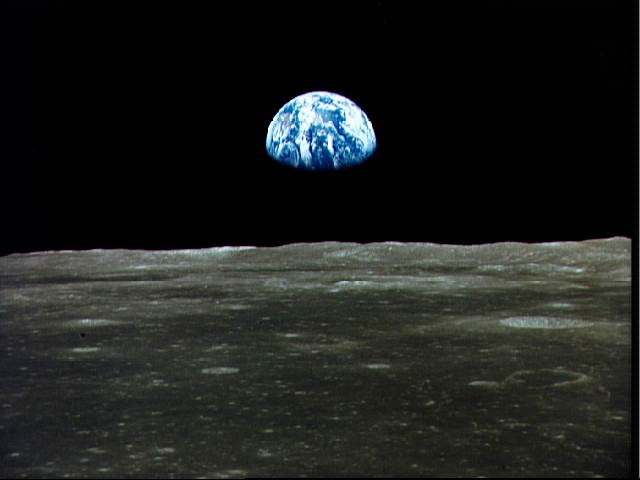 My favorite picture is earthrise as seen from the moon. It’s perfect. A great blue and green ball floating in vast black space, hanging right there in its orbit. From that vantage point, the scene on earth is awesome. creatures being born, other ones dying; plants blooming on one side, plants withering on the other; snow snowing, winds blowing, volcanoes erupting, earthquakes shivering, people talking, music playing. From the moonview, its incredible cosmic drama. From our usual view, inside the drama, looking up at the moon, it’s a different story. It changes from the drama to my drama and gets to be a problem. If you’re far enough away, it’s not your story – its one of the six and a half billion stories.