
The art of living….consists in being sensitive to each moment, in regarding it as utterly new and unique, in having the mind open and wholly receptive.
Alan Watts
The art of living….consists in being sensitive to each moment, in regarding it as utterly new and unique, in having the mind open and wholly receptive.
Alan Watts
If you live the life you love, you will receive shelter and blessings. Sometimes the great famine of blessings in and around us derives from the fact that we are not living the life we love; rather, we are living the life that is expected of us. We have fallen out of rhythm with the secret signature and light of our own nature.
John O Donohue

Everything that slows us down
and forces patience,
everything that sets us back
into the slow circles of nature,
is a help.
May Sarton
 Fall is when nature plants her seeds. And yet, the seeds of possibility planted with such hopefulness in the fall must eventually endure winter, a season when the potentials planted at our birth appear to be dead and gone. As we look out upon the winter landscape of our lives, it seems clear that whatever was planted is now frozen over, winter-killed, buried deep in the snow. Far too many teachers, physicians, and other professionals find the winter metaphor an all-too-apt description of the inner landscape of their lives.
But as we come to understand winter in the natural world, we learn that what we see out there is not death so much as dormancy. Some things have died, of course, but much that is alive goes underground in winter to await a season of renewal and rebirth. So winter gives us a chance to name, metaphorically, whatever may feel dead in us, to wonder whether it might be not dead but dormant — and to ask what we can do to help it, and ourselves, to “winter through” until spring. As adults, we like to think of ourselves as fulfilled, not partially dormant. When we drop that pretense and acknowledge how much remains unfulfilled in us, good things can happen, and not for us alone.
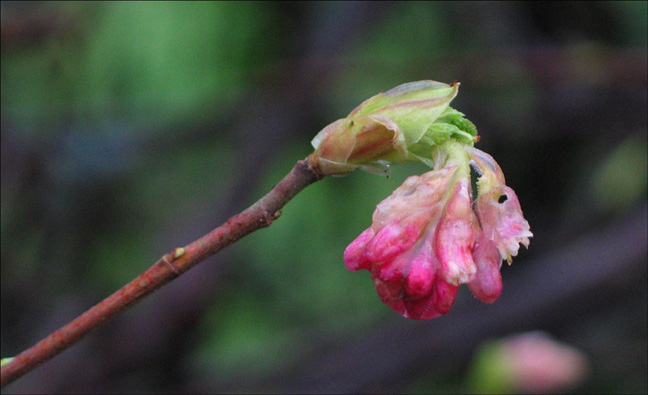
Spring is the season of surprise. Now we realize that, despite our winter doubts, darkness yields to light, and death makes way for new life. So one metaphor for this season is “the flowering of paradox”. As winter’s darkness and death give rise to their apparent opposites, spring invites us to contemplate the many both-ands we must hold to live life fully and well: the deeper our faith, the more doubt we must endure; the deeper our hope, the more prone we are to despair; the deeper our love, the more grief we are likely to know. Spring reminds us that, as creatures of the natural world, we know how to embrace paradox as instinctively as we know how to breathe both in and out. Our challenge is to stop using our minds to divide everything into forced choices, into either-ors.
Parker Palmer, Teaching with Heart and Soul
Joy is exactly what’s happening minus our opinion of it.
Charlotte Joko Beck.
Oh, give us pleasure in the flowers to-day;
And give us not to think so far away
As the uncertain harvest; keep us here
All simply in the springing of the year.
Robert Frost, A Prayer in Spring
 This morning two birds
fell down the side of the maple tree
like a tuft of fire, a wheel of fire
a love knot out of control as they plunged through the air
pressed against each other
and I thought
how I meant to live a quiet life
how I meant to live a life of mildness and meditation
tapping the careful words against each other
and I thought—
as though I were suddenly spinning, like a bar of silver
as though I had shaken my arms and lo! they were wings—
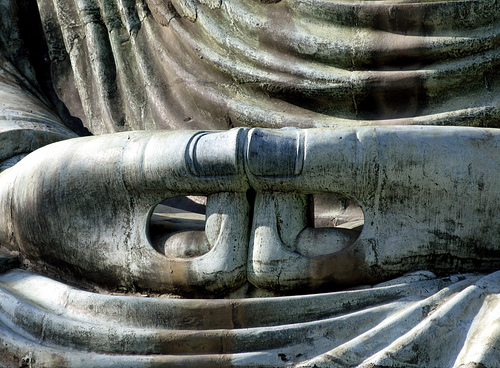
of the Buddha
when he rose from his green garden
when he rose in his powerful ivory body
when he turned to the long dusty road without end
when he covered his hair with ribbons and the petals of flowers
when he opened his hands to the world.
Mary Oliver, Spring
 Mindfulbalance