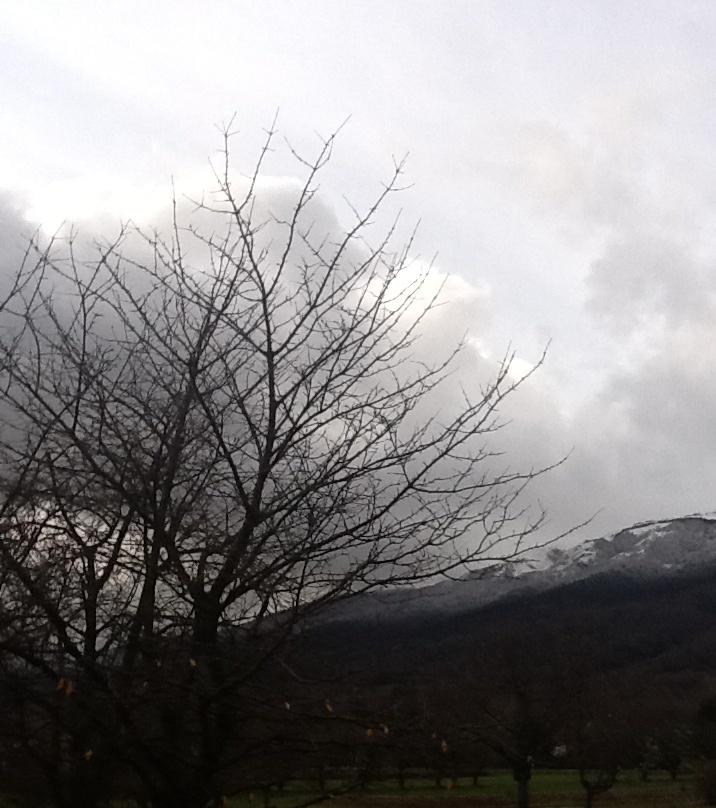
 The strong winds on Sunday night blew the last leaves from the trees and they stand bare in the garden, clearly seen against the grey sky. Snow fell on the tops of the nearby Jura mountains. I was involved in a retreat over the weekend where we reflected on Kabir’s beautiful words “Throw away all thoughts of imaginary things and stand firm in that which you are“. However, as we all experience from time to time, that firmness does not always seem so near, and we can be blown by winds of doubt and self-criticism. It feels cold and we think we are alone. In moments like these we have to be patient. We cannot see the whole picture or understand why things are happening. When moments seem dark we can identify with what is going on in our emotions and get fixed there. We settle quickly into the negative feelings about ourself or our life, turn in on ourselves and close down. However, the theme of the weekend, and the weather outside, remind us to keep our roots deep in the goodness underneath, and not in what passes through the mind. We do not need to hold on to what is happening. Some kinds of unknowing are right. We trust even if we cannot see. In waiting, even in difficult moments, what is coming to pass is gradually revealed.
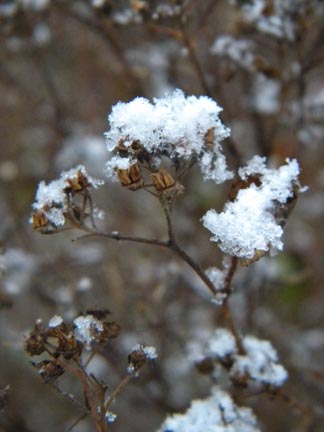
I prefer winter …… when you feel the bone structure of the landscape – the loneliness of it, the dead feeling of winter.
Something waits beneath it, the whole story doesn’t show.
Andrew Wyatt, American Painter


 Mindfulbalance