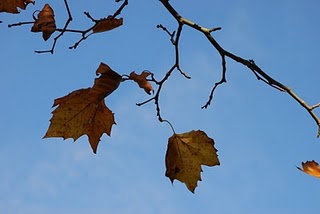
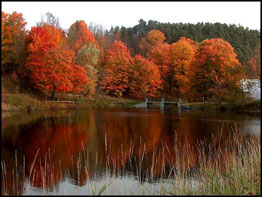
 Autumn is the season of reaping what has been sown and of things coming to fruition. Traditionally, it is also the period when one begins to wind down and celebrate the abundance and goodness of the earth, before the year moves into the dark and cold time of winter. Because of the rich colours and changing light it is a very suggestive time, and leads us to reflect on changes and growth, as well as letting things go and moving on. From the Autumn Equinox onwards the days get shorter and darkness and night take center stage. These changes are natural and remind us of the balance in our lives between light and darkness, growth and rest. We often more naturally prefer light and warmth to the dark and the cold. However, in this poem, we are reminded that some of the darkness in our lives is also a time of growth, as necessary as the bright days of Spring or Summer. The poet reflects on loss, and sees reflections of her struggle and grief outdoor in Nature. She sees the challenge, where she needs to go – to let go “as trees let go their leaves,” and “treelike, stand unmoved before the change.”
If I can let you go as trees let go
Their leaves, so casually, one by one;
If I can come to know what they do know,
That fall is the release, the consummation,
Then fear of time and the uncertain fruit
Would not distemper the great lucid skies
This strangest autumn, mellow and acute.
If I can take the dark with open eyes
And call it seasonal, not harsh or strange
(For love itself may need a time of sleep),
And, treelike, stand unmoved before the change,
Lose what I lose to keep what I can keep,
The strong root still alive under the snow,
Love will endure – if I can let you go.
May Sarton, Autumn Sonnets
 I used to hurry everywhere, and leaped over the running creeks.

 Mindfulbalance