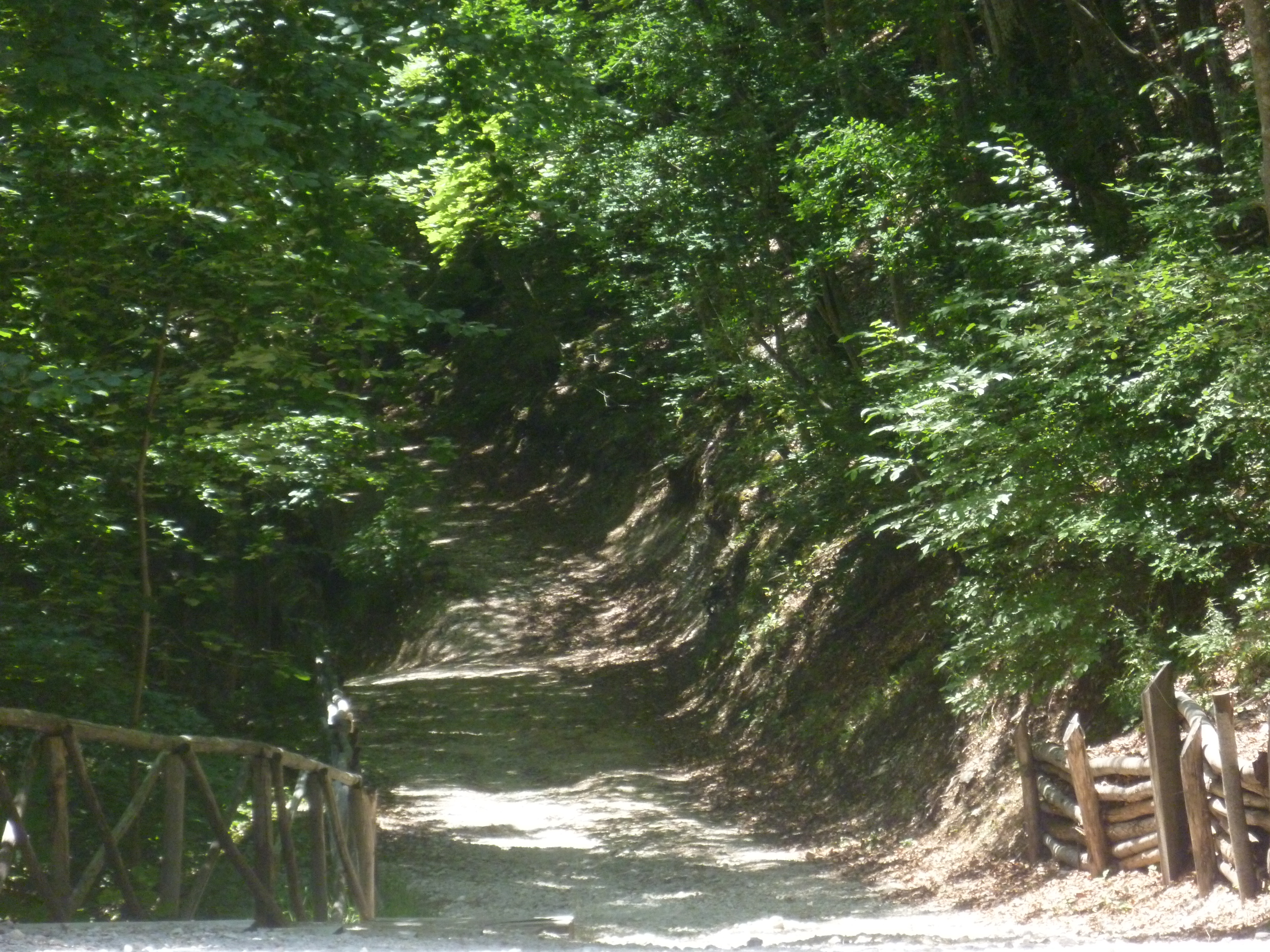
 I have been travelling and on holidays in the past few weeks. Outside travel and movement is a good time to observe ongoing inner movement. Even when relaxed, the ever-present restless mind was working away, wanting that things fit into a pre-decided idea of how moments, such as those spent on holidays, “should” be. Days should be relaxing, places should be better or give the exact same sense as before, the weather should consider me and be warmer or cooler, my mood calmer or more enthusiastic. This characteristic of the mind is described in one ancient text as giving rise to the “shackles of constant becomings” – always moving, always wanting something else and seeking fulfilment. Thus, as happens frequently, things were often seen as too much – “It was too hot to do anything” – while others not enough – “There were too many people there and it was not quiet enough to allow me enjoy the place”.
The following, profound, text describes both this problem and indicates the way towards its resolution, through a certain type of journey. The end of our restless, wanting-more, wanting-other, mind cannot be calmed by “travelling”, it tells us. The word “travelling” here seems to suggest, looking outside for solutions, such as ideas about our life or intellectual concepts, or in the latest technique – doing more, fixing more, trying harder – all of which are rooted in the unending quest to get our life under control by figuring it out or getting something. On the contrary, the radical solution proposed – that gets to the heart of our restlessness – is to be found in a type of travel, but one that goes inside, getting to know the body and heart, in an experiential way. In becoming familiar with the sensations of the body and how they give rise to energies in the heart that leave us restless, and seeing these body and heart formations as passing through and not identifying with them, we take the journey that leads to the end of our restless travel. The whole world is to be found there.
That end of the world wherein one is not born, does not grow old or die, pass away or reappear, that I declare, is impossible to be known, seen or reached by travelling. But, friend, I do not declare that one can make an end of suffering without reaching the end of the world. Friend, I do proclaim that in this very body, with its perceptions and consciousness, is the world, the world’s arising, the world’s cessation and the path leading to the world’s cessation.
The Buddha, Rohitassa Sutta.


 Mindfulbalance