
If I make a metaphor of my body,
it’s a desert. One part longing,
one part need, the rest withstanding. Of course
I would prefer to be thirsty
for nothing.
Kayleb Rae Candrilli, American poet
If I make a metaphor of my body,
it’s a desert. One part longing,
one part need, the rest withstanding. Of course
I would prefer to be thirsty
for nothing.
Kayleb Rae Candrilli, American poet

The end of the year in the Christian Calendar. A different rhythm begins tomorrow with the start of Advent
In this world of speed and distraction, choosing to be less busy feels almost countercultural; slowing down, eccentric. Perhaps it is, for there’s no denying the expansive, time-bending effects of awareness. Sometimes, I do call it meditation: I sit cross-legged on a cushion in my yoga room; I set a timer and focus on my breath, bringing my attention to bear on the elusive, invisible third eye in the center of my brow point. These sittings are humbling: My mind sneaks away, I chase it down, lead it back, tie it again and again to my breath. Eventually, if I’m not in a rush to get on to the next thing, a small, silent space clears. I savor the taste of quiet, roll it around on my tongue, feel the day’s contours softening and opening around me.
Katrina Kenison, Magical Journey: An Apprenticeship in Contentment
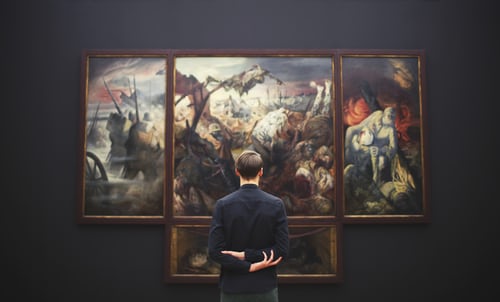
Psychologist Steve Taylor recalls watching tourists in the British Museum in London who weren’t really looking at the Rosetta Stone…on display in front of them , so much as preparing to look at it later, by recording images and videos on their phones. So intently were they focusing on using their time for a future benefit – for the ability to revisit or share the experience later on – that they were barely experiencing the exhibition itself at all. Of course, grumbling about young peoples smartphone habits is a favourite pastime of middle-aged curmudgeons like Taylor and me. But his deeper point is that we are all frequently guilty of something similar. We treat everything we’re doing – life itself in other words – as valuable only insofar as it lays the groundwork for something else.
from the always interesting Oliver Burkeman, Four Thousand Weeks: Time and How to LIve it

The sage Chuang-Tzu was walking with a disciple on a hilltop. They see a crooked, ancient tree without a single straight branch. The disciple says the tree is useless, nothing from it can be used and Chuang-Tzu replies, “That’s the reason it’s ancient. Everyone seem to know how useful it is to be useful. No one seems to know how useful it is to be useless”
Joseph Goldstein, The Practice of Loving Kindness for all
The one who knows that enough is enough
will always have enough.
Lao Tzu, Tao Te Ching, 46

A Zen saying helps us – “This being the case, how shall I proceed?”
That is so much more an adult question than “This being the case, who is at fault?” or “why is this happening to me?”
David Richo, The Five Things we Cannot Change

