
One of the symptoms of approaching nervous breakdown
is the belief that one’s work is terribly important.
Bertrand Russell, British Philosopher.
One of the symptoms of approaching nervous breakdown
is the belief that one’s work is terribly important.
Bertrand Russell, British Philosopher.

Both our present and our future depend on us.
From moment to moment, we are creating our future.
Tenzin Palmo
 A central truth of practice is that in order to come to the present, we must go through the past. This does not mean we have to relive or analyse our childhood, but it does mean that when our attention steadies itself in the here and now, we will be met with the residue of our past conditioning. Awakening means exposing and investigating areas of this past conditioning where the sense-of-self remains identified within a pattern, thought or emotion.
Rodney Smith, Stepping out of Self Deception.
The paradox is indeed that new life is born out of the pains of the old.
Henri Nouwen, Reaching Out.

To listen is to continually give up all expectation and to give our attention, completely and freshly, to what is before us, not really knowing what we will hear or what that will mean. In the practice of our days, to listen is to lean in, softly, with a willingness to be changed by what we hear.
Mark Nepo
 Contemplate beginning. When you think of birth you think of ‘I was born’, but that is the great birth of the body, which we can’t remember. The ordinary birth of ‘me’ which we experience, in daily life is ‘I want, I don’t want, I like, I don’t like.’ That’s a birth, or seeking to be happy. We contemplate the ordinary hell of our own anger, the anger that arises, the heat of the body, the aversion, the hatred we feel in the mind. We contemplate the ordinary heaven we experience, the happy states, the bliss, the lightness, the beauty in the here and now. Or just the dull state of mind, that kind of limbo, neither happy nor unhappy, but dull, bored and indifferent. In meditation we watch all these within ourselves. So in practice we are looking at the universe as it is reflected in our own minds..
Ajahn Sumedho
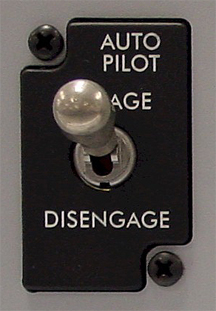 I came across this study, carried out by Dan Gilbert and Matthew Killingsworth, just yesterday, even though it was published last November. It confirms that most of us are ‘mentally checked out’ for a good portion of the day, operating on a type of autopilot which does not lead us to feeling very content. For 46.9% of the time during their waking hours people are engaged in ‘mind wandering’, not really focusing on the outside world or the task at hand, but rather looking into their own thoughts. And what this study of 2,250 people shows is that this activity – despite its obvious attraction – doesn’t make us feel happy.
The study was designed to find out what kind of activities people did throughout a day, and which made them happiest. So people were asked to indicated what they were engaged in at different random moments chosen during the day. Mind wandering was just one of 22 possible activities people could list, but turned out one of the most common. And here is the interesting part – the participants reported being unhappy during the periods of mind wandering. Thus how people deal with mind wandering is a better predictor of happiness than many other indicators which we normally use, such as relationships, careers or the actual activities people are engaged in. The study is another support for the effectiveness of mindfulness meditation, with its emphasis on just staying in the present moment and recognizing our stories as stories, as an aid toward greater happiness.

