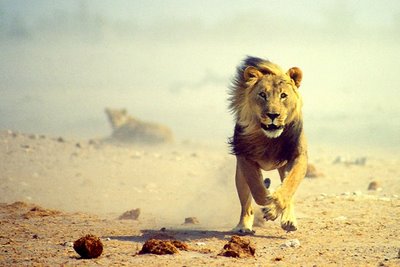
 You can outdistance that which is running after you,
but cannot outdistance that which is running inside you.
African proverb
You can outdistance that which is running after you,
but cannot outdistance that which is running inside you.
African proverb
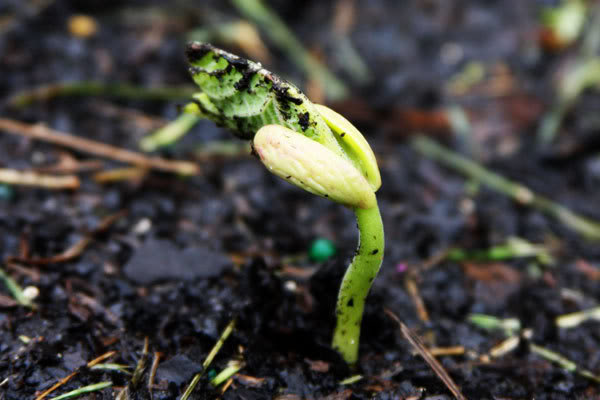 Help us to be the always-hopeful gardeners of the spirit,
who know that without darkness nothing comes to birth,
as without light nothing flowers.
May Sarton
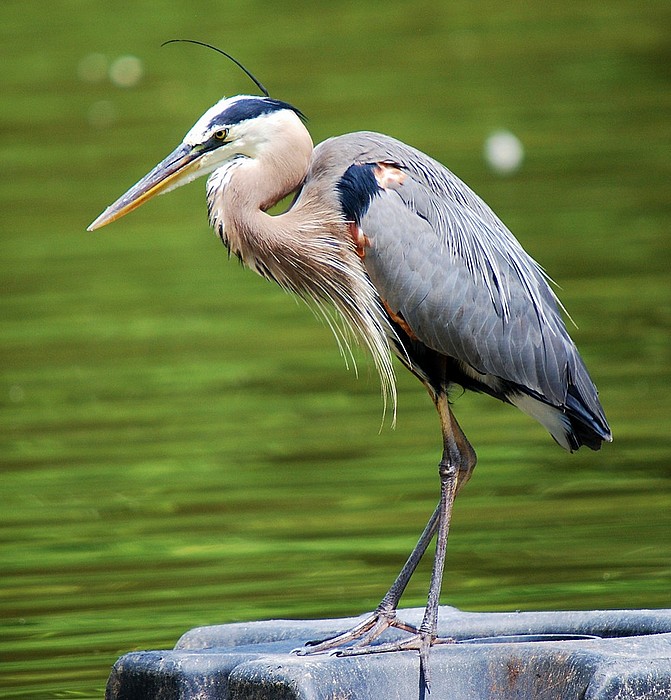 Judith sent me this beautiful poem, by a Canadian poet. Again, the action of a heron – this time its almost “monastic” stillness – confronts the poet and prompts reflections on how some moments contain everything:
A hunched grey shape
framed by leaves
with lake water behind
standing on our
little point of land
like a small monk
in a green monastery
meditating
almost sculpture
except that it’s alive
brooding immobile permanent
for half an hour
a blue heron
and it occurs to me
that if I were to die at this moment
that picture would accompany me
wherever I am going
for part of the way
Al Purdy, The last picture in the world
 Good and bad,
happy and sad,
all thoughts vanish into emptiness
like the imprint of a bird in the sky.
Chogyam Trunkpa Rinpoche
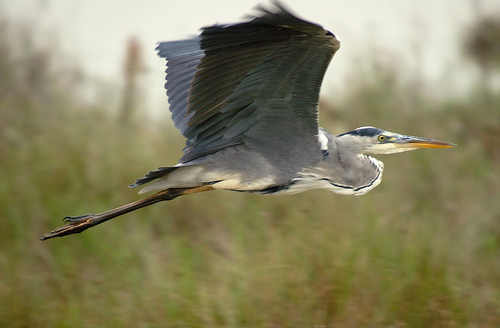 Last week, walking, I was startled by a heron taking off. This beautiful large bird rose up with very graceful slow beats of its wings, its long neck folded into a “s” shape, and flew away, letting out a loud squawk as it got further away. I looked after this bird as it vanished into the distance, leaving silence behind. Normally herons do not draw much attention to themselves, as they stand, solitary and still, for hours in fields or water, waiting to catch a frog or fish.
Because of this, for the ancient Celts the heron symbolized independence, patience and intelligence. They saw them as special creatures, who dwelt between the different realms of land, water and sky. Maybe because of its solitary nature, the heron was also seen as a messenger from the gods. And moments when we come accross the beauty of nature close up often feel like blessed moments, especially as we stand in the silence looking after them.
I admire the heron’s capacity to stand still, to stay focused, to draw on inner resources. It reminds me to trust myself, to nurture my own roots, ones that nothing and nobody can take away. I do not need to “produce” something in order to be happy. Looking at it standing there prompts me to see that I have a responsibility to befriend myself first of all, to be be comfortable my own solitude before any interactions with others and with the world. I see that I need to deconnect more, to quieten the noise, to simplify this increasingly complicated life, and resist the truth advanced today that being always connected means being more fruitful.
It is only from this place of solitude, from having our own wells, that we can really listen to others and relate to their deepest needs. As Mary Oliver reflected when she saw a heron rise up, new life rises up from the depths of the dark pools in which we stand. We have to descend before we can arise.
So heavy is the long-necked, long-bodied heron,open
and she turns from the thick water,
from the black sticks
of the summer pond,
and slowly rises into the air
and is gone.
Then, not for the first or the last time,
I take the deep breath
of happiness, and I think how unlikely it is
that death is a hole in the ground,
how improbable
that ascension is not possible,
though everything seems so inert, so nailed
back into itself–
the muskrat and his lumpy lodge,
the turtle, the fallen gate.
And especially it is wonderful
that the summers are long
and the ponds so dark and so many,
and therefore it isn’t a miracle
but the common thing,
this decision,
this trailing of the long legs in the water,
this opening up of the heavy body
into a new life: see how the sudden
gray-blue sheets of her wings
strive toward the wind; see how the clasp of nothing
takes her in.
Mary Oliver, Heron rises from the Dark Summer Pond
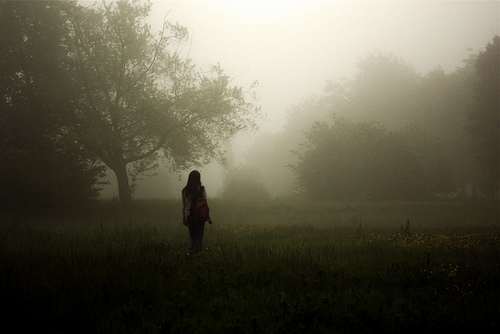 Was listening to the radio from Ireland earlier this evening. It is striking to note how economic uncertainty generates fear, and this fear can cause so much turmoil. It shows us how much we like the illusion of knowing where we are going and get so anxious when we realize that so many things are outside our control. At times like this we can see people feeling unprepared and scared in what they see as a harsh and hostile world.
Cetainly, when times are difficult it is only natural to feel sorrow, fear, despair, confusion, discouragement, and so on. It is however, striking to note how quickly we move to think that something is wrong with us. We seem to think that it is our right to feel that things should go well for us, and that if we start to feel depressed, lonely, or inadequate, that something has gone wrong with the plan for our lives. True, it is natural to have fears that arise from time to time in response to real situations. However what we notice is that an underlying presence of fear is often in the background throughout our days and that seems to be something that we simply have to work with. We cannot turn to outside distractions to bail us out. Each day a lot of our time is often simply concerned with dealing with this presence. Our practice teaches us one way : to sit with these feelings and to see them, like other mental events, as passing through the mind, and stop them before they develop into the full-blown fear that makes practice difficult. We try to stay with the felt experience in our bodies, and separate that from the storylines which so easily arise. I know this in theory, and can do it today becaue the economic siutuation in Ireland does not affect me as I no longer live there. However, in other matters, closer to home, I do not find it as easy. I get hooked too easily in the storyline and identify with it, believing its “truths” about me and my lack of strength, and get uncertain about my direction and my goals.
Fear spreads; it is our constant companion. It seems to be the default position of our minds. Our practice is essentially how to work with it and continually soften out hearts in the face of it. Wisdom comes from accepting that good times happen and bad times happen. We try to be present no matter what.
We cannot be in the present moment and run our story lines at the same time. Impermanence becomes vivid in the present moment; so do compassion and wonder and courage. And so does fear. In fact, anyone who stands on the edge of the unknown, fully in the present, without a reference point, experiences some fear. That’s when our understanding goes deeper, when we find that the present moment can be completely unnerving and completely tender at the same time.
Pema Chodron, Comfortable with Uncertainty

