The wounds in our hearts

At some level we will always be afraid. And the world we live in is very competitive one, which means that we do not always feel secure enough to reveal our true selves. So there is a lot of loneliness in the world, despite modern advances in communication and networking. A great value is placed on  achievement and appearance, and  strength and competency are appreciated. We can get the same message in a different way in our families as we are growing up. Maybe a parent does not have the emotional space at that time in their life to provide a consistent response to our moments of neediness. So we can come to believe that our acceptance by others is based on us being competent or strong in some way, or by us doing something for them. Then as we grow we can get many experiences that confirm and reinforce this; we are disappointed and we pull back. We armour the heart.

And yet, deep within us, we long for someplace where we can feel completely accepted. We want to be in front of someone, not to have to do something to be welcomed. We want to let out the parts that we have hidden away. We look for someone who is attuned to us and who can see us in our brokenness without turning away. We especially wish for that person to be able to contain us when we come up against moments which we take as more proof that there is something wrong with us. And we approach situations or relationships with the deep-down hope that this time our needs will be held and met, rather than finding the same disappointment as before. At moments like that the other person becomes the place where our history and our unconscious needs are played out. We look for someone who will not disappoint us now.

What I am slowly learning in mindfulness practice, is that the way to work with my fears is not to try to fix them but to open a space around them first and allow them to be. As Pema Chodron says:  This is the primary method for working with painful situations….. We can stop struggling with what occurs and see its true face without calling it the enemy. It helps to remember that our practice is not about accomplishing anything—not about winning or losing—but about ceasing to struggle and relaxing as it is. That is what we are doing when we sit down to meditate. That attitude spreads into the rest of our lives. It’s like inviting what scares us to introduce itself and hang around for a while.

And what I have noticed is that people often find hardest at the start of mindfulness practice the idea of a non-judgmental attitude towards themselves, to stop beating themselves up when they find it hard to meditate. And frequently people say to me that the most difficult element in the loving-kindness practice is extending kindness towards themselves.

And it seems to me that is what is needed in relationships also. What we are seeking is someone who can accept us, hold us in our weakness and fears, allow us to be as we are.  Most people, myself included, have tried the alternate strategy, returning again and again to the wounds and fears deep inside them,  trying to “fix” them.  But what I find is that some wounds are slow to change and we have to accept that we will always have some trace of our deepest fears, of old patterns that can be triggered in new guises.  We will always be wounded in some way. What we seek in relationships is not someone who appreciates us in our strengths and achievements , but  someone who can hold the fears which we feel, without panicking or taking it personally. It is not necessary to heal the wounds, but simply to be able to look at them without turning away.
Support in times of difficulty

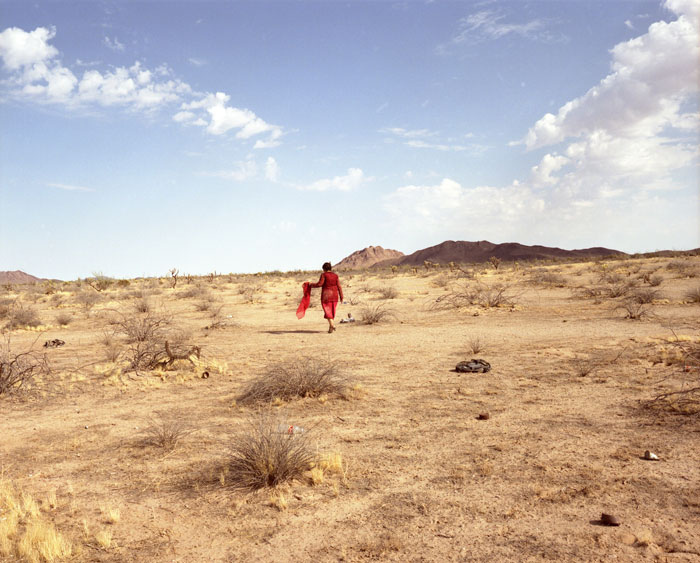
This week celebrates the feast of Saint Anthony, the founder of monastic practice in the Western Church. He went out into the desert at a young age to remove himself from some of the normal distractions in order to pay attention to what is really necessary. Most wisdom traditions have some reference to desert places, or retreats,  as a time for deepening or as a symbol for certain periods in our lives. We can have periods when we enter our own deserts and are forced to re-evaluate what is important and see what is really needed.

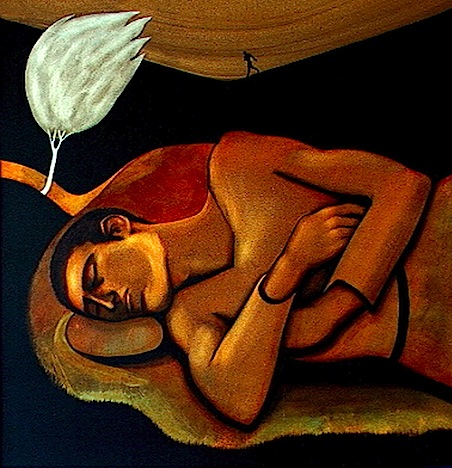
Deserts can be lonely and bleak places, however. So one of my favourite desert stories is that of Elijah who, in a period of danger, ran away into the barren desert. Elijah was a strong, forceful character, but after a setback in his ministry, he lost heart and became frightened. He  had no more motivation and lay down in the shade of a tree, wishing he would die. However what he found was that an  angel touched him gently and gave him bread baked on coals and water, telling him to eat in order to continue on his journey. He ate but had only the energy to sleep again. Again the angel gently touched him and encouraged him on his journey. Eventually Elijah rose and walked for forty days and nights to the Mountain of God.

As I have said before, these stories can be read on a number of levels.  Elijah is like a lot of us when events or people turn against us. It can lead us to doubt ourselves and the direction we have taken. Sometimes we feel we cannot go on anymore.  We may feel totally alone in the world. It is at that point, that frequently an “angel” comes to comfort and support us, someone whose encouragement or understanding simply gives us the strength to go on. An angel is a companion on our journey, sometimes a person, sometimes  other circumstances.  This angel is gentle and wakes Elijah up slowly. In our lives we notice that often others do not give up on us as easily as we give up on ourselves.  They are patient with us. I have found that they come into our lives at moments of difficulty, when we need consolation and comfort, restoring our trust, bringing us back to ourselves. At our deepest level having someone to share our hopes and fears with is what refreshes us most.

This presence becomes the nourishment we need at that time. In the story the angel brings bread baked on coals, symbolizing the ashes of the past experience. The angel opens our eyes and shows us what is right beside us to eat, which we had not seen up to that point. We have strengths within us that we are unaware of. Even in the desert of our difficulties there is bread. With the support from others, encouraged, we move on for forty days –  forty being the biblical number for transformation – leaving behind the past, moving on to a deeper sense of self.

Picture: Elijah in the Desert, Michael O’Brien.

Healing

Everyone alive has suffered. It is the wisdom gained from our wounds and from our own experiences of suffering that makes us able to heal. Becoming expert has turned out to be less important than remembering and trusting the wholeness in myself and everyone else. Expertise cures, but wounded people can best be healed by other wounded people. Only other wounded people can understand what is needed, for the healing of suffering is compassion, not expertise.

Rachel Naomi Remen

Choose either love or fear

Happiness, anxiety, joy, resentment — we have many words for the many emotions we experience in our lifetimes. But deep down, there are only two emotions: love and fear. All positive emotions come from love, all negative emotions from fear. From love flows happiness, contentment, peace, and joy. From fear comes anger, hate, anxiety and guilt.

We have to make a decision to be in one place or the other. If you don’t actively choose love, you will find yourself in a place of either fear or one of its component feelings. Every moment offers the choice to choose one or the other. And we must continually make these choices, especially in difficult circumstances when our commitment to love, instead of fear, is challenged.

Elizabeth Kubler Ross

Lost

Whether all is really lost
or not depends entirely on
whether or not I am lost.

Vaclav Havel

Tonight we’re going to party….

The expectations which a new year creates can sometimes heighten the sense of  disappointment or insecurity which we feel regarding where our life actually is.

There are a number of ways in which we can respond to this insecurity. One is to say “Tonight we are going to party like it’s ….” In other words, focus on what needs to be added to your life and throw yourself into something different. Convince yourself that what is required is to go out and find a party or new friends and surround yourself with life and music, get a new look and start all over again. In this way you can leave behind the past year/ person/ relationship/ bad patch (insert your own version here……….) and break free, finally, once and for all.  Now,  this not the worst of ideas, and I too will celebrate the evening in a party with friends.  However, if the underlying causes are not faced most likely it just offers relief for a few hours. Most things started in haste or under pressure tend to pick up at the same level of development we are at when we jump into them, and thus can just prolong the same issues.

A different response is to turn on yourself, focus on what is lacking, feel bad about who you are, dissect the reasons as to why you have reached the end of another year and yet are no further on than last year, and push harder. This pushing can take the shape of finding the root causes for your problems, such as having too many unhealed problems since childhood. Or it can simply focus on now, demanding more, pushing harder, renewing your positive thoughts or ambitions for the next twelve months. This is the way to be more focused/ more balanced/have a better body/ find a new relationship (insert your own version here………..) However, pushing ourselves towards perfection is unrelenting, and, as hard as we try, we are unlikely to turn off the critical messages in our heads that say “this is never good enough” or “what will those looking at me say?” And any desire for change which is based on unrelenting standards towards ourselves tends to maintain the same division between the “I” that observes and the “I” that is not good enough and thus just perpetuates the same perspective into the future.

There are some strange contradictions inherent in change and happiness. Change comes from accepting ourselves – resting with our imperfections and recognizing that we are already enough – and seeing that we are worthy of love and belonging.  All moving forward needs to be based on our capacity to sit still, accepting what we have. Happiness comes when we do not make it the focus of our efforts, but accepting that it comes even when we are not completely satisfied with where we are at any given moment.

Give up on yourself. Begin taking action now, while being neurotic or imperfect, or a procrastinator, or unhealthy, or lazy, or any other label by which you inaccurately describe yourself. Go ahead and be the best imperfect person you can be and get started on those things you want to accomplish before you die

Shoma Morita