Finding your princess

We are looking out there all the time, and not at ourselves.

Charlotte Joko Beck

The fact that all the news channels around the world devoted significant airtime to the announcement of the  engagement of Prince William and Kate Middleton shows that we have not lost our fascination with fairy tales. Most fairy tales, including those about the noble prince marrying the princess for love, can be seen as symbols of inner experiences and provide insight into human longings. Our choice of stories says a lot about us. When we identify with characters in a story we strengthen those aspects in ourselves. The British press is already looking forward to the wedding as a moment to help the nation look beyond its problems,  have its spirits lifted and its wounds healed.   It is as if the nation believes in this before-and-after story, looking to a hero to transform their circumstances, from inner poverty to riches.  By what, you may ask.  By just a wedding, or a wedding that has to carry all the hopes and dreams we all have for love and for life?

We too have a huge capacity to look outside ourselves for something to fulfill us. Most fairytales are quests to find out if there is a place elsewhere that has the something else that we feel we need. The biggest difficulty with this approach is that it divides the world into me and everything outside of me. And this gives rise to the tendency to look outside for something or some change in circumstance to respond to and heal the unease inside  of us. We can look for a career, or a inspiring teacher, or a religion or a practice……..something, someone,  to whom we can hand over the confusion and lack of direction we find inside ourselves. And often the place we do this most is in the relationships we seek to establish. We look to another person to fulfill us, to soothe the feelings of anxiety we find inside. We frequently place upon the other a wish to make our own lives more meaningful, more rich. We see the other person as the one who will fulfill our lacks, and often expect them to be able to heal our deepest wounds also. And yet  relationships do go a long way to touching the core parts of our being, especially when we find someone capable of deep sensitivity and selfless caring. However, drawing close to another inevitably brings our wounded places into sharper focus, and it can be quite a challenge to keep opening up the heart and allowing another person into our deepest self.

In my experience, I find that trying to live my life in a way that leads to my deepest happiness is something that requires constant attention.  I do not know if I get the balance right between outer and inner. I know that this fulness of life has something to do with living from my deepest inner capacities for loving and all that means. But often my experience is that I stumble   and fall in my attempts at full expression of that capacity. Despite the desire to connect, to relax with others, I  frequently hold back and check to see if they can actually hold my heart and my fears. I often pull back. I know that I am not alone in this: in my work I also encounter people who do not know how to show the love that they feel, or request the love that they need, the love whose absence makes a wound of this world and of so many lives.

Real life is  more complex than enchanted fairy tales. It demands in some way that we become disenchanted, not necessarily in a bad sense, but in the sense of being freed from the spell  which promises some magical saving from outside.  We have to discover that there are no perfect people, perfect job, perfect set of circumstances in which to live.  We have to be disenchanted in order to realize where true happiness lies. Happiness is an inside job, as a book reminds us, based on us looking inside rather than looking out., without however using that as a way of running from our need for love.  The original root of the word nobility comes from the greek word gnosis, meaning knowledge or wisdom. Our true nobility does not come from some outside prince, but from knowing how to live in harmony with an open heart.

The way to true happiness isn’t through trying to make everything right and pleasant on the external dimension, but to develop the right understanding, the right attitude towards ourselves.

Ajahn Sumedho
Sunday quote: Sharing

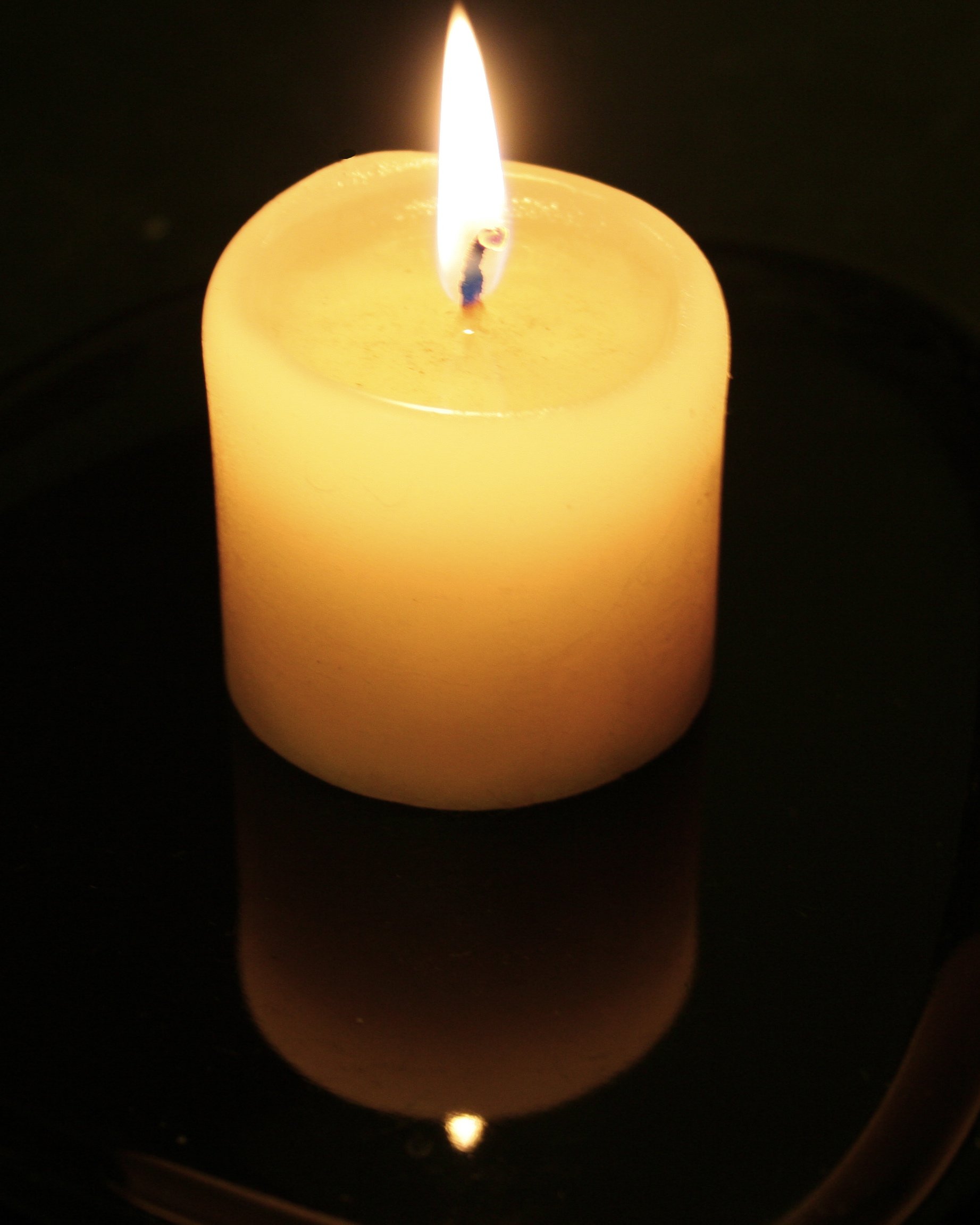
Thousands of candles can be lit from a single candle,
and the life of the candle will not be shortened.

Happiness never decreases by being shared.

The Buddha

Knowing us better than we ourselves do

There is a twilight zone in our hearts that we ourselves cannot see. Even when we know quite a lot about ourselves – our gifts and weaknesses, our ambitions and aspirations, our motives and our drives – large parts of ourselves remain in the shadow of consciousness. This is a very good thing. We will always remain partially hidden to ourselves. Other people, especially those who love us, can often see our twilight zones better than we ourselves can. The way we are seen and understood by others is different from the way we see and understand ourselves. We will never fully know the significance of our presence in the lives of our friends. That’s a grace, a grace that calls us not only to humility, but to a deep trust in those who love us. It is the twilight zones of our hearts where true friendships are born.

Henri Nouwen

Not getting stuck in the past

Nothing has a stronger influence psychologically on ….. their children than the unlived life of the parent. Carl Jung

I had a conversation today which made me reflect on the way that parental patterns have a huge influence on us even as adults. This notion has been around for a long time. In the Old Testament it was believed that the sins of the fathers are visited on their children. This was at times interpreted somewhat simplistically as a a way of explaining inherited illnesses or chance misfortune. However, in another sense it seems to accord with what can be found in modern psychology.

Some of the behaviours which we see in adult life are in response to unconscious traces left by experiences had in childhood. In general these experiences we have when little  frame us into certain judgements about the world. We come to see it as either predictable, stable and nurturing or uncertain and precarious. Our parents also had their own emotional and relationship patterns and ways of dealing with anxiety, and frequently played these out in their relationship to each other, impacting upon us as children. From this we drew our conclusions as to how to deal with the world, and how to develop our own relationships. This parental wound – or the places where our parents got stuck – has a huge influence on our own inner life. The inner world we form as a child will replicate what we see in the outer world and then as an adult we can gravitate towards situations that replicate this inner world dynamic.

We tend to do this by repeating the pattern or by being determined to do the opposite. However, because the opposite behaviour is undertaken in response to the parents’ way of behaving, we are still defining ourselves by it and end up strengthening the dynamic rather than weakening it. A lot of adult neurosis or anxiety can be understood as a part of the self looking to discover its full development away from the narrow confines of the family of origin. A repeating way of doing things or a rigid personal style is a clue to the original place of lack or neglect. Our minds love habits, even when they hurt us.

It is a slow work to recognize the limited nature of the early strategies which we have incorporated into our personality and begin the work of healing by no longer acting on them.

Telling the truth of our soul to ourselves is the first task. Living that truth is the second task. And telling it to other is the third. Such truth-telling will be the supreme test of our lives.

James Hollis

When things go wrong

A lot of practical things went wrong for me today – computers, recordings, simple practical details around courses. This added extra work onto the calendar and in speeding up things gets lost and mislaid. Have you ever noticed that sometimes  when things like this go wrong and disturb us, we have a tendency to think that something is wrong with us or the overall direction of our lives.  We may simply think we are doing too much. Sometimes it can go deeper and we think our whole life is out of sync. We seem to have a deep-down tendency to identify with a difficulty and let that affect how we see ourselves or how our life is going. This can also lead us to split the world into “good” and “bad” – or them and us-  seeing the situation or a person as all bad, and thinking that the best way of dealing with difficulties is to move them completely out of our life. Sadly, this maximizing of distance in order to increase a sense of personal safety often just solidifies our fearful or defensive sense of self.

Splitting is one of the primitive defense mechanisms described from Freud onwards, and is found particularly in Melanie Klein’s work. It is one of the more simplistic ways of dealing with life’s problems, rooted in the baby’s tendency of associating good experiences with a  “good” person and bad experiences with a “bad” person.  It is generally replaced as the child gets older by an understanding that good and bad occasions can reside in the one person and that does not make them “bad”. It is,  nonetheless  a common  way of behaving even in adults.  It is often activated when we are threatened, and means that we are unable to see complexity in a situation or a person, preferring rather seeing it or them as all bad.  It tells us that there is no grey area, and as a result people are frozen into a certain moment or fault and we let that moment define them. We can do it to ourselves also and solidify the most negative core beliefs about ourselves, letting them define our life, seeing it as threatened or frightened.

Mindfulness practice can help us be aware of this and other defense mechanisms arising, – to see fear forming – and help us notice the desire to withdraw –  normally accompanied by a kind of defensive story-line- as it appears.  If we can spot this happening we may have enough of a gap to see the whole drama . If so, we can question what is feeling threatened, whether it is really actually me, or some story which I have about myself and my life. If we can resist the tendency to split we can come to see that everything is actually workable. We can then experience for ourselves that it is ultimately possible to be open to everything, and to keep a compassionate heart available for others and for all that occurs in our lives.

When Beauty brightens

A poem I have posted before, remembering those who have gone before us.

Though we need to weep your loss,
You dwell in that safe place in our hearts,
Where no storm or might or pain can reach you.

We look towards each other no longer
From the old distance of our names;
Now you dwell inside the rhythm of breath,
As close to us as we are to ourselves.

Though we cannot see you with outward eyes,
We know our soul’s gaze is upon your face,
Smiling back at us from within everything
To which we bring our best refinement.

Let us not look for you only in memory,
Where we would grow lonely without you.
You would want us to find you in presence,
Beside us when beauty brightens,
When kindness glows
And music echoes eternal tones.

When orchids brighten the earth,
Darkest winter has turned to spring;
May this dark grief flower with hope
In every heart that loves you.

May you continue to inspire us:

To enter each day with a generous heart.
To serve the call of courage and love
Until we see your beautiful face again
In that land where there is no more separation,
Where all tears will be wiped from our mind,
And where we will never lose you again.

John O’Donohue