
Forgiveness is not always easy.
At times, it feels more painful than the wound we suffered, to forgive the one that inflicted it.
And yet, there is no peace without forgiveness.
Marianne Williamson
Forgiveness is not always easy.
At times, it feels more painful than the wound we suffered, to forgive the one that inflicted it.
And yet, there is no peace without forgiveness.
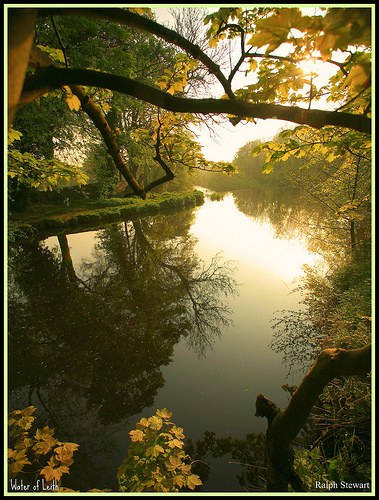 Sit comfortably for a few moments, letting your body be at rest. Bring your attention into the present and notice whatever sensations are present in your body. In particular, be aware of any sensation, tensions or pains you may have been fighting. Do not try to change them, simply notice them with an interested and kind attention. In each area of struggle you discover, let your body relax and your heart soften. Open to whatever you experience without fighting. Breathe quietly and let it be.
Continue to sit quietly. Then cast your attention over all the battles that still exist in your life. Sense them inside yourself. If you have an ongoing struggle with your body, be aware of that. If you have been fighting inner wars with your feelings, being in conflict with your own loneliness, fear, confusion, grief, anger or addiction, sense the struggle you have been waging. Notice the struggles in your thoughts as well. Be aware of how you have carried on the inner battles. Notice the inner armies, the inner dictators, the inner fortifications. Be aware of all that you have fought within yourself, of how long you have perpetuated the conflict.
Gently, with openness, allow each of these experiences to be present. In each area of struggle, let your body,heart and mind be soft. Open to whatever you experience without fighting. Let it be present just as it is. Let go of the battle. Breathe quietly and let yourself be at rest. Invite all parts of yourself to join you at the peace table in your heart
Jack Kornfield, A Path with Heart
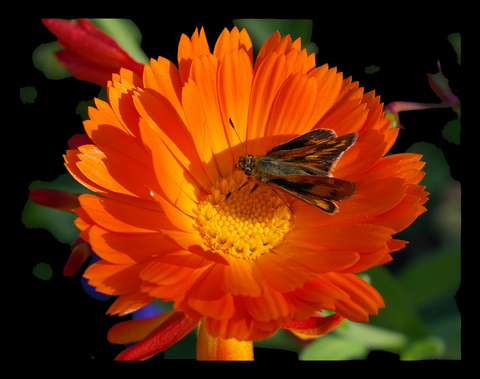
The first duty of love is to listen
Paul Tillich
 More on what I wrote about earlier this week prompted by seeing the hawk, and echoing Ajahn Sumedho’s words this morning, on simply being ourselves, and believing that this is enough, that it is a safe place to be. Over these past weeks I have met a lot of people who were tormented by self-doubt, by thoughts of never being “good enough”. Often this has led them to adopt strategies of pushing themselves in order to cover up some deep sense of lack. Some were afraid to admit their own needs because they had come to believe that the only way of being accepted was to be the perfect partner, the perfect girlfriend or boyfriend, doing everything for the other. Or others responded to their inner insecurity by controlling their partner or life so much, thus ensuring that they will therefore never leave them or never be left just with themselves.
Healing comes when we realize that we are perfect, just as we are, before we do anything, from being secure in our sense of self. The more we can sit simply with ourselves, the more we realize that everything we need for our happiness is already here, even with the histories we have had or the disappointments we have endured. Once again we can learn from nature: like the still hawk in the sky or the silent rose in the quote below, we try to be still and not run after happiness outside ourselves. Agere sequitur esse as the Medieval Philosophers liked to remind us: our actions flow out of our being. However, this is not just a philosophical truth. It is a practical way of increasing happiness moment by moment, day by day. Let go of all we think we have to add on to ourselves in order to be accepted or for this moment to be whole.
Does the rose have to do something? No, the purpose of a rose is to be a rose. Your purpose is to be yourself. You don’t have to run anywhere to become someone else. You are wonderful just the way you are. This teaching …. allows us to enjoy ourselves, the blue sky, and everything that is refreshing and healing in the present moment. We already have everything we are looking for, everything we want to become. I am happy in the present moment. I do not ask for anything else. I do not expect any additional happiness. Aimlessness is stopping and realizing the happiness that is already available.
Thich Nhat Hahn
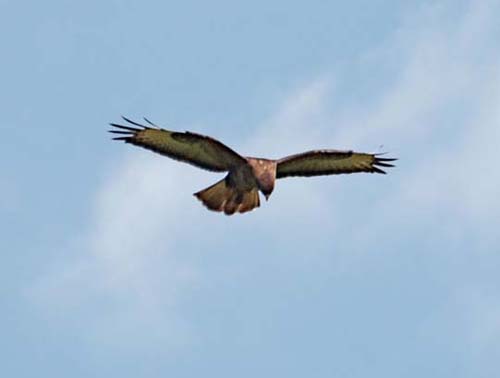 I was driving home from lecturing today and saw a hawk, still in the sky, hovering over the field, its eyes fixed on prey somewhere far below. I do not know why but this sight always makes me catch my breath; I always feel that I am before a thing of beauty. And it brought home to me again how animals simply are true to their nature, and follow their essence, without worrying too much about the meaning of it. They are, in some ways, “simple” – in the sense that the medieval writers used to talk about God – in the unity of their being and their actions. They are not divided within.
We, on the other hand, are frequently only too aware of the divisions within ourselves , of ongoing tensions, of a separation from our deepest self. We may spend our lives seeking a greater unity and a simple, undivided self, but on a day-to-day level are most conscious of how much we observe ourselves from outside. We are rarely just one., with ourselves or with our experiences. As I listened to the class today sharing their stories, I realized yet again how difficult it is to achieve the wholeness and simplicity we desire. Everyone forms ways of behaving – or defenses – as they are growing up, to cope with the demands and dangers of experiences that threatened them emotionally – caused maybe by parents’ imperfections or ways that they felt left down. And thus some arrive in adulthood with structures which allow them keep going in safety, but which at the same time can keep them severely limited in their fears and lack of ability to trust. Or others arrive with huge conditions placed on their worth – tied to others’ approval or to the necessity to strive, to achieve success or push themselves in work. They look outside themselves for the solutions to the emotional templates formed within when young.
We find it so hard to simply be ourselves, to believe that this is enough, that it is a safe place to be. We look to always add something to ourselves, or to this moment, to feel secure. And yet, looking at the hawk today, in its stillness, what strikes me most is the absence of something, maybe the absence of striving, the resting in just what it is – the ability to just be still and secure with that. We too need to relax into our own being, to let go of the patterns we have built up to protect ourselves, to trust that who we are, deep down, is enough.
We all have well-established habits of thought, emotion, reaction and judgement, and without the keen awareness of practice, we’re just acting out these patterns. When they arise, we’re not aware they’ve arisen. We get lost in them, identify with them, act on them — so much of our life is just acting out patterns.
Joseph Goldstein

Love is the capacity to take care, to protect, to nourish. If you are not capable of generating that kind of energy toward yourself – if you are not capable of taking care of yourself, of nourishing yourself, of protecting yourself – it is very difficult to take care of another person. To love oneself is the foundation of the love of other people. Love is a practice. Love is truly a practice.
 Mindfulbalance