Stay awake!

It is the acceptance of death that has finally allowed me to choose life. Elizabeth Lesser

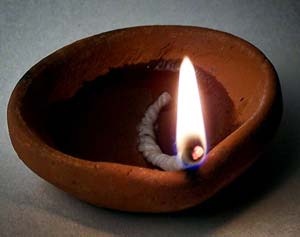
The gospel in this morning’s  liturgy is a well known one, reminding us of the need to be always on the alert for the return of the Master. It advises us to “stay awake, for you do not know the day or the hour“. We are urged to “always keep the lamps lit“. Initially understood as a reference to the immanent return of Christ,  it became applied to the awareness that life itself is precarious and that sickness and death can strike when we least expect.

This awareness of death can be very real when someone close to us is ill. However, it is also common in different wisdom traditions, including in Catholic and Buddhist practice,  to consciously reflect on death and on what legacy we would like to leave behind. The Dalai Lama recommends this as an ongoing practice, reminding us that death is part of life itself and is not bad in itself. He states that his daily meditation includes preparation for death: “Thinking about death not only serves as a preparation for dying and prompts actions that benefit future lives, but it also dramatically affects your mental perspective”

There is another way this morning’s text can be applied to our practice, not referring to the future or to our death. It simply reminds us to be awake , at every moment, to the different ways in which life presents itself, second by second. It is only in the present moment that we can fully be alive, as recent quotes on the blog remind us. We miss so much of life’s richness by not being present, or wishing to be elsewhere. We can often prefer the jabber in our heads or dreaming about some imagined future to the real life that is before us. Our minds love to be busy, running outward toward something they see and want, and then in the the next moment, turning inward toward some thought that feels good or planning for the future. The problem with this busyness, even when we are concerned with important things, is that we are not aware. We are thinking. The wisdom in this gospel text is lost if we use it just to prepare for death. We are called to be fully alert to all the ways that we can love life in each moment by being aware of what is going on.
Stories 2: How the past defines us

More on story and myth, this time from an excellent recently-published Buddhist perspective:

The Buddha taught that,  over time, the unobserved thought settles into character. Character is more than our temperament and personality; it is the fundamental way we see life, including our suppositions, ideas and views of who we are and what life is. When we look out of our eyes we see what we have been conditioned to see, and part of that conditioning is the assumed reality of the person who is having the experience.

Character is reinforced through our narrative, the ongoing story of “me”. We confirm our current reality through the recollection of how we have always been. For instance, if we have assumed a victim mentality from our past, we may have a predisposition to overcompensate and react strongly when we are imposed upon. Our personal narrative reveals our strengths and limitations, and engenders a self-attitude. As our story moves on, each chapter predisposes “me” to behave in a certain way, and though this proliferating tendency was never specified in our early history, the ongoing story gets captured within its momentum.

Rodney Smith, Stepping out of Self-Deception

A Morning Prayer: Gratitude

I join my hands in thanks
for the many wonders of life;
for having twenty-four brand-new hours before me.

Thich Nhat Hanh, Call Me by My True Names

Hospitality

I am at home in Ireland and have been struck by the welcome, ease and friendliness of people, in shops, taxis and at a football match. Early Celtic spirituality placed a huge emphasis on hospitality, and some of that has persisted to this day.

The focus of hospitality was especially directed toward strangers and the poor, and that still challenges us today, especially in our self-obsessed society. However, another reflection on openness and welcome which can be looked at, in the light of the last few posts, is how we offer hospitality to ourselves, to our fears, to the people and situations that scare us? We are sometimes easier on others than we are on ourselves. Can we turn towards those emotions that frighten us, rather than turn away?

May the blessing of light be on you – light without and light within.
May the blessed sunlight shine on you like a great  fire,
so that stranger and friend may come and warm himself at it.
And may light shine out of your eyes,
like a candle set in the window of a house,
bidding the wanderer to come in out of the storm.

Early Scottish Prayer

Being fully present

Today’s liturgy read from the gospel of Saint Luke,  the story of Martha and Mary. It is a well known tale. Jesus arrives in the house of his friends after a long journey. Martha is bothered, gets stressed and loses her  calm as she prepares something for him to eat. She complains that Mary is not helping but Jesus states that Mary has chosen the better part – the better way of being –  by simply sitting with him and listening.  It is frequently used to argue for the superiority of reflection over action; I think it is better understood as a priority in the cultivation of aspects of ourseves, both of which are necessary.

However, it also points to another teaching, namely one on being present. One of the greatest gifts we can all experience – and it seemed to have been true for Jesus also –   is knowing that another person is fully tuned into us. Sometimes we have to learn the art of being still so as to better support another person. In this story,  the greatest gift that Mary could offer was not to be useful,  but to be present. When we are lucky enough to have that connection with someone who is there for us, who really listens –  who instinctively senses deep down how we are –  then we are truly blessed.

Most people think of love as a feeling, but love is not so much a feeling as a way of being present.

David Richo

Talking to God

The grass beneath a tree
is content and silent.

A squirrel holds an acorn
in its praying hands
offering thanks,
it looks like.

The nut tastes sweet;
I bet the prayer added
to its taste somehow.

The broken shells fall on the grass,
the grass looks up
and says
“Hey”

And the squirrel looks down
and says
“Hey”

I have been saying “Hey” lately too,
to God

The formal way was just not working

Rumi