Opening to the sacred in each moment

Pause practice can transform each day of your life. It creates an open doorway to the sacredness of the place in which you find yourself. The vastness, stillness, and magic of the place will dawn upon you, if you let your mind relax and drop for just a few breaths the storyline you are working so hard to maintain. If you pause just long enough, you can reconnect with exactly where you are, with the immediacy of your experience.

When you are waking up in the morning and you aren’t even out of bed yet, even if you are running late, you could just look out and drop the storyline and take three conscious breaths. Just be where you are! When you are washing up, or making your coffee or tea, or brushing your teeth, just create a gap in your discursive mind. Take three conscious breaths. Just pause. Let it be a contrast to being all caught up. In any moment you could just listen. In any moment, you could put your full attention on the immediacy of your experience. When you are completely wound up about something and you pause, your natural intelligence clicks in and you have a sense of the right thing to do. This is part of the magic: our own natural intelligence is always there to inform us, as long as we allow a gap. As long as we are on automatic pilot, dictated to by our minds and our emotions, there is no intelligence. It is a rat race. So, what is the most important thing to do with each day? With each morning, each afternoon, each evening? It is to leave a gap.

Pema Chodron

Not waiting until everything is perfect

It’s odd in a way, this business of Perfect Christmasses. The story of the first Christmas is the story of a series of completely unplanned, messy events – a surprise pregnancy, an unexpected journey that’s got to be made, a complete muddle over the hotel accommodation when you get there… Not exactly a perfect holiday.

But it tells us something really vital. We try to plan all this stuff and stay in charge, and too often (especially with advertisers singing in our ears the whole time) we think that unless we can cook the perfect dinner, plan the perfect wedding, organise the perfect Christmas, we somehow don’t really count or we can’t hold our heads up. But in the complete mess of the first Christmas, God says, ‘Don’t worry – I’m not going to wait until you’ve got everything sorted out perfectly before I get involved with you. I’m already there for you in the middle of it all, and if you just let yourself lean on me a bit instead of trying to make yourself and everything around you perfect by your own efforts, everyone will feel a little more of my love flowing’.

Archbishop of Canterbury, Pause for Thought, BBC Radio 2.

The monastery of your daily life

Many people fail to distinguish between their true nature and their personality traits, particularly their less desirable traits. The fact is you are not the worst characteristics of your personality. It is the nature of the untrained mind to want what it perceives as advantageous and to fear or hate what seems painful. Discovering how your heart and mind can work together to use these feelings allows you to move beyond them. [But..]It is not an easy task. You may feel overwhelmed by the circumstances of your present life or bound by past traumatic events. Again, this is a failure in perception. They are just mind-states which can be known. They can be seen as impermanent and not belonging to you and, therefore, they do not ultimately define your true nature. A spiritual practice can provide you with the knowledge and discipline to investigate and work with these conditions.

You can do this investigation within the parameters of your present life. There is no need to wait until you can go to a monastery or get your life more together. The intensity of your desires and fears can be a source of energy that propels you to look more deeply for that which really matters. Life delivers you a series of challenges in the form of small and large good fortune, as well as petty and great misfortune. In the struggle to learn how to respond to the resulting joy, pain, and confusion, you are repeatedly challenged to seek and to act from your essence.

Phillip Moffit, Realizing Your True Nature

Active waiting

Waiting is not popular. In fact, most people consider waiting a waste of time. Perhaps this is because the culture in which we live is basically saying, “Get going! Do something! Show you are able to make a difference! Don’t just sit there and wait!” For many people, waiting is an awful desert between where they are and where they want to go. And people do not like such a place.  

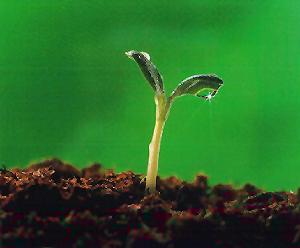
But there is none of this passivity in Scripture. Those who are waiting are waiting very actively. They know that what they are waiting for is growing from the ground on which they are standing. That’s the secret. The secret of waiting is the faith that the seed has been planted, that something has begun. Active waiting means to be present fully to the moment, in the conviction that something is happening. A waiting person is a patient person. The word “patience” means the willingness to stay where we are and life the situation out to the full in the belief that something hidden there will manifest itself to us. Impatient people are always expecting the real thing to happen somewhere else and therefore want to go elsewhere. The moment is empty. But patient people dare to stay where they are. Patient living means to live actively in the present and wait there. That, indeed, is a very radical stance toward life in a world preoccupied with control.

Henri Nouwen, A Spirituality of Waiting

Sunday quote: Silence

Don’t look for meaning in the words.

Listen to the silences.

Samuel Beckett

Sunday Quote: Waiting

The word patience comes from the Latin verb patior, which means “to suffer.” Waiting patiently is suffering through the present moment, tasting it to the full, and letting the seeds that are sown in the ground on which we stand grow into strong plants.

Henri Nouwen, Bread for the Journey