Sunday Quote: A still mind, not fixing….


God, rest in my heart,

Fortify me

Take away my hunger for answers.

Mary Oliver

Empty time

Two reasons for posting this poem by John O’ Donohue today.

Firstly, I love the line “the joy that dwells far within slow time” as a way of expressing where we get when we meditate.

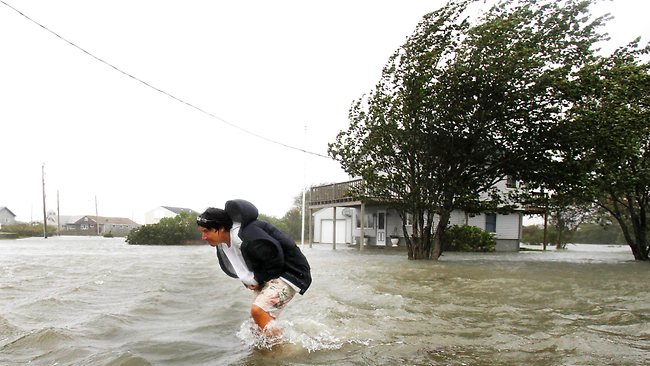
Secondly, as a prayer for “One who is Exhausted”,  it captures well what happens to many of us at different times in our lives, when we find ourselves “marooned on unsure ground”. The familiar markers are nowhere to be seen, and we feel lost. Rather than panicking at this, or see it as something wrong, the poet encourages us to trust that our soul needs this empty time to recover itself. We learn from the rain – not the heavy thunderstorms of last evening but the soft rain which O’Donohue was familiar with in the West of Ireland and which fell here this morning –  to take things gently, change rhythm and to wait.

The tide you never valued has gone out.
And you are marooned on unsure ground.
Something within you has closed down;
And you cannot push yourself back to life.

You have been forced to enter empty time.
The desire that drove you has relinquished.
There is nothing else to do now but rest
And patiently learn to receive the self
You have forsaken for the race of days.

At first your thinking will darken
And sadness take over like listless weather.
The flow of unwept tears will frighten you.

You have traveled too fast over false ground;
Now your soul has come to take you back.

Take refuge in your senses, open up
To all the small miracles you rushed through.

Become inclined to watch the way of rain
When it falls slow and free.

Imitate the habit of twilight,
Taking time to open the well of color
That fostered the brightness of day.

Draw alongside the silence of stone
Until its calmness can claim you.
Be excessively gentle with yourself.

Stay clear of those vexed in spirit.
Learn to linger around someone of ease
Who feels they have all the time in the world.

Gradually, you will return to yourself,
Having learned a new respect for your heart
And the joy that dwells far within slow time.

John O’Donohue, A Blessing for One who is Exhausted.
More thoughts on our underlying shifting ground

Similar thoughts to the ones posted on Monday, this time from a Christian perspective, written by probably the most influential Catholic Theologian of the 20th Century. He uses the word “pessimism” to describe the underlying sense of groundlessness which we frequently feel. His ideas are remarkably similar to ones found in other traditions, such as posts I have already written based on the work of  Pema Chodron.

This perplexity in human existence is not merely a transitory stage that, with patience and creative imagination, might eventually be removed from human existence. It is a permanent existential of humanity in history and, although it keeps assuming new forms, it can never be wholly overcome in history……. Of course, we cannot say that human finitude and historicity alone explain the fact that history cannot follow its course without friction and without blind alleys. Nor can this Christian pessimism be justified merely by the fact that it is impossible fully to harmonize all human knowledge with its many disparate sources, or to build a fully harmonious praxis on the basis of such disparate knowledge. We might also mention that we can never fully understand the meaning of suffering and death. Yet in spite of all this, the Christian interpretation of human existence says that within history, it is never possible wholly and definitively to overcome the riddles of human existence and history, which we experience so clearly and so painfully…..

People are afraid of this pessimism. They do not accept it. They repress it. That is why it is the first task of Christian preaching to speak up for it.

Karl Rahner, “Christian Pessimism”, in Theological Investigations XXII

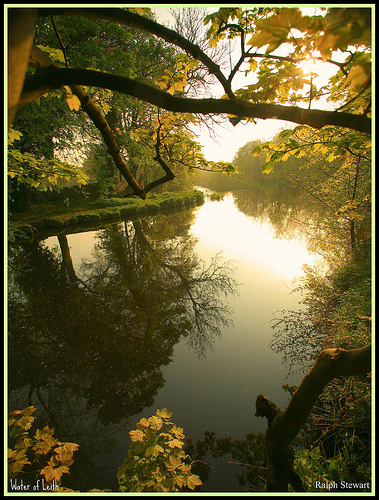
(Photo Credit: AP/Winslow Townson)

Sunday quote: Creating space

What I most want
is to spring out of this personality,
then to sit apart from that leaping.

I’ve lived too long where I can be reached

Rumi

Under our feet

At the entrance to some Zen Temples in Japan one finds a sign, saying simply kyakka-sho-ko. One way of translating this is Look under your feet. Like most zen sayings it is open to numerous interpretations, but the one I like to consider is the way that meditation, or entering any sacred space, begins right where we are standing, in the circumstances of our ordinary life. We may not even consider this as being worthy of attention or deserving special notice. We can find our daily life so distracted and drab that we may think that our real life lies elsewhere, or our happiness lies when we get some of the elements that are missing now. How often we do this – undervalue our actual life, or the opportunities presented for love in actual daily tasks, thinking that a more special version of life exists elsewhere. We are not helped by that fact that modern culture encourages dissatisfaction with what we have, always presenting something new and something better. And that this culture is a powerful narcotic. So we can find that we are not interested on what is under our feet, but prefer to look around or elsewhere, to live with our head in the clouds, planning or worrying, waiting…… anywhere other than just in this moment

So this phrase says to me – Look around, notice, appreciate, take care of what you have. This life, this place, this family, this relationship, this time. It reminds me that every moment – even ordinary activities such as eating, walking, shopping or cleaning the house  –  is where I can cultivate my attention. It carries an echo of that famous phrase – when we are eating,  we give our full attention to our eating, while walking we pay full attention to the sensation of walking.  The sacred is found in the ordinary; the ground of our growth is deep within our own being. Mindfulness practice in its simplest, is essentially developing the capacity to sit –  to be with ourselves –  and to be happy there.

Looking for treasure outside ourselves

We can spend a good portion of our life waiting for some time in the future when we have the time to do the things we want, or the things we feel are good for us. We look forward to our holidays, or to weekend seminars or to doing a course, believing that then we will finally get it together. It is rare that things actually happen in this way. The conditions are already available to us, in the moments of each day. We can start with where we are, not matter how messy that is, or how distracted we feel.

Solitude is not found so much by looking outside the boundaries of your own dwelling, as by staying within.  Solitude is not something you must hope for in the future.  Rather, it is a deepening of the present, and unless you look for it in the present you will never find it.

Thomas Merton, The Sign of Jonas