
Making time for our better health: Sorry, I’m too busy

I’m Late, I’m Late for a very important date,
No time to say hello, goodbye.
I’m late, I’m late, I’m late, and when I wave,
I lose the time I save.

White Rabbit, Alice in Wonderland

In a famous study, conducted in 1973  by J. M . Darley  and C. D. Batsonresearchers at Princeton University,  it was shown that our perception of busyness influences the way we  behave in certain situations.  It was conducted with theology students  who, after completing some initial questionnaires,  were told to go to another building on campus to give a speech. The irony in this study was that the speech was on the New Testament parable of the Good Samaritan, where the main character helps a person in distress whom he meets unexpectedly on the road. Some of the students were told that they were late for the speech; others were told that they had a few minutes to spare. On the way, they came across a man slumped in an alleyway who appeared to need help. Out of those students who were told they were late and thus felt that they were in a hurry,  10% stopped to help. Of the group who knew they had a few minutes to spare, 63% stopped.

The crucial variable in the study was not the values of the person or their basic kindness, it was whether or not they believed themselves to be in a hurry. When questioned afterwards, those who had failed to stop said they would have done so, if they had “had more time“. It seems that when we speed up and feel that we are in a hurry, we experience something similar to what Tolman called in 1948 the “narrowing of the cognitive map”. We miss details. We do not make the best or wisest choices. We are not present in the moment to notice what is really important.  Too much focus on the future – one of the driving features of today’s age – means that we ignore what is in front of us in the present. The words “Hurry, you’re late”  had the effect of turning someone who would normally notice,  into someone who was indifferent to suffering — of making someone, in that moment, into a different person.
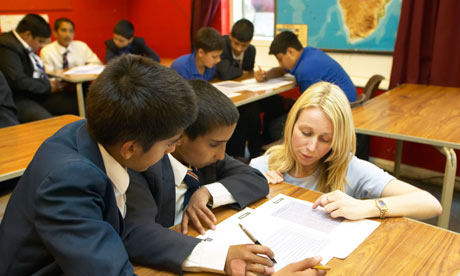

Mindfulness meditation improves sense of well being in teenagers

An interesting study has been carried out on the effect of meditation on teenage boys in two schools in the U.K.  Researchers from the University of Cambridge analyzed 155 boys from two schools, Tonbridge and Hampton, before and after a  4-week course in mindfulness,  comparing them to a control group on measures of mindfulness, resilience and psychological well-being.  The training consisted of four 40 minute classes, once a week, which presented the principles and practice of mindfulness. The classes covered the concepts such as awareness and acceptance, and taught practical skills such as how to practice bodily awareness by noticing where they were in contact with their chairs or the floor, paying attention to their breathing, and noticing the sensations involved in walking.  Furthermore, the students were  asked to practice outside the classroom and were encouraged to listen to an audio recording for eight minutes a day.

After the trial period, the 14 and 15 year-old boys were found to have increased well-being, defined as the combination of feeling good – having more positive emotions such as happiness, contentment, interest and affection – and functioning well. Most students reported enjoying and benefiting from the mindfulness training, and 74% said they would like to continue with it in the future.

Lead researcher Dr Felicia Hubbert summed up the findings as follows: More and more we are realising the importance of supporting the overall mental health of children. Our study demonstrates that this type of training improves wellbeing in adolescents and that the more they practise, the greater the benefits. Importantly, many of the students genuinely enjoyed the exercises and said they intended to continue them – a good sign that many children would be receptive to this type of intervention. Another significant aspect of this study is that adolescents who suffered from higher levels of anxiety were the ones who benefitted most.

Felicia Huppert, Daniel Johnson: “A controlled trial of mindfulness training in schools; the importance of practice for an impact on well-being.” The Journal of Positive Psychology. Volume 5 Issue 4,  2010

Downstream

At times we need to pay attention to what is going on upstream in our lives and in the world around us,  rather than always reacting or playing catch-up.  We can find that we have constructed a lot of reactive practices – fire-fighting – rather than dealing with the issues at source, somewhat like the Downstreamers in this contemporary fable by Donald Ardell. We need to recognize what are the stressors in the way our life is structured and take proactive measures to readjust the balance, rather than dealing with the symptoms when they become overwhelming. Or sometimes we need courage to go back in our history and face the events that are still having consequences in our life today.

It was many years ago that villagers in Downstream recall spotting the first body in the river. Some old timers remember how spartan were the facilities and procedures for managing that sort of thing. Sometimes, they say, it would take hours to pull 10 people from the river, and even then only a few would survive.

Though the number of victims in the river has increased greatly in recent years, the good folks of Downstream have responded admirably to the challenge. Their rescue system is clearly second to none: most people discovered in the swirling waters are reached within 20 minutes — many in less than 10. Only a small number drown each day before help arrives — a big improvement from the way it used to be.

Talk to the people of Downstream and they’ll speak with pride about the new hospital by the edge of the waters, the flotilla of rescue boats ready for service at a moment’s notice, the comprehensive health plans for coordinating all the manpower involved, and the large number of highly trained and dedicated swimmers always ready to risk their lives to save victims from the raging currents. Sure it costs a lot but, say the Downstreamers, what else can decent people do except to provide whatever is necessary when human lives are at stake.

Oh, a few people in Downstream have raised the question now and again, but most folks show little interest in what’s happening Upstream. It seems there’s so much to do to help those in the river that nobody’s got time to check how all those bodies are getting there in the first place. That’s the way things are, sometimes.

Donald Ardell, “The Parable of the Downstreamers” in High Level Wellness: An Alternative to Doctors, Drugs and Disease

Noticing when we are not present today

By virtue of being human, each one of us is on intimate terms with not being present. Because of this, our intimacy with this felt absence is a powerful ally. Each time we awaken to no longer being present to ourselves or to another person, it is, paradoxically, a moment of presence. If we are willing to see the whole of our lives as practice, our awareness of the moments when we are not present, coupled with our intention to awaken, brings us into the present. Given our penchant for absence, opportunities for practicing  presence are abundant…… at heart, mindfulness meditation is about care, about a willingness to come up to our discomfort and pain without judgment, striving, manipulation or pretense. this gentle, open, nonjudgmental approach is both merciful and relentless asking of us more than we may ever have expected.

Saki Santorelli, Letting Ourselves Heal

Watching and observing

Mindfulness is not thinking about things. (It is not “meditating on” some topic, as people often say.) It is a non-discursive observation of our life in all its aspects. In those moments when thinking predominates, mindfulness is the clear and silent awareness that we are thinking. I found it helpful and relaxing when someone said, “For the purpose of meditation, nothing is particularly worth thinking about.” Thoughts can come and go as they wish, and the meditator does not need to become involved with them. We are not interested in engaging in the content of our thoughts; mindfulness of thinking is simply recognizing we are thinking.

Gil Fronsdal

Simple daily practices 2: Touch-points

A useful technique involves  working with awareness of body touch-points. These are the parts of the body that come into contact with other objects in the course of each day, such as the bottoms of our feet as we move about, or the felt sense of sitting in a chair, or of our hands touching something. We bring our attention to a touch-point as often as we can remember.  This is useful in breaking our habitual mental and emotional patterns.

Narayan Liebenson Grady