Still the mind and practice freedom

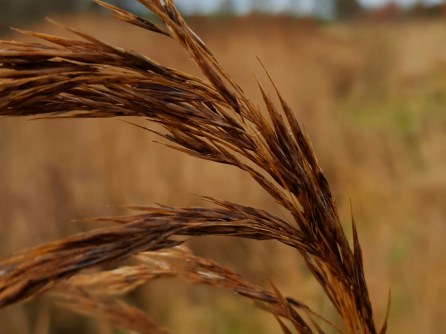
reeds

A new month.

A lot of anxiety and dysfunction all around. The challenge: Not to be a victim of the frantic world in which we live in, or of the way in which our nervous systems respond.

When despair for the world grows in me

and I wake in the night at the least sound

in fear of what my life and my children’s lives may be,

I go and lie down where the wood drake rests in his beauty on the water,

and the great heron feeds.

I come into the peace of wild things

who do not tax their lives with forethought of grief.

I come into the presence of still water.

And I feel above me the day-blind stars

waiting with their light. For a time

I rest in the grace of the world, and am free.

Wendell Berry

Let’s try quiet eyes today

https://upload.wikimedia.org/wikipedia/commons/e/e8/%E7%A9%8F%E3%82%84%E3%81%8B%E3%81%AA%E7%9C%BC%E5%B7%AE%E3%81%97_Gentle_Eyes_%288360606632%29.jpg

The theologian Howard Thurman said, “Look at the world with quiet eyes.” Isn’t that lovely? Just look at the world with quiet eyes. Usually when we are in the midst of life’s circumstances — whatever they are — we can be very reactive and therefore miss the many gifts for which we can have gratitude and also miss opportunities to give, thus making our very presence a blessing. It reminds me of some cartoon characters with eyeballs on springs that pop out when they see something surprising. But looking upon the world with quiet eyes, we can feel a sense of simply coming back into ourselves and into receptive mode. Ready to give and to receive the blessings of our life.

Gina Sharpe

photo Yuya Sekiguchi

Sunday Quote: our inner resource

reflected

May we all grow in grace and peace,
and not neglect the silence that is printed
in the centre of our being.
It will not fail us.

Thomas Merton

This is the way it is

File:Gold Necklace with Medallion Depicting a Goddess LACMA 50.22.20 (2 of 2).jpg

Advice from two great teachers from the Thai tradition, where I find myself mainly at home.

Ajahn Sumedho has had a huge influence on the development of meditation practice in the West. Here he refers to an observation made by one of the great figures in Thai Theravada Buddhist practice, summarizing neatly the whole of mindfulness practice. Its an observation which is one of my favourites and points us towards the right attitude.

That being said, it’s not so easy to work with when circumstances are challenging, or, you know, those evenings when the heart just feels a bit lost.

Buddhadasa Bhikkhu said, “If there was to be a useful inscription to put on a medallion around your neck it would be ‘This is the way it is’.”

This reflection helps us to contemplate: wherever we happen to be, whatever time and place, good or bad, ‘This is the way it is.’

It is a way of bringing an acceptance into our minds,

a noting rather than a reaction.

Ajahn Sumedho, The Way it is

Not worth getting excited over

File:Faded wall advertising, Belfast - geograph.org.uk - 1376783.jpg

A lot of what we hold on to as important- even just a week or two ago – turns out to be, like everything else, impermanent, arising and passing away according to conditions.

I have already lost touch with a couple of people I used to be

Joan Didion, On Keeping a Notebook

photo albert bridge

The gentler way of nature

leaves-on-ground

The first week back to work over. Nature has a gentler pace than the one imposed by our minds and seems to have  different phases – growth, slowing down,  covering over and rest. Thus, despite all the clamour to change we hear in these first weeks,  we can choose to have some natural rest and a time of quiet,  not always striving – allowing the different parts of our lives to just be .

You begin to see that there are seasons in your life, in the same way as there as seasons in nature. There are times to cultivate, when you nurture your world and give birth to new ideas and ventures. There are times of flourishing and abundance, when life feels in full bloom, energized and expanding. And there are times of fruition, when things come to an end. They have reached their climax and must be harvested before they begin to fade. And finally there are those times that are cold and cutting and empty, times when the spring of new beginnings seems like a distant dream. Those rhythms in life are natural events. They weave into one another as day follows night, bringing, not messages of hope and fear, but messages of how things are.

Chogram Trungpa Rinpoche, How to Rule